

Similarly, Sharma et al. [136] have utilized a DIHMA in their synthesis of the
antimicrobial fungal metabolite dinemasone A 258 (Scheme 63). Unfortunately
DIHMA of the ynone 256 afforded the singly anomerically stabilized spiroacetal
257a, albeit in good yield. Epimerization to the desired doubly anomerically
stabilized spiroacetal 257b under the best conditions gave a 1:1 mixture of the
anomers. Subsequent hydrogenolysis then gave dinemasone A 258 in high yield.
2.10 Ring Opening of Epoxides
Another of the well-established methods for the synthesis of α-hydroxy spiroacetals
is through the intramolecular ring opening of an epoxide (Scheme 64).
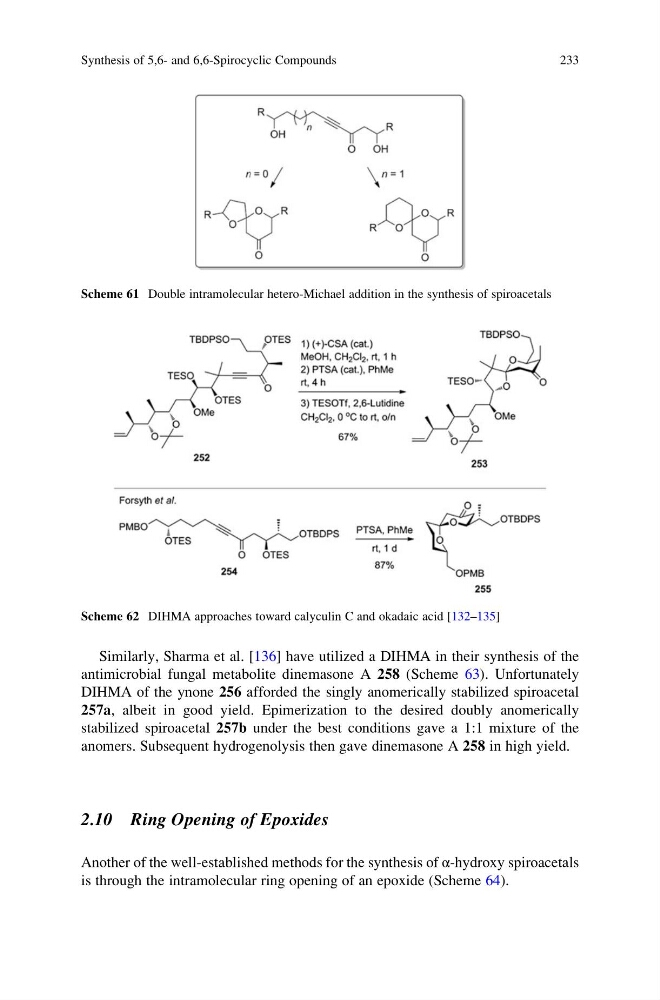
Scheme 61 Double intramolecular hetero-Michael addition in the synthesis of spiroacetals
Scheme 62 DIHMA approaches toward calyculin C and okadaic acid [132–135]
Synthesis of 5,6- and 6,6-Spirocyclic Compounds
233
antimicrobial fungal metabolite dinemasone A 258 (Scheme 63). Unfortunately
DIHMA of the ynone 256 afforded the singly anomerically stabilized spiroacetal
257a, albeit in good yield. Epimerization to the desired doubly anomerically
stabilized spiroacetal 257b under the best conditions gave a 1:1 mixture of the
anomers. Subsequent hydrogenolysis then gave dinemasone A 258 in high yield.
2.10 Ring Opening of Epoxides
Another of the well-established methods for the synthesis of α-hydroxy spiroacetals
is through the intramolecular ring opening of an epoxide (Scheme 64).
Scheme 61 Double intramolecular hetero-Michael addition in the synthesis of spiroacetals
Scheme 62 DIHMA approaches toward calyculin C and okadaic acid [132–135]
Synthesis of 5,6- and 6,6-Spirocyclic Compounds
233