

13.6 16-Membered Macrocyclic Lactones
13.6.1 (+)-Peloruside A
The macrolactonization strategy in Jacobsen’s total synthesis of (+)-peloruside A
111 [97] (Scheme 47) is similar to the former approaches to this natural product.
Employing similarly protected seco-acids [98, 99], Jacobsen et al. were able to
differentiate between the free hydroxy groups at C11 and C15.
14 Macrolactonization Through Thioesters: Corey
(Nicolaou, Clark, Brunelle), Schmidt, Wollenberg,
and Gerlach Procedures
14.1 Background
The macrolactonization of thioesters is the biosynthetic pathway for the formation
of macrolides. It is therefore not surprising that this strategy was also investigated
for the laboratory synthesis of macrolactones. The most prominent reaction involving a thioester is the “double activation” method described in 1974 by Corey and
Nicolaou [100]. The mechanism involves the initial formation of a 2-pyridine
thioester 168 of the ω-hydroxy acid by using a Mukaiyama oxidation–reduction
condensation [101, 102] with PySSPy 167 and triphenylphosphine. Internal proton
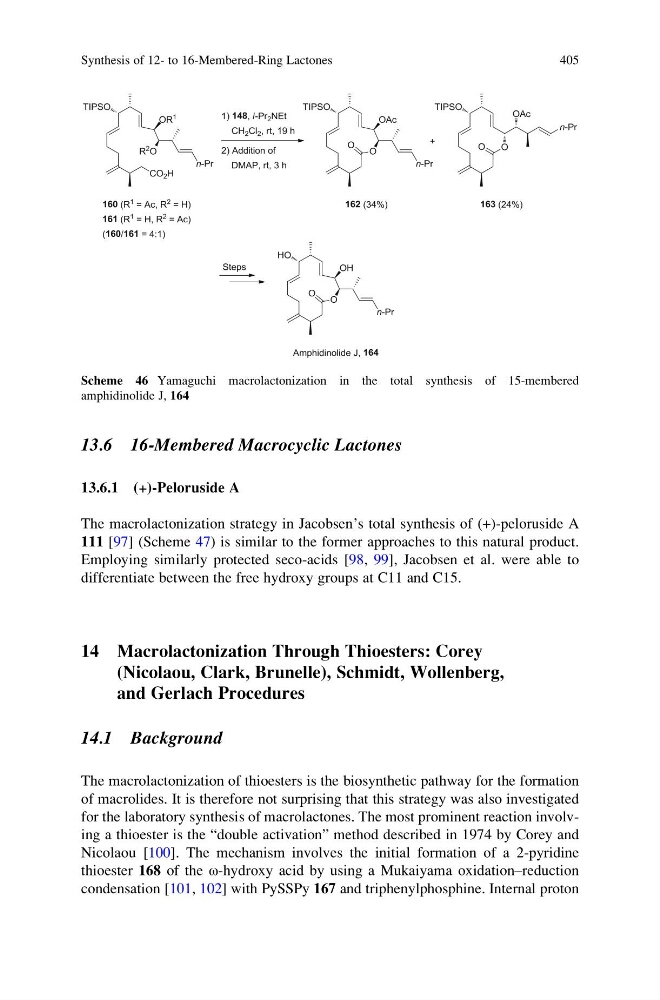
Scheme 46 Yamaguchi macrolactonization in the total synthesis of 15-membered
amphidinolide J, 164
Synthesis of 12- to 16-Membered-Ring Lactones
405
13.6.1 (+)-Peloruside A
The macrolactonization strategy in Jacobsen’s total synthesis of (+)-peloruside A
111 [97] (Scheme 47) is similar to the former approaches to this natural product.
Employing similarly protected seco-acids [98, 99], Jacobsen et al. were able to
differentiate between the free hydroxy groups at C11 and C15.
14 Macrolactonization Through Thioesters: Corey
(Nicolaou, Clark, Brunelle), Schmidt, Wollenberg,
and Gerlach Procedures
14.1 Background
The macrolactonization of thioesters is the biosynthetic pathway for the formation
of macrolides. It is therefore not surprising that this strategy was also investigated
for the laboratory synthesis of macrolactones. The most prominent reaction involving a thioester is the “double activation” method described in 1974 by Corey and
Nicolaou [100]. The mechanism involves the initial formation of a 2-pyridine
thioester 168 of the ω-hydroxy acid by using a Mukaiyama oxidation–reduction
condensation [101, 102] with PySSPy 167 and triphenylphosphine. Internal proton
Scheme 46 Yamaguchi macrolactonization in the total synthesis of 15-membered
amphidinolide J, 164
Synthesis of 12- to 16-Membered-Ring Lactones
405