

The synthetic chemicals are applied to reduce the burden
of diseases, and in turn, the chemical forms target the beneficial agents. There are several reports on nanomaterials as
effective control efficacies and improved crop yields (Khan
et al. 2015a, b, 2019). The efficiency of engineered
nanoparticles (ENPs) is focused to highlight the merits on
plant physiology that increase the crop yields with multifarious applications. The need of sustainable farming to
protect the environment with high yields from different crop
plants is investigated to feed the growing human population.
The nanoscale particles are reported for alternatives to
reduce the burden of agrochemicals. The reports on use of
ENPs to boost plant physiological responses and enhance the
yield and quality of crop, medicinal and ornamental plants
(herbs, shrubs and trees) were evaluated to prove the
efficiency in different conditions (Figs. 1 and 2). In this
chapter, the role of ENPs in test plants is presented in different categories, viz.: (1) Plant growth responses, (2) Fertilizer effects in different plants, (3) Nano-harvest,
(4) Phytoaccumulation, and (5) Toxicity effects.
2 Plant growth responses to engineered
nanoparticles
Improved metabolic profile
The soil amended with cadmium sulfide nanoparticles
(CdS-NPs) was used for broad bean (Vicia faba L.) plant
cultivation and evaluation of the phenotypic, biochemical
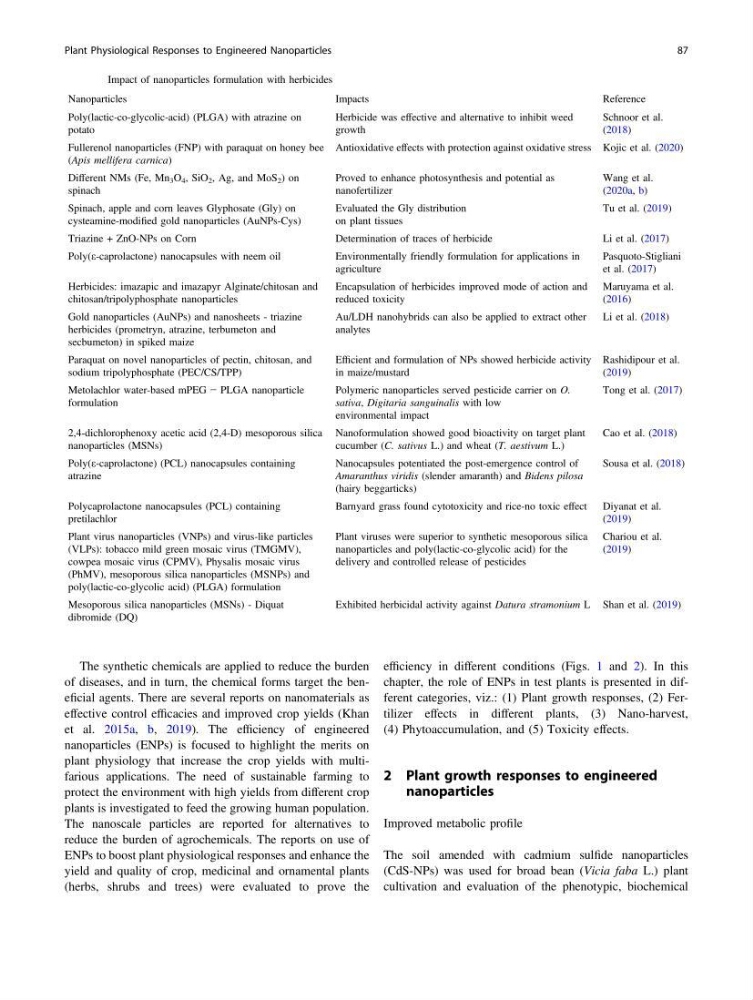
Table 4 Impact of nanoparticles formulation with herbicides
Nanoparticles
Impacts
Reference
Poly(lactic-co-glycolic-acid) (PLGA) with atrazine on
potato
Herbicide was effective and alternative to inhibit weed
growth
Schnoor et al.
(2018)
Fullerenol nanoparticles (FNP) with paraquat on honey bee
(Apis mellifera carnica)
Antioxidative effects with protection against oxidative stress Kojic et al. (2020)
Different NMs (Fe, Mn 3 O 4 , SiO 2 , Ag, and MoS 2 ) on
spinach
Proved to enhance photosynthesis and potential as
nanofertilizer
Wang et al.
(2020a, b)
Spinach, apple and corn leaves Glyphosate (Gly) on
cysteamine-modified gold nanoparticles (AuNPs-Cys)
Evaluated the Gly distribution
on plant tissues
Tu et al. (2019)
Triazine + ZnO-NPs on Corn
Determination of traces of herbicide
Li et al. (2017)
Poly(e-caprolactone) nanocapsules with neem oil
Environmentally friendly formulation for applications in
agriculture
Pasquoto-Stigliani
et al. (2017)
Herbicides: imazapic and imazapyr Alginate/chitosan and
chitosan/tripolyphosphate nanoparticles
Encapsulation of herbicides improved mode of action and
reduced toxicity
Maruyama et al.
(2016)
Gold nanoparticles (AuNPs) and nanosheets - triazine
herbicides (prometryn, atrazine, terbumeton and
secbumeton) in spiked maize
Au/LDH nanohybrids can also be applied to extract other
analytes
Li et al. (2018)
Paraquat on novel nanoparticles of pectin, chitosan, and
sodium tripolyphosphate (PEC/CS/TPP)
Efficient and formulation of NPs showed herbicide activity
in maize/mustard
Rashidipour et al.
(2019)
Metolachlor water-based mPEG − PLGA nanoparticle
formulation
Polymeric nanoparticles served pesticide carrier on O.
sativa, Digitaria sanguinalis with low
environmental impact
Tong et al. (2017)
2,4-dichlorophenoxy acetic acid (2,4-D) mesoporous silica
nanoparticles (MSNs)
Nanoformulation showed good bioactivity on target plant
cucumber (C. sativus L.) and wheat (T. aestivum L.)
Cao et al. (2018)
Poly(e-caprolactone) (PCL) nanocapsules containing
atrazine
Nanocapsules potentiated the post-emergence control of
Amaranthus viridis (slender amaranth) and Bidens pilosa
(hairy beggarticks)
Sousa et al. (2018)
Polycaprolactone nanocapsules (PCL) containing
pretilachlor
Barnyard grass found cytotoxicity and rice-no toxic effect Diyanat et al.
(2019)
Plant virus nanoparticles (VNPs) and virus-like particles
(VLPs): tobacco mild green mosaic virus (TMGMV),
cowpea mosaic virus (CPMV), Physalis mosaic virus
(PhMV), mesoporous silica nanoparticles (MSNPs) and
poly(lactic-co-glycolic acid) (PLGA) formulation
Plant viruses were superior to synthetic mesoporous silica
nanoparticles and poly(lactic-co-glycolic acid) for the
delivery and controlled release of pesticides
Chariou et al.
(2019)
Mesoporous silica nanoparticles (MSNs) - Diquat
dibromide (DQ)
Exhibited herbicidal activity against Datura stramonium L Shan et al. (2019)
Plant Physiological Responses to Engineered Nanoparticles
87
of diseases, and in turn, the chemical forms target the beneficial agents. There are several reports on nanomaterials as
effective control efficacies and improved crop yields (Khan
et al. 2015a, b, 2019). The efficiency of engineered
nanoparticles (ENPs) is focused to highlight the merits on
plant physiology that increase the crop yields with multifarious applications. The need of sustainable farming to
protect the environment with high yields from different crop
plants is investigated to feed the growing human population.
The nanoscale particles are reported for alternatives to
reduce the burden of agrochemicals. The reports on use of
ENPs to boost plant physiological responses and enhance the
yield and quality of crop, medicinal and ornamental plants
(herbs, shrubs and trees) were evaluated to prove the
efficiency in different conditions (Figs. 1 and 2). In this
chapter, the role of ENPs in test plants is presented in different categories, viz.: (1) Plant growth responses, (2) Fertilizer effects in different plants, (3) Nano-harvest,
(4) Phytoaccumulation, and (5) Toxicity effects.
2 Plant growth responses to engineered
nanoparticles
Improved metabolic profile
The soil amended with cadmium sulfide nanoparticles
(CdS-NPs) was used for broad bean (Vicia faba L.) plant
cultivation and evaluation of the phenotypic, biochemical
Table 4 Impact of nanoparticles formulation with herbicides
Nanoparticles
Impacts
Reference
Poly(lactic-co-glycolic-acid) (PLGA) with atrazine on
potato
Herbicide was effective and alternative to inhibit weed
growth
Schnoor et al.
(2018)
Fullerenol nanoparticles (FNP) with paraquat on honey bee
(Apis mellifera carnica)
Antioxidative effects with protection against oxidative stress Kojic et al. (2020)
Different NMs (Fe, Mn 3 O 4 , SiO 2 , Ag, and MoS 2 ) on
spinach
Proved to enhance photosynthesis and potential as
nanofertilizer
Wang et al.
(2020a, b)
Spinach, apple and corn leaves Glyphosate (Gly) on
cysteamine-modified gold nanoparticles (AuNPs-Cys)
Evaluated the Gly distribution
on plant tissues
Tu et al. (2019)
Triazine + ZnO-NPs on Corn
Determination of traces of herbicide
Li et al. (2017)
Poly(e-caprolactone) nanocapsules with neem oil
Environmentally friendly formulation for applications in
agriculture
Pasquoto-Stigliani
et al. (2017)
Herbicides: imazapic and imazapyr Alginate/chitosan and
chitosan/tripolyphosphate nanoparticles
Encapsulation of herbicides improved mode of action and
reduced toxicity
Maruyama et al.
(2016)
Gold nanoparticles (AuNPs) and nanosheets - triazine
herbicides (prometryn, atrazine, terbumeton and
secbumeton) in spiked maize
Au/LDH nanohybrids can also be applied to extract other
analytes
Li et al. (2018)
Paraquat on novel nanoparticles of pectin, chitosan, and
sodium tripolyphosphate (PEC/CS/TPP)
Efficient and formulation of NPs showed herbicide activity
in maize/mustard
Rashidipour et al.
(2019)
Metolachlor water-based mPEG − PLGA nanoparticle
formulation
Polymeric nanoparticles served pesticide carrier on O.
sativa, Digitaria sanguinalis with low
environmental impact
Tong et al. (2017)
2,4-dichlorophenoxy acetic acid (2,4-D) mesoporous silica
nanoparticles (MSNs)
Nanoformulation showed good bioactivity on target plant
cucumber (C. sativus L.) and wheat (T. aestivum L.)
Cao et al. (2018)
Poly(e-caprolactone) (PCL) nanocapsules containing
atrazine
Nanocapsules potentiated the post-emergence control of
Amaranthus viridis (slender amaranth) and Bidens pilosa
(hairy beggarticks)
Sousa et al. (2018)
Polycaprolactone nanocapsules (PCL) containing
pretilachlor
Barnyard grass found cytotoxicity and rice-no toxic effect Diyanat et al.
(2019)
Plant virus nanoparticles (VNPs) and virus-like particles
(VLPs): tobacco mild green mosaic virus (TMGMV),
cowpea mosaic virus (CPMV), Physalis mosaic virus
(PhMV), mesoporous silica nanoparticles (MSNPs) and
poly(lactic-co-glycolic acid) (PLGA) formulation
Plant viruses were superior to synthetic mesoporous silica
nanoparticles and poly(lactic-co-glycolic acid) for the
delivery and controlled release of pesticides
Chariou et al.
(2019)
Mesoporous silica nanoparticles (MSNs) - Diquat
dibromide (DQ)
Exhibited herbicidal activity against Datura stramonium L Shan et al. (2019)
Plant Physiological Responses to Engineered Nanoparticles
87