

2.3 Macro and Micronutrients
Nitrogen, phosphorus, and potassium are called as main or
primary macronutrients. Among them: Nitrogen (N) is vital
for the development of leaves; phosphorus (P) is necessary for
the development of roots, flowers, fruits, and seeds. Activities
such as stem growth, water transportation inside the plants,
and promotion of flowering and fruiting need potassium
(K) macronutrient. Calcium (Ca), magnesium (Mg), and sulfur (S) are known as secondary macronutrients. Copper (Cu),
iron (Fe), manganese (Mn), molybdenum (Mo), zinc (Zn),
chloride (Cl), and boron (B) are the essential micronutrients.
Silicon (Si), cobalt (Co), and vanadium (V) are some of the
micronutrients that have less importance.
Micronutrients like zinc, copper, and molybdenum can
be supplied to plants as water-soluble salts. Iron is transformed into insoluble compounds at moderate soil pH and
phosphate concentrations. This transformation causes biounavailability. Hence, it is supplied in the form of chelated
complex like EDTA derivative. The requirements of
micronutrients are depending upon the plants, for example,
sugar beets need boron and legumes need cobalt (Scherer
2009). Likewise, nanofertilizers also have macronutrient and
micronutrient contents.
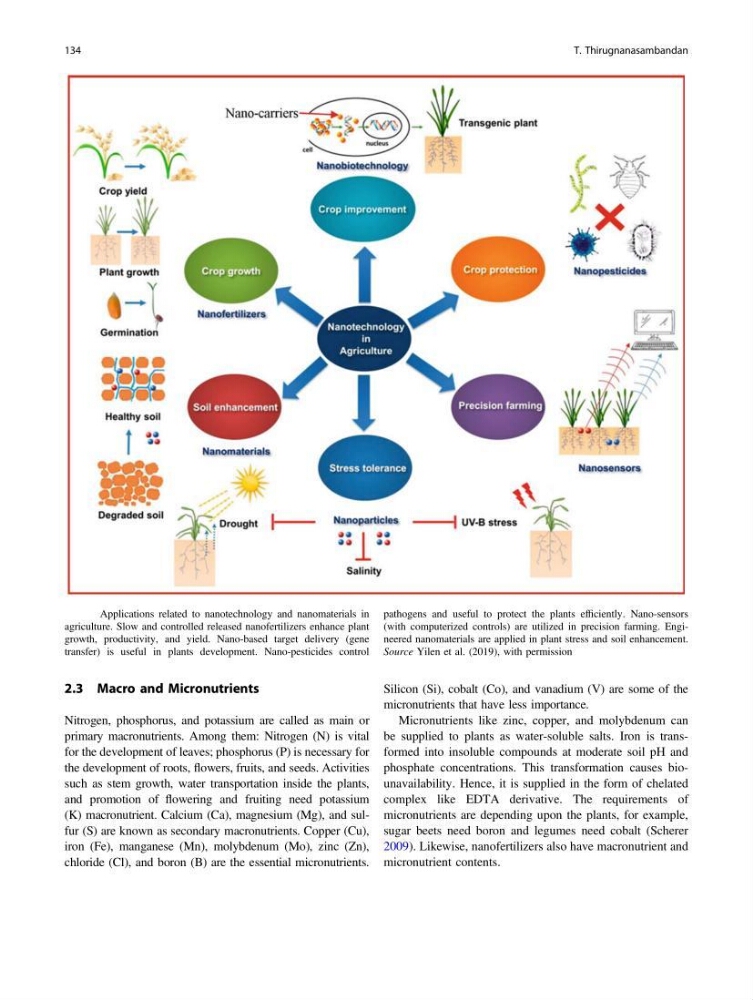
Fig. 1 Applications related to nanotechnology and nanomaterials in
agriculture. Slow and controlled released nanofertilizers enhance plant
growth, productivity, and yield. Nano-based target delivery (gene
transfer) is useful in plants development. Nano-pesticides control
pathogens and useful to protect the plants efficiently. Nano-sensors
(with computerized controls) are utilized in precision farming. Engineered nanomaterials are applied in plant stress and soil enhancement.
Source Yilen et al. (2019), with permission
134
T. Thirugnanasambandan
Nitrogen, phosphorus, and potassium are called as main or
primary macronutrients. Among them: Nitrogen (N) is vital
for the development of leaves; phosphorus (P) is necessary for
the development of roots, flowers, fruits, and seeds. Activities
such as stem growth, water transportation inside the plants,
and promotion of flowering and fruiting need potassium
(K) macronutrient. Calcium (Ca), magnesium (Mg), and sulfur (S) are known as secondary macronutrients. Copper (Cu),
iron (Fe), manganese (Mn), molybdenum (Mo), zinc (Zn),
chloride (Cl), and boron (B) are the essential micronutrients.
Silicon (Si), cobalt (Co), and vanadium (V) are some of the
micronutrients that have less importance.
Micronutrients like zinc, copper, and molybdenum can
be supplied to plants as water-soluble salts. Iron is transformed into insoluble compounds at moderate soil pH and
phosphate concentrations. This transformation causes biounavailability. Hence, it is supplied in the form of chelated
complex like EDTA derivative. The requirements of
micronutrients are depending upon the plants, for example,
sugar beets need boron and legumes need cobalt (Scherer
2009). Likewise, nanofertilizers also have macronutrient and
micronutrient contents.
Fig. 1 Applications related to nanotechnology and nanomaterials in
agriculture. Slow and controlled released nanofertilizers enhance plant
growth, productivity, and yield. Nano-based target delivery (gene
transfer) is useful in plants development. Nano-pesticides control
pathogens and useful to protect the plants efficiently. Nano-sensors
(with computerized controls) are utilized in precision farming. Engineered nanomaterials are applied in plant stress and soil enhancement.
Source Yilen et al. (2019), with permission
134
T. Thirugnanasambandan