

impedes dissolution while sometimes their quick degradation promotes dissolution (Chen 2018). The dissolution of
Ag NPs was reported due to chemical reactions in the soil
(Benoit et al. 2013) while Au nanoparticles were impervious
to oxidative dissolution due to its instability of oxidized Au
(Au
+3 ) hence readily reduced in soil.
The oxidation and dissolution of CeO 2 nanoparticles were
enhanced by complex formation between chelating agents
and Ce
+3 in soil, thus, lowering the bioavailability and
transport of nanoparticles (Zhang et al. 2017; Rodrigues
et al. 2016). In contrast, sometimes, the dissolution process
is inhibited by certain factors in soil subsurface likewise the
dissolution of Ag NPs was hampered by iron oxides due to
the formation of electrostatic attraction followed by
hetero-aggregation (Wang et al. 2019). Thus, the dissolution
kinetics of nanoparticles is a very complex process and
therefore the factors affecting the dissolution should be
critically evaluated. Overall future study should incorporate
detailed inspection of the in vitro fate behavior of ENPs for
better identification of risk associated with ENPs application
in soil.
5 Factors Affecting Transport of Engineered
Nanoparticles in Soil
As discussed above, the aggregation, transport, and deposition of ENPs have been affected by several parameters like
size, surface area, zeta potential, hydrophobicity, structure,
and synthesis route. These properties may interact with soil
solution and it was proposed that ENP size between 1 and
30 nm behave differently for the aforementioned processes
(Santiago-Martín et al. 2016). Due to their smaller size, they
start to aggregate in soil, however, they can keep on
changing the properties in soil solution depend on the particle size. The high surface area further boosts its activity and
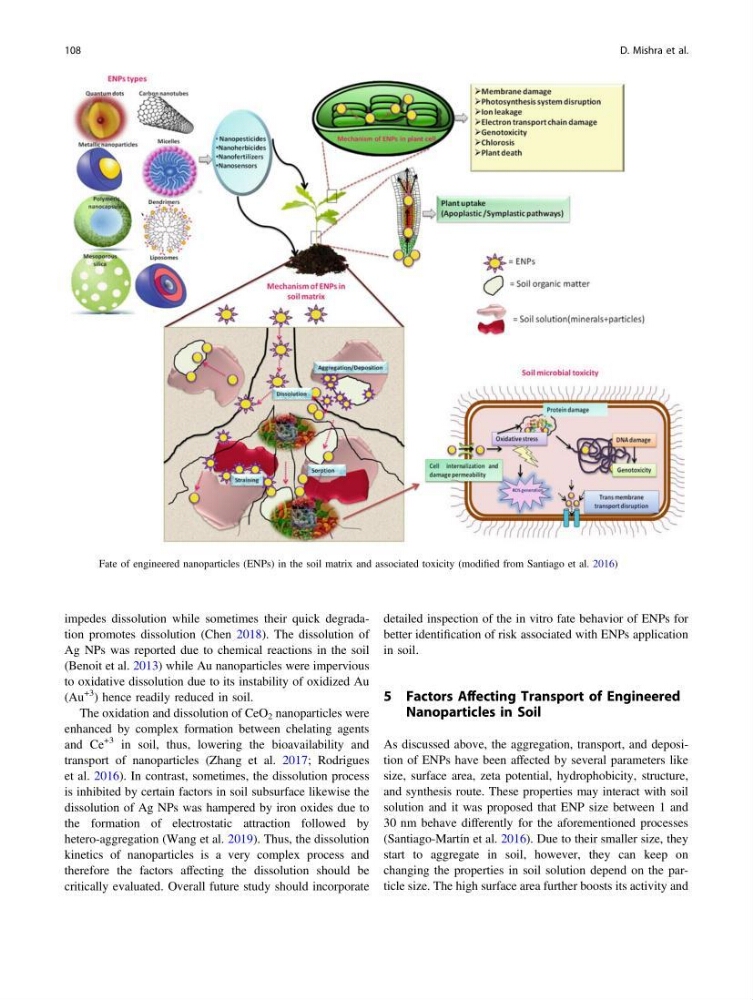
Fig. 1 Fate of engineered nanoparticles (ENPs) in the soil matrix and associated toxicity (modified from Santiago et al. 2016)
108
D. Mishra et al.
Ag NPs was reported due to chemical reactions in the soil
(Benoit et al. 2013) while Au nanoparticles were impervious
to oxidative dissolution due to its instability of oxidized Au
(Au
+3 ) hence readily reduced in soil.
The oxidation and dissolution of CeO 2 nanoparticles were
enhanced by complex formation between chelating agents
and Ce
+3 in soil, thus, lowering the bioavailability and
transport of nanoparticles (Zhang et al. 2017; Rodrigues
et al. 2016). In contrast, sometimes, the dissolution process
is inhibited by certain factors in soil subsurface likewise the
dissolution of Ag NPs was hampered by iron oxides due to
the formation of electrostatic attraction followed by
hetero-aggregation (Wang et al. 2019). Thus, the dissolution
kinetics of nanoparticles is a very complex process and
therefore the factors affecting the dissolution should be
critically evaluated. Overall future study should incorporate
detailed inspection of the in vitro fate behavior of ENPs for
better identification of risk associated with ENPs application
in soil.
5 Factors Affecting Transport of Engineered
Nanoparticles in Soil
As discussed above, the aggregation, transport, and deposition of ENPs have been affected by several parameters like
size, surface area, zeta potential, hydrophobicity, structure,
and synthesis route. These properties may interact with soil
solution and it was proposed that ENP size between 1 and
30 nm behave differently for the aforementioned processes
(Santiago-Martín et al. 2016). Due to their smaller size, they
start to aggregate in soil, however, they can keep on
changing the properties in soil solution depend on the particle size. The high surface area further boosts its activity and
Fig. 1 Fate of engineered nanoparticles (ENPs) in the soil matrix and associated toxicity (modified from Santiago et al. 2016)
108
D. Mishra et al.