

colloids and ENPs. The organic (<30 nm) and inorganic
particles (>20–30 nm) of iron or aluminum oxide or clay
oxides, larger colloids of soil minerals (>100 nm) play
important role in adhering and act as the carrier of ENPs.
Wang et al. (2015) have described the main key factors
governing the transport of ENPs in soil porous media. The
interaction between silver nanoparticles and natural soil
colloids has shown deposition of nanoparticles followed by
hetero-aggregation and hence confirming their reduced
mobility in soil solution (Cornelis et al. 2013). The transport
of nanoscale zero-valent iron (nZVI) was also promoted by
soil-colloids interaction behavior suggesting the highest
mobility in quartz while least in diatomite (Zhang et al.
2019). The transport of ENPs in the soil column was mainly
affected by texture, charge, porosity, and adsorption capacity
of colloids fraction.
4.2 Aggregations
The word “aggregate” is known as the clusters of ENPs in
different shapes. This phrasing is aggravated passing through
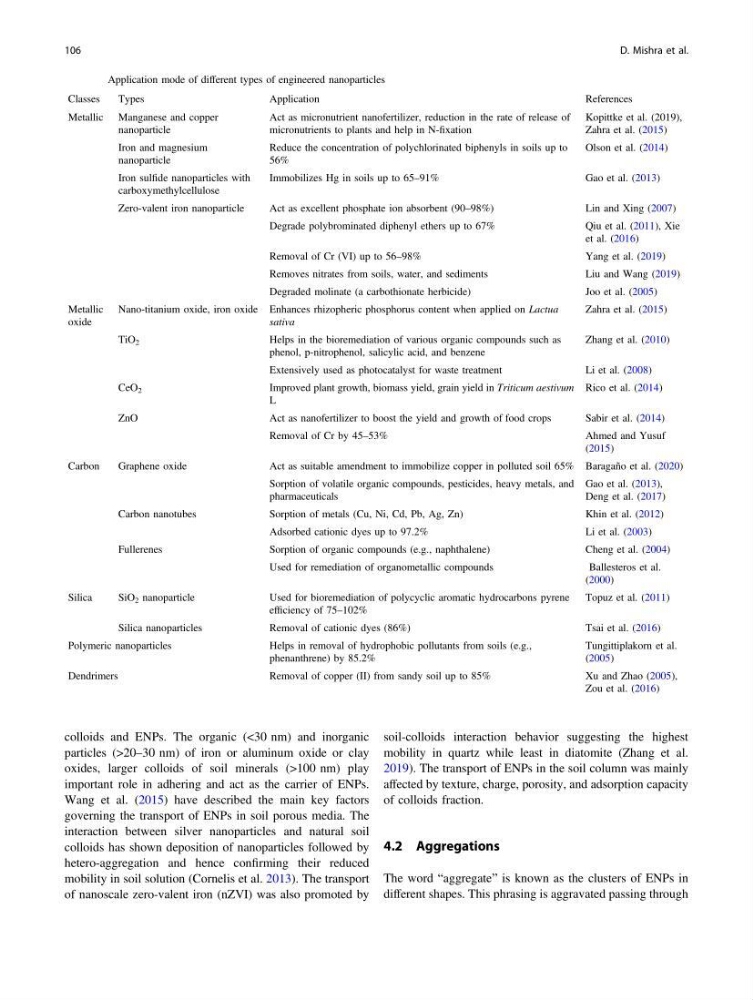
Table 1 Application mode of different types of engineered nanoparticles
Classes
Types
Application
References
Metallic Manganese and copper
nanoparticle
Act as micronutrient nanofertilizer, reduction in the rate of release of
micronutrients to plants and help in N-fixation
Kopittke et al. (2019),
Zahra et al. (2015)
Iron and magnesium
nanoparticle
Reduce the concentration of polychlorinated biphenyls in soils up to
56%
Olson et al. (2014)
Iron sulfide nanoparticles with
carboxymethylcellulose
Immobilizes Hg in soils up to 65–91%
Gao et al. (2013)
Zero-valent iron nanoparticle
Act as excellent phosphate ion absorbent (90–98%)
Lin and Xing (2007)
Degrade polybrominated diphenyl ethers up to 67%
Qiu et al. (2011), Xie
et al. (2016)
Removal of Cr (VI) up to 56–98%
Yang et al. (2019)
Removes nitrates from soils, water, and sediments
Liu and Wang (2019)
Degraded molinate (a carbothionate herbicide)
Joo et al. (2005)
Metallic
oxide
Nano-titanium oxide, iron oxide Enhances rhizopheric phosphorus content when applied on Lactua
sativa
Zahra et al. (2015)
TiO 2
Helps in the bioremediation of various organic compounds such as
phenol, p-nitrophenol, salicylic acid, and benzene
Zhang et al. (2010)
Extensively used as photocatalyst for waste treatment
Li et al. (2008)
CeO 2
Improved plant growth, biomass yield, grain yield in Triticum aestivum
L
Rico et al. (2014)
ZnO
Act as nanofertilizer to boost the yield and growth of food crops
Sabir et al. (2014)
Removal of Cr by 45–53%
Ahmed and Yusuf
(2015)
Carbon
Graphene oxide
Act as suitable amendment to immobilize copper in polluted soil 65% Baragaño et al. (2020)
Sorption of volatile organic compounds, pesticides, heavy metals, and
pharmaceuticals
Gao et al. (2013),
Deng et al. (2017)
Carbon nanotubes
Sorption of metals (Cu, Ni, Cd, Pb, Ag, Zn)
Khin et al. (2012)
Adsorbed cationic dyes up to 97.2%
Li et al. (2003)
Fullerenes
Sorption of organic compounds (e.g., naphthalene)
Cheng et al. (2004)
Used for remediation of organometallic compounds
Ballesteros et al.
(2000)
Silica
SiO 2 nanoparticle
Used for bioremediation of polycyclic aromatic hydrocarbons pyrene
efficiency of 75–102%
Topuz et al. (2011)
Silica nanoparticles
Removal of cationic dyes (86%)
Tsai et al. (2016)
Polymeric nanoparticles
Helps in removal of hydrophobic pollutants from soils (e.g.,
phenanthrene) by 85.2%
Tungittiplakorn et al.
(2005)
Dendrimers
Removal of copper (II) from sandy soil up to 85%
Xu and Zhao (2005),
Zou et al. (2016)
106
D. Mishra et al.
particles (>20–30 nm) of iron or aluminum oxide or clay
oxides, larger colloids of soil minerals (>100 nm) play
important role in adhering and act as the carrier of ENPs.
Wang et al. (2015) have described the main key factors
governing the transport of ENPs in soil porous media. The
interaction between silver nanoparticles and natural soil
colloids has shown deposition of nanoparticles followed by
hetero-aggregation and hence confirming their reduced
mobility in soil solution (Cornelis et al. 2013). The transport
of nanoscale zero-valent iron (nZVI) was also promoted by
soil-colloids interaction behavior suggesting the highest
mobility in quartz while least in diatomite (Zhang et al.
2019). The transport of ENPs in the soil column was mainly
affected by texture, charge, porosity, and adsorption capacity
of colloids fraction.
4.2 Aggregations
The word “aggregate” is known as the clusters of ENPs in
different shapes. This phrasing is aggravated passing through
Table 1 Application mode of different types of engineered nanoparticles
Classes
Types
Application
References
Metallic Manganese and copper
nanoparticle
Act as micronutrient nanofertilizer, reduction in the rate of release of
micronutrients to plants and help in N-fixation
Kopittke et al. (2019),
Zahra et al. (2015)
Iron and magnesium
nanoparticle
Reduce the concentration of polychlorinated biphenyls in soils up to
56%
Olson et al. (2014)
Iron sulfide nanoparticles with
carboxymethylcellulose
Immobilizes Hg in soils up to 65–91%
Gao et al. (2013)
Zero-valent iron nanoparticle
Act as excellent phosphate ion absorbent (90–98%)
Lin and Xing (2007)
Degrade polybrominated diphenyl ethers up to 67%
Qiu et al. (2011), Xie
et al. (2016)
Removal of Cr (VI) up to 56–98%
Yang et al. (2019)
Removes nitrates from soils, water, and sediments
Liu and Wang (2019)
Degraded molinate (a carbothionate herbicide)
Joo et al. (2005)
Metallic
oxide
Nano-titanium oxide, iron oxide Enhances rhizopheric phosphorus content when applied on Lactua
sativa
Zahra et al. (2015)
TiO 2
Helps in the bioremediation of various organic compounds such as
phenol, p-nitrophenol, salicylic acid, and benzene
Zhang et al. (2010)
Extensively used as photocatalyst for waste treatment
Li et al. (2008)
CeO 2
Improved plant growth, biomass yield, grain yield in Triticum aestivum
L
Rico et al. (2014)
ZnO
Act as nanofertilizer to boost the yield and growth of food crops
Sabir et al. (2014)
Removal of Cr by 45–53%
Ahmed and Yusuf
(2015)
Carbon
Graphene oxide
Act as suitable amendment to immobilize copper in polluted soil 65% Baragaño et al. (2020)
Sorption of volatile organic compounds, pesticides, heavy metals, and
pharmaceuticals
Gao et al. (2013),
Deng et al. (2017)
Carbon nanotubes
Sorption of metals (Cu, Ni, Cd, Pb, Ag, Zn)
Khin et al. (2012)
Adsorbed cationic dyes up to 97.2%
Li et al. (2003)
Fullerenes
Sorption of organic compounds (e.g., naphthalene)
Cheng et al. (2004)
Used for remediation of organometallic compounds
Ballesteros et al.
(2000)
Silica
SiO 2 nanoparticle
Used for bioremediation of polycyclic aromatic hydrocarbons pyrene
efficiency of 75–102%
Topuz et al. (2011)
Silica nanoparticles
Removal of cationic dyes (86%)
Tsai et al. (2016)
Polymeric nanoparticles
Helps in removal of hydrophobic pollutants from soils (e.g.,
phenanthrene) by 85.2%
Tungittiplakorn et al.
(2005)
Dendrimers
Removal of copper (II) from sandy soil up to 85%
Xu and Zhao (2005),
Zou et al. (2016)
106
D. Mishra et al.