

derivatives over a range of temperatures from 40
C to 90
C (Scheme 7). The
carboxyl and amino groups could make catalytic species (probably a Cu
I ) more
reactive toward a first oxidative addition of the aryl halide, by chelating the metal
[47, 48].
Another elegant route for the room-temperature coupling of aryl iodide (of aryl
bromides at 65
C) with aliphatic amides was developed by Ding et al. with the
support of a 2 pyridyl β-ketones ligand L21. This Cu-based catalytic system permits
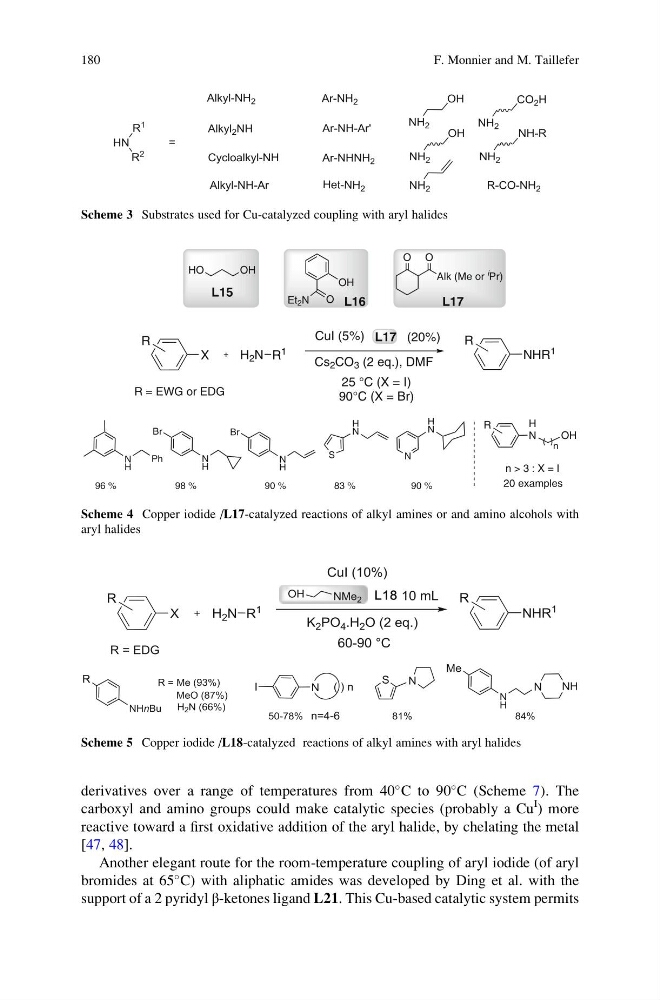
Scheme 3 Substrates used for Cu-catalyzed coupling with aryl halides
CuI (5%) L17 (20%)
Cs 2 CO 3 (2 eq.), DMF
X
R
NHR 1
R
R = EWG or EDG
25 °C (X = I)
90°C (X = Br)
R
1
H 2 N
N
H
Ph
96 %
98 %
N
H
Br
N
H
Br
90 %
H
N
S
83 %
H
N
N
90 %
L15
HO
OH
L16
L17
O
Alk (Me or
i Pr)
O
OH
Et 2 N
O
R
20 examples
n > 3 : X = I
H
N
OH
n
Scheme 4 Copper iodide /L17-catalyzed reactions of alkyl amines or and amino alcohols with
aryl halides
Scheme 5 Copper iodide /L18-catalyzed reactions of alkyl amines with aryl halides
180
F. Monnier and M. Taillefer
C to 90
C (Scheme 7). The
carboxyl and amino groups could make catalytic species (probably a Cu
I ) more
reactive toward a first oxidative addition of the aryl halide, by chelating the metal
[47, 48].
Another elegant route for the room-temperature coupling of aryl iodide (of aryl
bromides at 65
C) with aliphatic amides was developed by Ding et al. with the
support of a 2 pyridyl β-ketones ligand L21. This Cu-based catalytic system permits
Scheme 3 Substrates used for Cu-catalyzed coupling with aryl halides
CuI (5%) L17 (20%)
Cs 2 CO 3 (2 eq.), DMF
X
R
NHR 1
R
R = EWG or EDG
25 °C (X = I)
90°C (X = Br)
R
1
H 2 N
N
H
Ph
96 %
98 %
N
H
Br
N
H
Br
90 %
H
N
S
83 %
H
N
N
90 %
L15
HO
OH
L16
L17
O
Alk (Me or
i Pr)
O
OH
Et 2 N
O
R
20 examples
n > 3 : X = I
H
N
OH
n
Scheme 4 Copper iodide /L17-catalyzed reactions of alkyl amines or and amino alcohols with
aryl halides
Scheme 5 Copper iodide /L18-catalyzed reactions of alkyl amines with aryl halides
180
F. Monnier and M. Taillefer