

2.6 Treatability of Municipal Wastewater
27
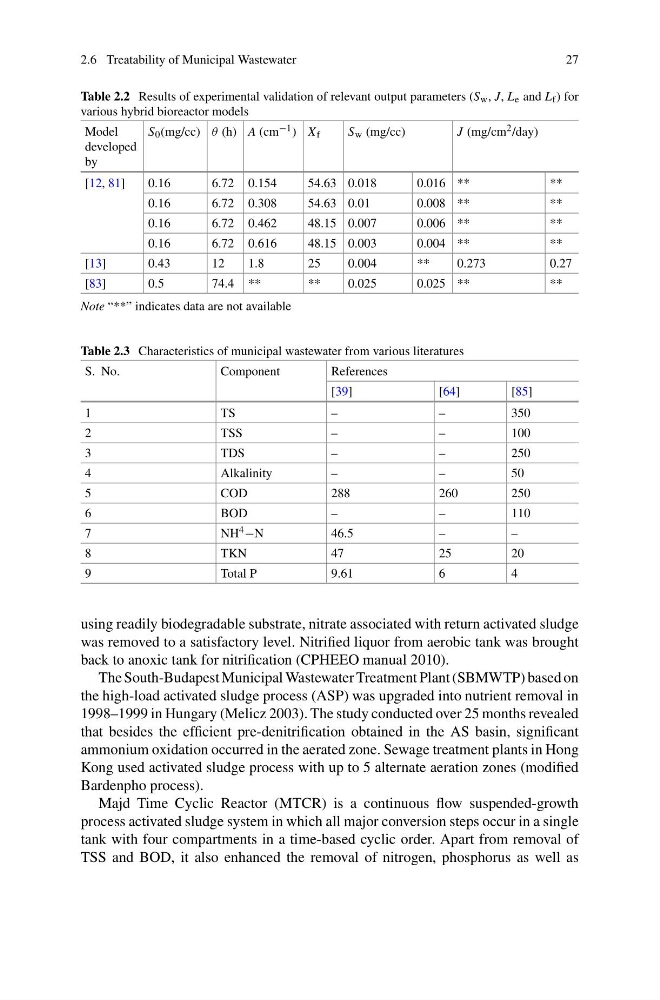
Table 2.2 Results of experimental validation of relevant output parameters (S w , J, L e and L f ) for
various hybrid bioreactor models
Model
developed
by
S 0 (mg/cc) θ (h) A (cm −1 ) X f
S w (mg/cc)
J (mg/cm 2 /day)
[12, 81]
0.16
6.72 0.154
54.63 0.018
0.016 **
**
0.16
6.72 0.308
54.63 0.01
0.008 **
**
0.16
6.72 0.462
48.15 0.007
0.006 **
**
0.16
6.72 0.616
48.15 0.003
0.004 **
**
[13]
0.43
12
1.8
25
0.004
**
0.273
0.27
[83]
0.5
74.4 **
**
0.025
0.025 **
**
Note “**” indicates data are not available
Table 2.3 Characteristics of municipal wastewater from various literatures
S. No.
Component
References
[39]
[64]
[85]
1
TS
–
–
350
2
TSS
–
–
100
3
TDS
–
–
250
4
Alkalinity
–
–
50
5
COD
288
260
250
6
BOD
–
–
110
7
NH 4 −N
46.5
–
–
8
TKN
47
25
20
9
Total P
9.61
6
4
using readily biodegradable substrate, nitrate associated with return activated sludge
was removed to a satisfactory level. Nitrified liquor from aerobic tank was brought
back to anoxic tank for nitrification (CPHEEO manual 2010).
The South-Budapest Municipal Wastewater Treatment Plant (SBMWTP) based on
the high-load activated sludge process (ASP) was upgraded into nutrient removal in
1998–1999 in Hungary (Melicz 2003). The study conducted over 25 months revealed
that besides the efficient pre-denitrification obtained in the AS basin, significant
ammonium oxidation occurred in the aerated zone. Sewage treatment plants in Hong
Kong used activated sludge process with up to 5 alternate aeration zones (modified
Bardenpho process).
Majd Time Cyclic Reactor (MTCR) is a continuous flow suspended-growth
process activated sludge system in which all major conversion steps occur in a single
tank with four compartments in a time-based cyclic order. Apart from removal of
TSS and BOD, it also enhanced the removal of nitrogen, phosphorus as well as
27
Table 2.2 Results of experimental validation of relevant output parameters (S w , J, L e and L f ) for
various hybrid bioreactor models
Model
developed
by
S 0 (mg/cc) θ (h) A (cm −1 ) X f
S w (mg/cc)
J (mg/cm 2 /day)
[12, 81]
0.16
6.72 0.154
54.63 0.018
0.016 **
**
0.16
6.72 0.308
54.63 0.01
0.008 **
**
0.16
6.72 0.462
48.15 0.007
0.006 **
**
0.16
6.72 0.616
48.15 0.003
0.004 **
**
[13]
0.43
12
1.8
25
0.004
**
0.273
0.27
[83]
0.5
74.4 **
**
0.025
0.025 **
**
Note “**” indicates data are not available
Table 2.3 Characteristics of municipal wastewater from various literatures
S. No.
Component
References
[39]
[64]
[85]
1
TS
–
–
350
2
TSS
–
–
100
3
TDS
–
–
250
4
Alkalinity
–
–
50
5
COD
288
260
250
6
BOD
–
–
110
7
NH 4 −N
46.5
–
–
8
TKN
47
25
20
9
Total P
9.61
6
4
using readily biodegradable substrate, nitrate associated with return activated sludge
was removed to a satisfactory level. Nitrified liquor from aerobic tank was brought
back to anoxic tank for nitrification (CPHEEO manual 2010).
The South-Budapest Municipal Wastewater Treatment Plant (SBMWTP) based on
the high-load activated sludge process (ASP) was upgraded into nutrient removal in
1998–1999 in Hungary (Melicz 2003). The study conducted over 25 months revealed
that besides the efficient pre-denitrification obtained in the AS basin, significant
ammonium oxidation occurred in the aerated zone. Sewage treatment plants in Hong
Kong used activated sludge process with up to 5 alternate aeration zones (modified
Bardenpho process).
Majd Time Cyclic Reactor (MTCR) is a continuous flow suspended-growth
process activated sludge system in which all major conversion steps occur in a single
tank with four compartments in a time-based cyclic order. Apart from removal of
TSS and BOD, it also enhanced the removal of nitrogen, phosphorus as well as