

80
D. Lahiri et al.
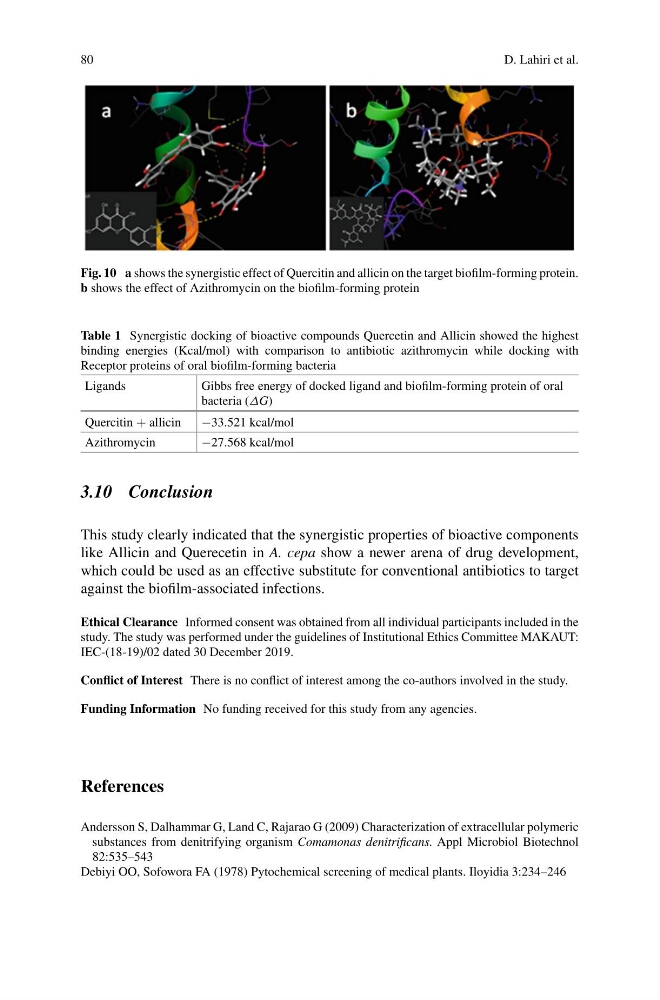
Fig. 10 a shows the synergistic effect of Quercitin and allicin on the target biofilm-forming protein.
b shows the effect of Azithromycin on the biofilm-forming protein
Table 1 Synergistic docking of bioactive compounds Quercetin and Allicin showed the highest
binding energies (Kcal/mol) with comparison to antibiotic azithromycin while docking with
Receptor proteins of oral biofilm-forming bacteria
Ligands
Gibbs free energy of docked ligand and biofilm-forming protein of oral
bacteria (ΔG)
Quercitin + allicin
−33.521 kcal/mol
Azithromycin
−27.568 kcal/mol
3.10 Conclusion
This study clearly indicated that the synergistic properties of bioactive components
like Allicin and Querecetin in A. cepa show a newer arena of drug development,
which could be used as an effective substitute for conventional antibiotics to target
against the biofilm-associated infections.
Ethical Clearance Informed consent was obtained from all individual participants included in the
study. The study was performed under the guidelines of Institutional Ethics Committee MAKAUT:
IEC-(18-19)/02 dated 30 December 2019.
Conflict of Interest There is no conflict of interest among the co-authors involved in the study.
Funding Information No funding received for this study from any agencies.
References
Andersson S, Dalhammar G, Land C, Rajarao G (2009) Characterization of extracellular polymeric
substances from denitrifying organism Comamonas denitrificans. Appl Microbiol Biotechnol
82:535–543
Debiyi OO, Sofowora FA (1978) Pytochemical screening of medical plants. Iloyidia 3:234–246
D. Lahiri et al.
Fig. 10 a shows the synergistic effect of Quercitin and allicin on the target biofilm-forming protein.
b shows the effect of Azithromycin on the biofilm-forming protein
Table 1 Synergistic docking of bioactive compounds Quercetin and Allicin showed the highest
binding energies (Kcal/mol) with comparison to antibiotic azithromycin while docking with
Receptor proteins of oral biofilm-forming bacteria
Ligands
Gibbs free energy of docked ligand and biofilm-forming protein of oral
bacteria (ΔG)
Quercitin + allicin
−33.521 kcal/mol
Azithromycin
−27.568 kcal/mol
3.10 Conclusion
This study clearly indicated that the synergistic properties of bioactive components
like Allicin and Querecetin in A. cepa show a newer arena of drug development,
which could be used as an effective substitute for conventional antibiotics to target
against the biofilm-associated infections.
Ethical Clearance Informed consent was obtained from all individual participants included in the
study. The study was performed under the guidelines of Institutional Ethics Committee MAKAUT:
IEC-(18-19)/02 dated 30 December 2019.
Conflict of Interest There is no conflict of interest among the co-authors involved in the study.
Funding Information No funding received for this study from any agencies.
References
Andersson S, Dalhammar G, Land C, Rajarao G (2009) Characterization of extracellular polymeric
substances from denitrifying organism Comamonas denitrificans. Appl Microbiol Biotechnol
82:535–543
Debiyi OO, Sofowora FA (1978) Pytochemical screening of medical plants. Iloyidia 3:234–246