

Synergistic Effect of Quercetin with Allicin from the Ethanolic …
75
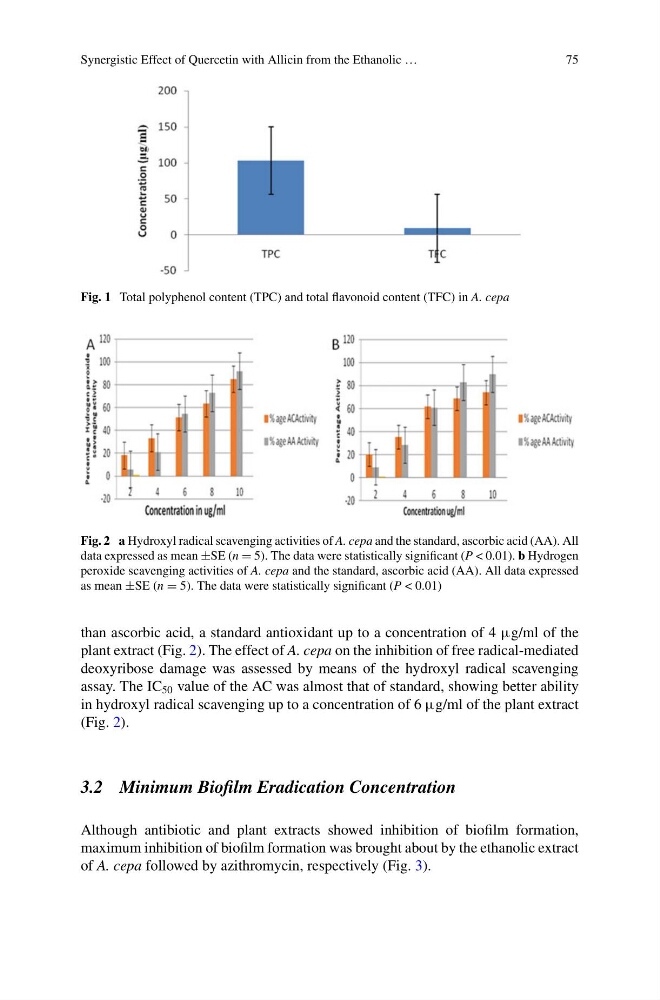
Fig. 1 Total polyphenol content (TPC) and total flavonoid content (TFC) in A. cepa
Fig. 2 a Hydroxyl radical scavenging activities of A. cepa and the standard, ascorbic acid (AA). All
data expressed as mean ±SE (n = 5). The data were statistically significant (P < 0.01). b Hydrogen
peroxide scavenging activities of A. cepa and the standard, ascorbic acid (AA). All data expressed
as mean ±SE (n = 5). The data were statistically significant (P < 0.01)
than ascorbic acid, a standard antioxidant up to a concentration of 4 µg/ml of the
plant extract (Fig. 2). The effect of A. cepa on the inhibition of free radical-mediated
deoxyribose damage was assessed by means of the hydroxyl radical scavenging
assay. The IC 50 value of the AC was almost that of standard, showing better ability
in hydroxyl radical scavenging up to a concentration of 6 µg/ml of the plant extract
(Fig. 2).
3.2 Minimum Biofilm Eradication Concentration
Although antibiotic and plant extracts showed inhibition of biofilm formation,
maximum inhibition of biofilm formation was brought about by the ethanolic extract
of A. cepa followed by azithromycin, respectively (Fig. 3).
75
Fig. 1 Total polyphenol content (TPC) and total flavonoid content (TFC) in A. cepa
Fig. 2 a Hydroxyl radical scavenging activities of A. cepa and the standard, ascorbic acid (AA). All
data expressed as mean ±SE (n = 5). The data were statistically significant (P < 0.01). b Hydrogen
peroxide scavenging activities of A. cepa and the standard, ascorbic acid (AA). All data expressed
as mean ±SE (n = 5). The data were statistically significant (P < 0.01)
than ascorbic acid, a standard antioxidant up to a concentration of 4 µg/ml of the
plant extract (Fig. 2). The effect of A. cepa on the inhibition of free radical-mediated
deoxyribose damage was assessed by means of the hydroxyl radical scavenging
assay. The IC 50 value of the AC was almost that of standard, showing better ability
in hydroxyl radical scavenging up to a concentration of 6 µg/ml of the plant extract
(Fig. 2).
3.2 Minimum Biofilm Eradication Concentration
Although antibiotic and plant extracts showed inhibition of biofilm formation,
maximum inhibition of biofilm formation was brought about by the ethanolic extract
of A. cepa followed by azithromycin, respectively (Fig. 3).