

380
S. Mitra et al.
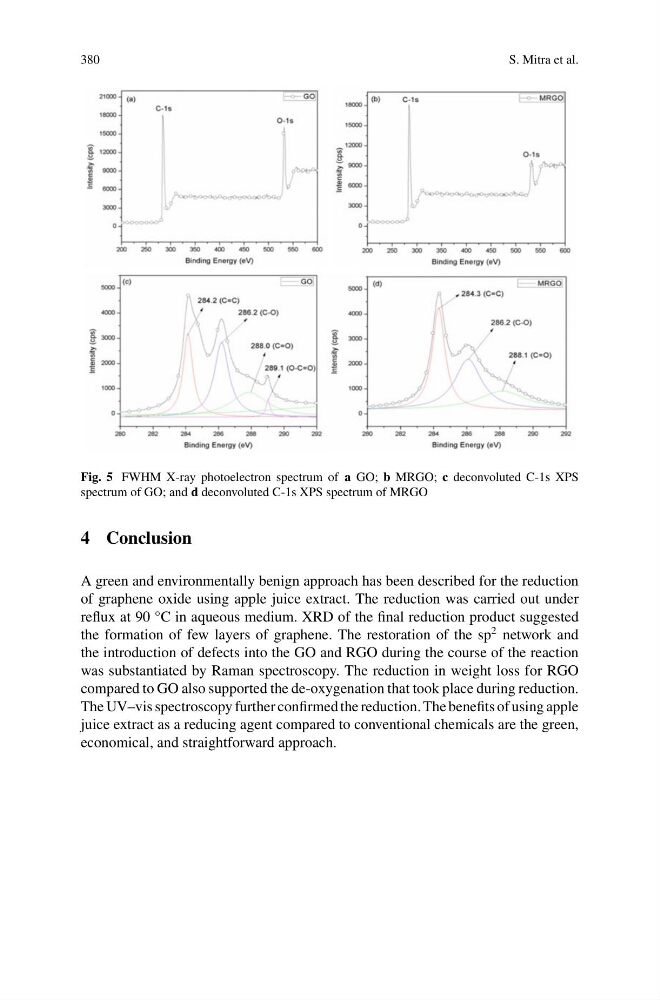
Fig. 5 FWHM X-ray photoelectron spectrum of a GO; b MRGO; c deconvoluted C-1s XPS
spectrum of GO; and d deconvoluted C-1s XPS spectrum of MRGO
4 Conclusion
A green and environmentally benign approach has been described for the reduction
of graphene oxide using apple juice extract. The reduction was carried out under
reflux at 90 °C in aqueous medium. XRD of the final reduction product suggested
the formation of few layers of graphene. The restoration of the sp
2 network and
the introduction of defects into the GO and RGO during the course of the reaction
was substantiated by Raman spectroscopy. The reduction in weight loss for RGO
compared to GO also supported the de-oxygenation that took place during reduction.
The UV–vis spectroscopy further confirmed the reduction. The benefits of using apple
juice extract as a reducing agent compared to conventional chemicals are the green,
economical, and straightforward approach.
S. Mitra et al.
Fig. 5 FWHM X-ray photoelectron spectrum of a GO; b MRGO; c deconvoluted C-1s XPS
spectrum of GO; and d deconvoluted C-1s XPS spectrum of MRGO
4 Conclusion
A green and environmentally benign approach has been described for the reduction
of graphene oxide using apple juice extract. The reduction was carried out under
reflux at 90 °C in aqueous medium. XRD of the final reduction product suggested
the formation of few layers of graphene. The restoration of the sp
2 network and
the introduction of defects into the GO and RGO during the course of the reaction
was substantiated by Raman spectroscopy. The reduction in weight loss for RGO
compared to GO also supported the de-oxygenation that took place during reduction.
The UV–vis spectroscopy further confirmed the reduction. The benefits of using apple
juice extract as a reducing agent compared to conventional chemicals are the green,
economical, and straightforward approach.