

Isolation of a Most Potent Bacterial Strain from Soil …
293
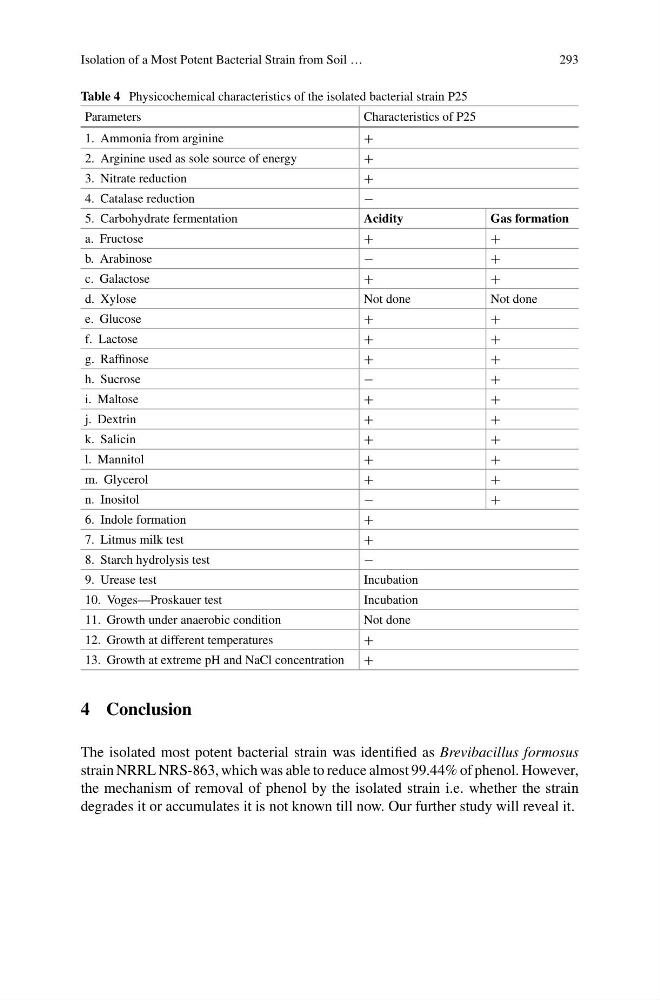
Table 4 Physicochemical characteristics of the isolated bacterial strain P25
Parameters
Characteristics of P25
1. Ammonia from arginine
+
2. Arginine used as sole source of energy
+
3. Nitrate reduction
+
4. Catalase reduction
−
5. Carbohydrate fermentation
Acidity
Gas formation
a. Fructose
+
+
b. Arabinose
−
+
c. Galactose
+
+
d. Xylose
Not done
Not done
e. Glucose
+
+
f. Lactose
+
+
g. Raffinose
+
+
h. Sucrose
−
+
i. Maltose
+
+
j. Dextrin
+
+
k. Salicin
+
+
l. Mannitol
+
+
m. Glycerol
+
+
n. Inositol
−
+
6. Indole formation
+
7. Litmus milk test
+
8. Starch hydrolysis test
−
9. Urease test
Incubation
10. Voges—Proskauer test
Incubation
11. Growth under anaerobic condition
Not done
12. Growth at different temperatures
+
13. Growth at extreme pH and NaCl concentration
+
4 Conclusion
The isolated most potent bacterial strain was identified as Brevibacillus formosus
strain NRRL NRS-863, which was able to reduce almost 99.44% of phenol. However,
the mechanism of removal of phenol by the isolated strain i.e. whether the strain
degrades it or accumulates it is not known till now. Our further study will reveal it.
293
Table 4 Physicochemical characteristics of the isolated bacterial strain P25
Parameters
Characteristics of P25
1. Ammonia from arginine
+
2. Arginine used as sole source of energy
+
3. Nitrate reduction
+
4. Catalase reduction
−
5. Carbohydrate fermentation
Acidity
Gas formation
a. Fructose
+
+
b. Arabinose
−
+
c. Galactose
+
+
d. Xylose
Not done
Not done
e. Glucose
+
+
f. Lactose
+
+
g. Raffinose
+
+
h. Sucrose
−
+
i. Maltose
+
+
j. Dextrin
+
+
k. Salicin
+
+
l. Mannitol
+
+
m. Glycerol
+
+
n. Inositol
−
+
6. Indole formation
+
7. Litmus milk test
+
8. Starch hydrolysis test
−
9. Urease test
Incubation
10. Voges—Proskauer test
Incubation
11. Growth under anaerobic condition
Not done
12. Growth at different temperatures
+
13. Growth at extreme pH and NaCl concentration
+
4 Conclusion
The isolated most potent bacterial strain was identified as Brevibacillus formosus
strain NRRL NRS-863, which was able to reduce almost 99.44% of phenol. However,
the mechanism of removal of phenol by the isolated strain i.e. whether the strain
degrades it or accumulates it is not known till now. Our further study will reveal it.