

Effect of Medicinal Plants on Biofilm-Forming …
193
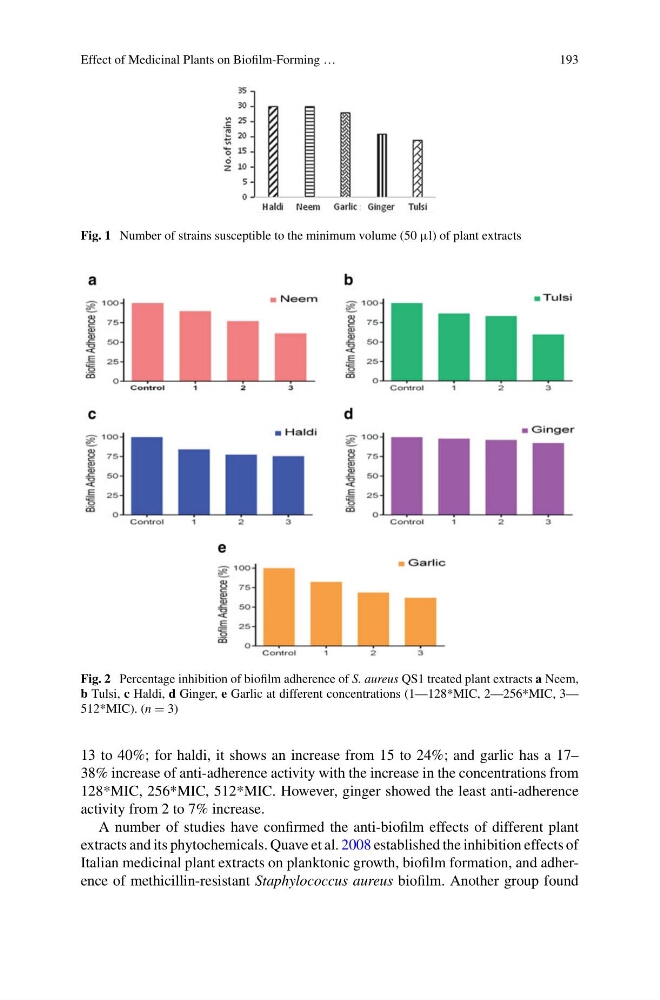
Fig. 1 Number of strains susceptible to the minimum volume (50 µl) of plant extracts
Fig. 2 Percentage inhibition of biofilm adherence of S. aureus QS1 treated plant extracts a Neem,
b Tulsi, c Haldi, d Ginger, e Garlic at different concentrations (1—128*MIC, 2—256*MIC, 3—
512*MIC). (n = 3)
13 to 40%; for haldi, it shows an increase from 15 to 24%; and garlic has a 17–
38% increase of anti-adherence activity with the increase in the concentrations from
128*MIC, 256*MIC, 512*MIC. However, ginger showed the least anti-adherence
activity from 2 to 7% increase.
A number of studies have confirmed the anti-biofilm effects of different plant
extracts and its phytochemicals. Quave et al. 2008 established the inhibition effects of
Italian medicinal plant extracts on planktonic growth, biofilm formation, and adherence of methicillin-resistant Staphylococcus aureus biofilm. Another group found
193
Fig. 1 Number of strains susceptible to the minimum volume (50 µl) of plant extracts
Fig. 2 Percentage inhibition of biofilm adherence of S. aureus QS1 treated plant extracts a Neem,
b Tulsi, c Haldi, d Ginger, e Garlic at different concentrations (1—128*MIC, 2—256*MIC, 3—
512*MIC). (n = 3)
13 to 40%; for haldi, it shows an increase from 15 to 24%; and garlic has a 17–
38% increase of anti-adherence activity with the increase in the concentrations from
128*MIC, 256*MIC, 512*MIC. However, ginger showed the least anti-adherence
activity from 2 to 7% increase.
A number of studies have confirmed the anti-biofilm effects of different plant
extracts and its phytochemicals. Quave et al. 2008 established the inhibition effects of
Italian medicinal plant extracts on planktonic growth, biofilm formation, and adherence of methicillin-resistant Staphylococcus aureus biofilm. Another group found