

124
S. Ghosal et al.
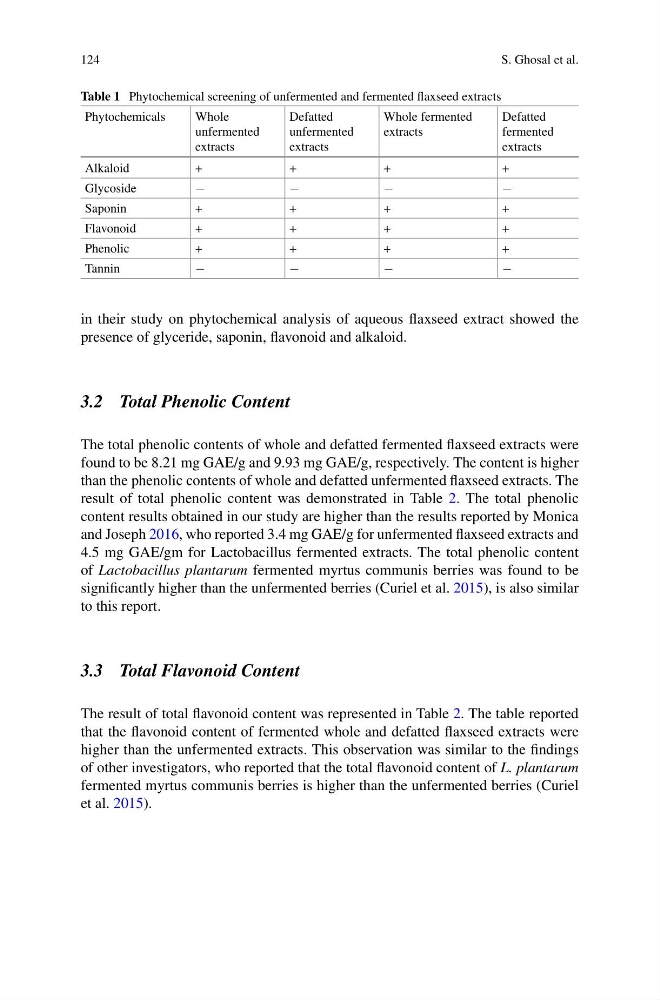
Table 1 Phytochemical screening of unfermented and fermented flaxseed extracts
Phytochemicals
Whole
unfermented
extracts
Defatted
unfermented
extracts
Whole fermented
extracts
Defatted
fermented
extracts
Alkaloid
+
+
+
+
Glycoside
−
−
−
−
Saponin
+
+
+
+
Flavonoid
+
+
+
+
Phenolic
+
+
+
+
Tannin
−
−
−
−
in their study on phytochemical analysis of aqueous flaxseed extract showed the
presence of glyceride, saponin, flavonoid and alkaloid.
3.2 Total Phenolic Content
The total phenolic contents of whole and defatted fermented flaxseed extracts were
found to be 8.21 mg GAE/g and 9.93 mg GAE/g, respectively. The content is higher
than the phenolic contents of whole and defatted unfermented flaxseed extracts. The
result of total phenolic content was demonstrated in Table 2. The total phenolic
content results obtained in our study are higher than the results reported by Monica
and Joseph 2016, who reported 3.4 mg GAE/g for unfermented flaxseed extracts and
4.5 mg GAE/gm for Lactobacillus fermented extracts. The total phenolic content
of Lactobacillus plantarum fermented myrtus communis berries was found to be
significantly higher than the unfermented berries (Curiel et al. 2015), is also similar
to this report.
3.3 Total Flavonoid Content
The result of total flavonoid content was represented in Table 2. The table reported
that the flavonoid content of fermented whole and defatted flaxseed extracts were
higher than the unfermented extracts. This observation was similar to the findings
of other investigators, who reported that the total flavonoid content of L. plantarum
fermented myrtus communis berries is higher than the unfermented berries (Curiel
et al. 2015).
S. Ghosal et al.
Table 1 Phytochemical screening of unfermented and fermented flaxseed extracts
Phytochemicals
Whole
unfermented
extracts
Defatted
unfermented
extracts
Whole fermented
extracts
Defatted
fermented
extracts
Alkaloid
+
+
+
+
Glycoside
−
−
−
−
Saponin
+
+
+
+
Flavonoid
+
+
+
+
Phenolic
+
+
+
+
Tannin
−
−
−
−
in their study on phytochemical analysis of aqueous flaxseed extract showed the
presence of glyceride, saponin, flavonoid and alkaloid.
3.2 Total Phenolic Content
The total phenolic contents of whole and defatted fermented flaxseed extracts were
found to be 8.21 mg GAE/g and 9.93 mg GAE/g, respectively. The content is higher
than the phenolic contents of whole and defatted unfermented flaxseed extracts. The
result of total phenolic content was demonstrated in Table 2. The total phenolic
content results obtained in our study are higher than the results reported by Monica
and Joseph 2016, who reported 3.4 mg GAE/g for unfermented flaxseed extracts and
4.5 mg GAE/gm for Lactobacillus fermented extracts. The total phenolic content
of Lactobacillus plantarum fermented myrtus communis berries was found to be
significantly higher than the unfermented berries (Curiel et al. 2015), is also similar
to this report.
3.3 Total Flavonoid Content
The result of total flavonoid content was represented in Table 2. The table reported
that the flavonoid content of fermented whole and defatted flaxseed extracts were
higher than the unfermented extracts. This observation was similar to the findings
of other investigators, who reported that the total flavonoid content of L. plantarum
fermented myrtus communis berries is higher than the unfermented berries (Curiel
et al. 2015).