

106
D. Chaudhuri and P. Bhattacharjee
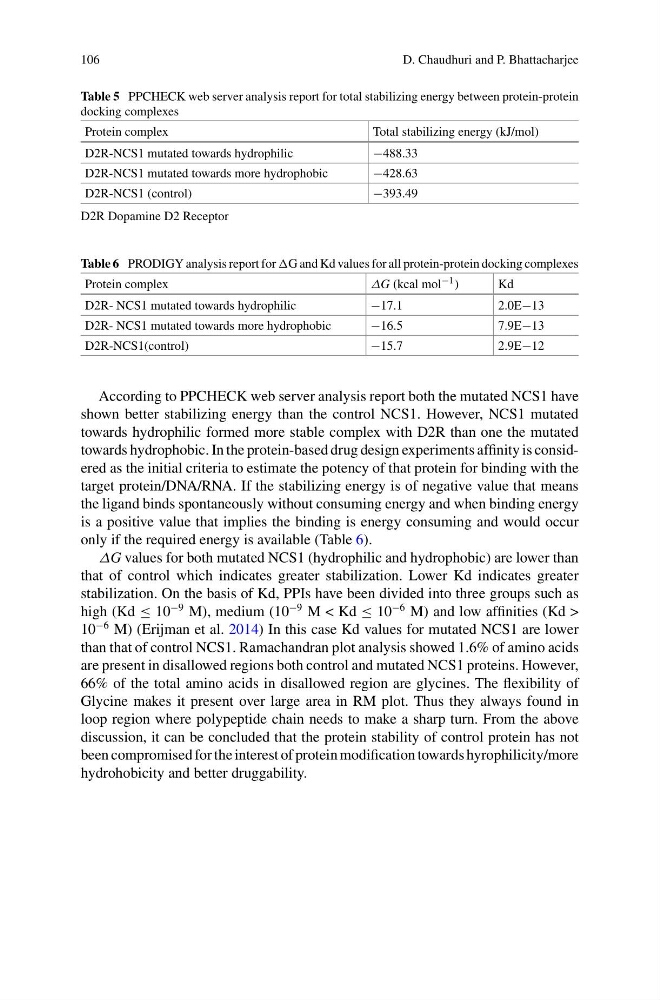
Table 5 PPCHECK web server analysis report for total stabilizing energy between protein-protein
docking complexes
Protein complex
Total stabilizing energy (kJ/mol)
D2R-NCS1 mutated towards hydrophilic
−488.33
D2R-NCS1 mutated towards more hydrophobic
−428.63
D2R-NCS1 (control)
−393.49
D2R Dopamine D2 Receptor
Table 6 PRODIGY analysis report for G and Kd values for all protein-protein docking complexes
Protein complex
ΔG (kcal mol −1 )
Kd
D2R- NCS1 mutated towards hydrophilic
−17.1
2.0E−13
D2R- NCS1 mutated towards more hydrophobic
−16.5
7.9E−13
D2R-NCS1(control)
−15.7
2.9E−12
According to PPCHECK web server analysis report both the mutated NCS1 have
shown better stabilizing energy than the control NCS1. However, NCS1 mutated
towards hydrophilic formed more stable complex with D2R than one the mutated
towards hydrophobic. In the protein-based drug design experiments affinity is considered as the initial criteria to estimate the potency of that protein for binding with the
target protein/DNA/RNA. If the stabilizing energy is of negative value that means
the ligand binds spontaneously without consuming energy and when binding energy
is a positive value that implies the binding is energy consuming and would occur
only if the required energy is available (Table 6).
ΔG values for both mutated NCS1 (hydrophilic and hydrophobic) are lower than
that of control which indicates greater stabilization. Lower Kd indicates greater
stabilization. On the basis of Kd, PPIs have been divided into three groups such as
high (Kd ≤ 10
−9 M), medium (10
−9 M < Kd ≤ 10
−6 M) and low affinities (Kd >
10
−6 M) (Erijman et al. 2014) In this case Kd values for mutated NCS1 are lower
than that of control NCS1. Ramachandran plot analysis showed 1.6% of amino acids
are present in disallowed regions both control and mutated NCS1 proteins. However,
66% of the total amino acids in disallowed region are glycines. The flexibility of
Glycine makes it present over large area in RM plot. Thus they always found in
loop region where polypeptide chain needs to make a sharp turn. From the above
discussion, it can be concluded that the protein stability of control protein has not
been compromised for the interest of protein modification towards hyrophilicity/more
hydrohobicity and better druggability.
D. Chaudhuri and P. Bhattacharjee
Table 5 PPCHECK web server analysis report for total stabilizing energy between protein-protein
docking complexes
Protein complex
Total stabilizing energy (kJ/mol)
D2R-NCS1 mutated towards hydrophilic
−488.33
D2R-NCS1 mutated towards more hydrophobic
−428.63
D2R-NCS1 (control)
−393.49
D2R Dopamine D2 Receptor
Table 6 PRODIGY analysis report for G and Kd values for all protein-protein docking complexes
Protein complex
ΔG (kcal mol −1 )
Kd
D2R- NCS1 mutated towards hydrophilic
−17.1
2.0E−13
D2R- NCS1 mutated towards more hydrophobic
−16.5
7.9E−13
D2R-NCS1(control)
−15.7
2.9E−12
According to PPCHECK web server analysis report both the mutated NCS1 have
shown better stabilizing energy than the control NCS1. However, NCS1 mutated
towards hydrophilic formed more stable complex with D2R than one the mutated
towards hydrophobic. In the protein-based drug design experiments affinity is considered as the initial criteria to estimate the potency of that protein for binding with the
target protein/DNA/RNA. If the stabilizing energy is of negative value that means
the ligand binds spontaneously without consuming energy and when binding energy
is a positive value that implies the binding is energy consuming and would occur
only if the required energy is available (Table 6).
ΔG values for both mutated NCS1 (hydrophilic and hydrophobic) are lower than
that of control which indicates greater stabilization. Lower Kd indicates greater
stabilization. On the basis of Kd, PPIs have been divided into three groups such as
high (Kd ≤ 10
−9 M), medium (10
−9 M < Kd ≤ 10
−6 M) and low affinities (Kd >
10
−6 M) (Erijman et al. 2014) In this case Kd values for mutated NCS1 are lower
than that of control NCS1. Ramachandran plot analysis showed 1.6% of amino acids
are present in disallowed regions both control and mutated NCS1 proteins. However,
66% of the total amino acids in disallowed region are glycines. The flexibility of
Glycine makes it present over large area in RM plot. Thus they always found in
loop region where polypeptide chain needs to make a sharp turn. From the above
discussion, it can be concluded that the protein stability of control protein has not
been compromised for the interest of protein modification towards hyrophilicity/more
hydrohobicity and better druggability.