

The Mechanical Performance of In Situ Processed …
13
Ni-10Ti-10C
Ni-5Ti-10C
Ni-5Ti-20C
50 μm
50 μm
50 μm
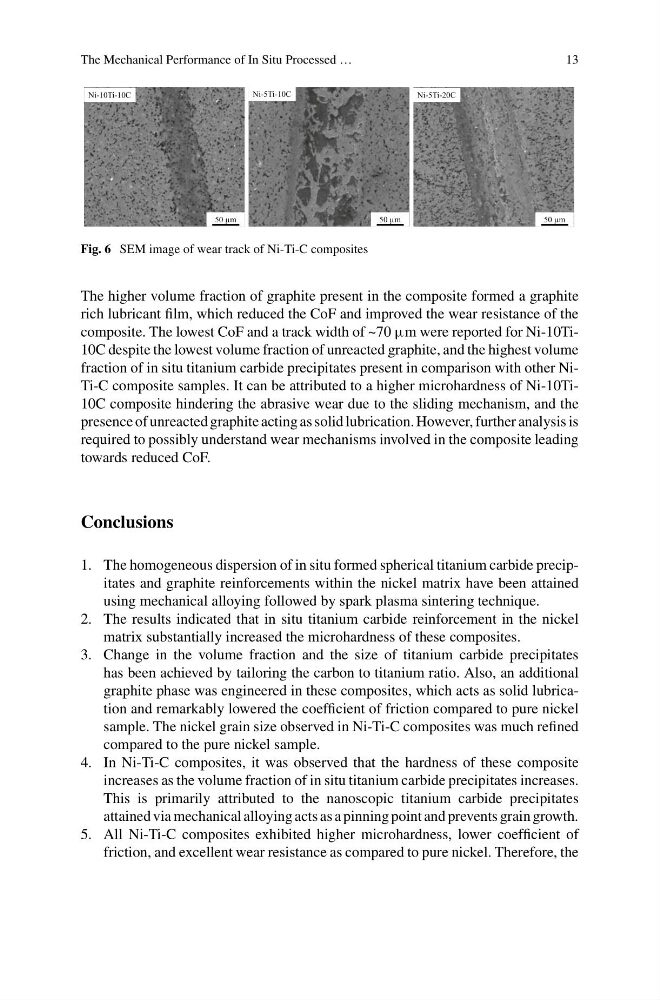
Fig. 6 SEM image of wear track of Ni-Ti-C composites
The higher volume fraction of graphite present in the composite formed a graphite
rich lubricant film, which reduced the CoF and improved the wear resistance of the
composite. The lowest CoF and a track width of ~70 µm were reported for Ni-10Ti10C despite the lowest volume fraction of unreacted graphite, and the highest volume
fraction of in situ titanium carbide precipitates present in comparison with other NiTi-C composite samples. It can be attributed to a higher microhardness of Ni-10Ti10C composite hindering the abrasive wear due to the sliding mechanism, and the
presence of unreacted graphite acting as solid lubrication. However, further analysis is
required to possibly understand wear mechanisms involved in the composite leading
towards reduced CoF.
Conclusions
1. The homogeneous dispersion of in situ formed spherical titanium carbide precipitates and graphite reinforcements within the nickel matrix have been attained
using mechanical alloying followed by spark plasma sintering technique.
2. The results indicated that in situ titanium carbide reinforcement in the nickel
matrix substantially increased the microhardness of these composites.
3. Change in the volume fraction and the size of titanium carbide precipitates
has been achieved by tailoring the carbon to titanium ratio. Also, an additional
graphite phase was engineered in these composites, which acts as solid lubrication and remarkably lowered the coefficient of friction compared to pure nickel
sample. The nickel grain size observed in Ni-Ti-C composites was much refined
compared to the pure nickel sample.
4. In Ni-Ti-C composites, it was observed that the hardness of these composite
increases as the volume fraction of in situ titanium carbide precipitates increases.
This is primarily attributed to the nanoscopic titanium carbide precipitates
attained via mechanical alloying acts as a pinning point and prevents grain growth.
5. All Ni-Ti-C composites exhibited higher microhardness, lower coefficient of
friction, and excellent wear resistance as compared to pure nickel. Therefore, the
13
Ni-10Ti-10C
Ni-5Ti-10C
Ni-5Ti-20C
50 μm
50 μm
50 μm
Fig. 6 SEM image of wear track of Ni-Ti-C composites
The higher volume fraction of graphite present in the composite formed a graphite
rich lubricant film, which reduced the CoF and improved the wear resistance of the
composite. The lowest CoF and a track width of ~70 µm were reported for Ni-10Ti10C despite the lowest volume fraction of unreacted graphite, and the highest volume
fraction of in situ titanium carbide precipitates present in comparison with other NiTi-C composite samples. It can be attributed to a higher microhardness of Ni-10Ti10C composite hindering the abrasive wear due to the sliding mechanism, and the
presence of unreacted graphite acting as solid lubrication. However, further analysis is
required to possibly understand wear mechanisms involved in the composite leading
towards reduced CoF.
Conclusions
1. The homogeneous dispersion of in situ formed spherical titanium carbide precipitates and graphite reinforcements within the nickel matrix have been attained
using mechanical alloying followed by spark plasma sintering technique.
2. The results indicated that in situ titanium carbide reinforcement in the nickel
matrix substantially increased the microhardness of these composites.
3. Change in the volume fraction and the size of titanium carbide precipitates
has been achieved by tailoring the carbon to titanium ratio. Also, an additional
graphite phase was engineered in these composites, which acts as solid lubrication and remarkably lowered the coefficient of friction compared to pure nickel
sample. The nickel grain size observed in Ni-Ti-C composites was much refined
compared to the pure nickel sample.
4. In Ni-Ti-C composites, it was observed that the hardness of these composite
increases as the volume fraction of in situ titanium carbide precipitates increases.
This is primarily attributed to the nanoscopic titanium carbide precipitates
attained via mechanical alloying acts as a pinning point and prevents grain growth.
5. All Ni-Ti-C composites exhibited higher microhardness, lower coefficient of
friction, and excellent wear resistance as compared to pure nickel. Therefore, the