

70
3 Single Molecule Non-cleavable Multiply Active Antibacterials
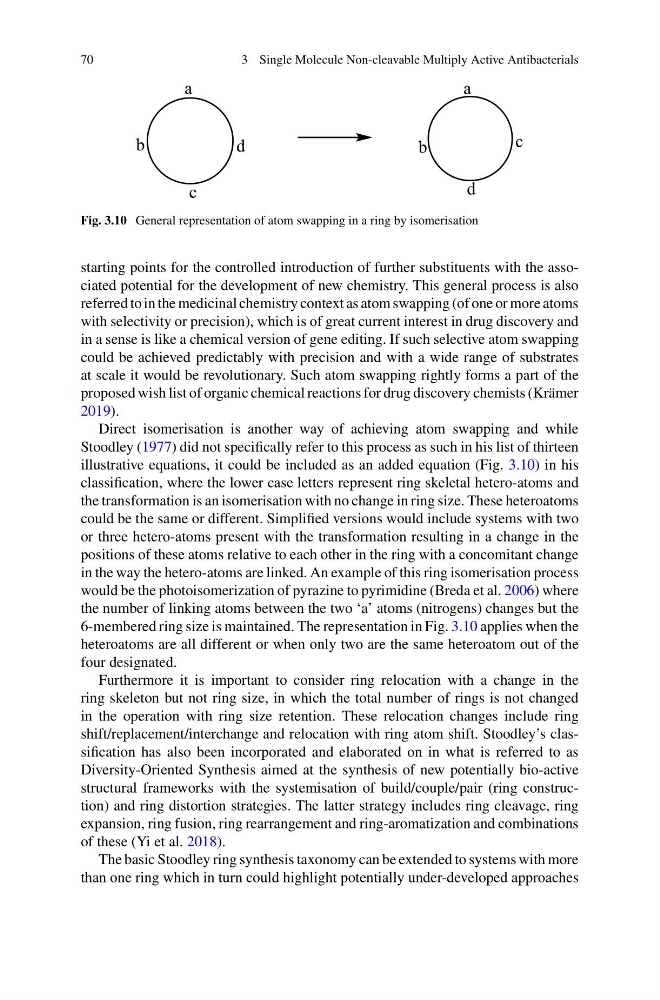
Fig. 3.10 General representation of atom swapping in a ring by isomerisation
starting points for the controlled introduction of further substituents with the associated potential for the development of new chemistry. This general process is also
referred to in the medicinal chemistry context as atom swapping (of one or more atoms
with selectivity or precision), which is of great current interest in drug discovery and
in a sense is like a chemical version of gene editing. If such selective atom swapping
could be achieved predictably with precision and with a wide range of substrates
at scale it would be revolutionary. Such atom swapping rightly forms a part of the
proposed wish list of organic chemical reactions for drug discovery chemists (Krämer
2019).
Direct isomerisation is another way of achieving atom swapping and while
Stoodley (1977) did not specifically refer to this process as such in his list of thirteen
illustrative equations, it could be included as an added equation (Fig. 3.10) in his
classification, where the lower case letters represent ring skeletal hetero-atoms and
the transformation is an isomerisation with no change in ring size. These heteroatoms
could be the same or different. Simplified versions would include systems with two
or three hetero-atoms present with the transformation resulting in a change in the
positions of these atoms relative to each other in the ring with a concomitant change
in the way the hetero-atoms are linked. An example of this ring isomerisation process
would be the photoisomerization of pyrazine to pyrimidine (Breda et al. 2006) where
the number of linking atoms between the two ‘a’ atoms (nitrogens) changes but the
6-membered ring size is maintained. The representation in Fig. 3.10 applies when the
heteroatoms are all different or when only two are the same heteroatom out of the
four designated.
Furthermore it is important to consider ring relocation with a change in the
ring skeleton but not ring size, in which the total number of rings is not changed
in the operation with ring size retention. These relocation changes include ring
shift/replacement/interchange and relocation with ring atom shift. Stoodley’s classification has also been incorporated and elaborated on in what is referred to as
Diversity-Oriented Synthesis aimed at the synthesis of new potentially bio-active
structural frameworks with the systemisation of build/couple/pair (ring construction) and ring distortion strategies. The latter strategy includes ring cleavage, ring
expansion, ring fusion, ring rearrangement and ring-aromatization and combinations
of these (Yi et al. 2018).
The basic Stoodley ring synthesis taxonomy can be extended to systems with more
than one ring which in turn could highlight potentially under-developed approaches
3 Single Molecule Non-cleavable Multiply Active Antibacterials
Fig. 3.10 General representation of atom swapping in a ring by isomerisation
starting points for the controlled introduction of further substituents with the associated potential for the development of new chemistry. This general process is also
referred to in the medicinal chemistry context as atom swapping (of one or more atoms
with selectivity or precision), which is of great current interest in drug discovery and
in a sense is like a chemical version of gene editing. If such selective atom swapping
could be achieved predictably with precision and with a wide range of substrates
at scale it would be revolutionary. Such atom swapping rightly forms a part of the
proposed wish list of organic chemical reactions for drug discovery chemists (Krämer
2019).
Direct isomerisation is another way of achieving atom swapping and while
Stoodley (1977) did not specifically refer to this process as such in his list of thirteen
illustrative equations, it could be included as an added equation (Fig. 3.10) in his
classification, where the lower case letters represent ring skeletal hetero-atoms and
the transformation is an isomerisation with no change in ring size. These heteroatoms
could be the same or different. Simplified versions would include systems with two
or three hetero-atoms present with the transformation resulting in a change in the
positions of these atoms relative to each other in the ring with a concomitant change
in the way the hetero-atoms are linked. An example of this ring isomerisation process
would be the photoisomerization of pyrazine to pyrimidine (Breda et al. 2006) where
the number of linking atoms between the two ‘a’ atoms (nitrogens) changes but the
6-membered ring size is maintained. The representation in Fig. 3.10 applies when the
heteroatoms are all different or when only two are the same heteroatom out of the
four designated.
Furthermore it is important to consider ring relocation with a change in the
ring skeleton but not ring size, in which the total number of rings is not changed
in the operation with ring size retention. These relocation changes include ring
shift/replacement/interchange and relocation with ring atom shift. Stoodley’s classification has also been incorporated and elaborated on in what is referred to as
Diversity-Oriented Synthesis aimed at the synthesis of new potentially bio-active
structural frameworks with the systemisation of build/couple/pair (ring construction) and ring distortion strategies. The latter strategy includes ring cleavage, ring
expansion, ring fusion, ring rearrangement and ring-aromatization and combinations
of these (Yi et al. 2018).
The basic Stoodley ring synthesis taxonomy can be extended to systems with more
than one ring which in turn could highlight potentially under-developed approaches