

36
2 Antibacterial Combinations
Fig. 2.12 Structure of the
β-lactamase inhibitor
relebactam
review also summarises a large amount of work over the past decade on mechanistic and structural aspects informing the design of inhibitors for the particularly
problematic New Delhi metallo-lactamase (NDM-1) enzyme (Linciano et al. 2019).
The triple combination of meropenem-piperacillin-tazobactam is a synergistic
one which suppresses resistance in MRSA (Gonzales et al. 2015). Bush (2015)
has published a commentary on this paper including a clear mechanism of action
representation in which tazobactam inhibits the staphylococcal penicillinase (Bla)
preventing it from hydrolysing the PBP2-binder, piperacillin. The third component,
meropenem, binds to PBP1 inhibiting transpetidation, as well at the allosteric site of
PBP2a and opening the active site for β-lactam binding. As a result of these binding
processes cell wall synthesis is inhibited.
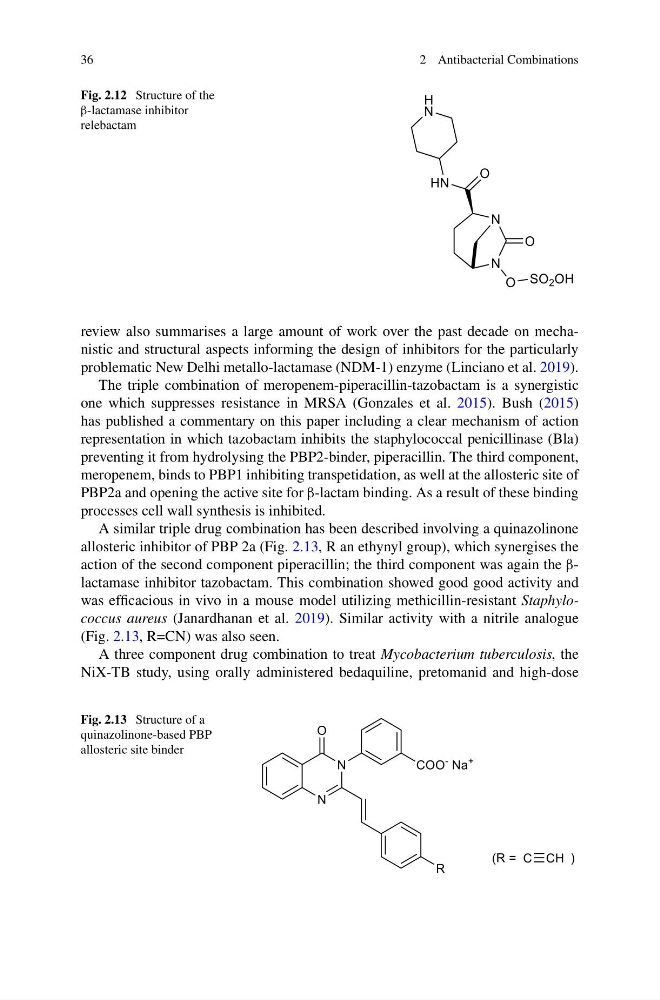
A similar triple drug combination has been described involving a quinazolinone
allosteric inhibitor of PBP 2a (Fig. 2.13, R an ethynyl group), which synergises the
action of the second component piperacillin; the third component was again the βlactamase inhibitor tazobactam. This combination showed good good activity and
was efficacious in vivo in a mouse model utilizing methicillin-resistant Staphylococcus aureus (Janardhanan et al. 2019). Similar activity with a nitrile analogue
(Fig. 2.13, R=CN) was also seen.
A three component drug combination to treat Mycobacterium tuberculosis, the
NiX-TB study, using orally administered bedaquiline, pretomanid and high-dose
Fig. 2.13 Structure of a
quinazolinone-based PBP
allosteric site binder
2 Antibacterial Combinations
Fig. 2.12 Structure of the
β-lactamase inhibitor
relebactam
review also summarises a large amount of work over the past decade on mechanistic and structural aspects informing the design of inhibitors for the particularly
problematic New Delhi metallo-lactamase (NDM-1) enzyme (Linciano et al. 2019).
The triple combination of meropenem-piperacillin-tazobactam is a synergistic
one which suppresses resistance in MRSA (Gonzales et al. 2015). Bush (2015)
has published a commentary on this paper including a clear mechanism of action
representation in which tazobactam inhibits the staphylococcal penicillinase (Bla)
preventing it from hydrolysing the PBP2-binder, piperacillin. The third component,
meropenem, binds to PBP1 inhibiting transpetidation, as well at the allosteric site of
PBP2a and opening the active site for β-lactam binding. As a result of these binding
processes cell wall synthesis is inhibited.
A similar triple drug combination has been described involving a quinazolinone
allosteric inhibitor of PBP 2a (Fig. 2.13, R an ethynyl group), which synergises the
action of the second component piperacillin; the third component was again the βlactamase inhibitor tazobactam. This combination showed good good activity and
was efficacious in vivo in a mouse model utilizing methicillin-resistant Staphylococcus aureus (Janardhanan et al. 2019). Similar activity with a nitrile analogue
(Fig. 2.13, R=CN) was also seen.
A three component drug combination to treat Mycobacterium tuberculosis, the
NiX-TB study, using orally administered bedaquiline, pretomanid and high-dose
Fig. 2.13 Structure of a
quinazolinone-based PBP
allosteric site binder