

2.1 Introduction
33
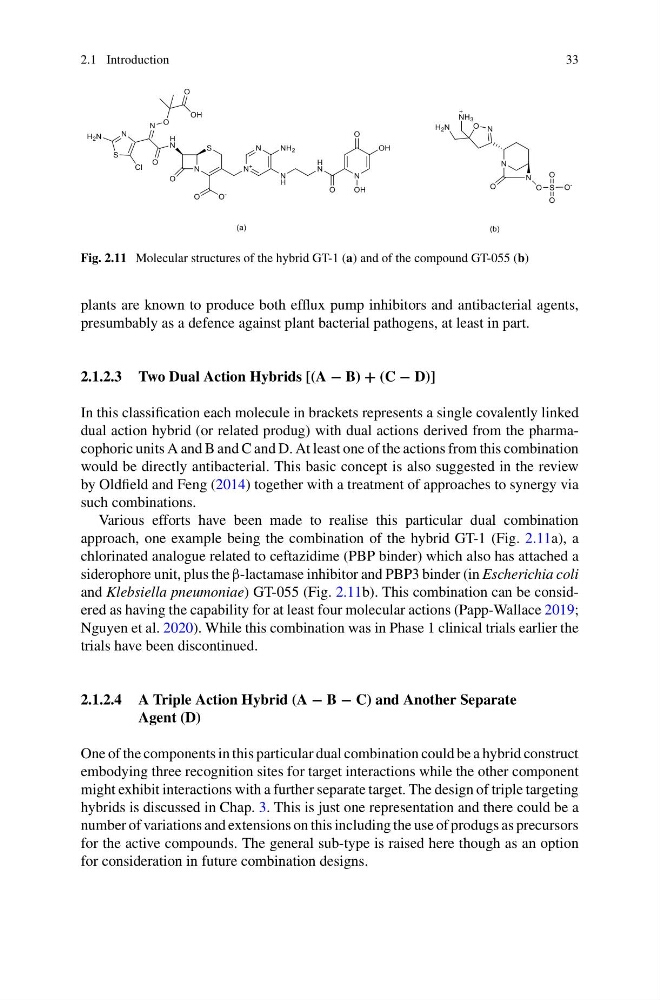
Fig. 2.11 Molecular structures of the hybrid GT-1 (a) and of the compound GT-055 (b)
plants are known to produce both efflux pump inhibitors and antibacterial agents,
presumbably as a defence against plant bacterial pathogens, at least in part.
2.1.2.3 Two Dual Action Hybrids [(A − B) + (C − D)]
In this classification each molecule in brackets represents a single covalently linked
dual action hybrid (or related produg) with dual actions derived from the pharmacophoric units A and B and C and D. At least one of the actions from this combination
would be directly antibacterial. This basic concept is also suggested in the review
by Oldfield and Feng (2014) together with a treatment of approaches to synergy via
such combinations.
Various efforts have been made to realise this particular dual combination
approach, one example being the combination of the hybrid GT-1 (Fig. 2.11a), a
chlorinated analogue related to ceftazidime (PBP binder) which also has attached a
siderophore unit, plus the β-lactamase inhibitor and PBP3 binder (in Escherichia coli
and Klebsiella pneumoniae) GT-055 (Fig. 2.11b). This combination can be considered as having the capability for at least four molecular actions (Papp-Wallace 2019;
Nguyen et al. 2020). While this combination was in Phase 1 clinical trials earlier the
trials have been discontinued.
2.1.2.4 A Triple Action Hybrid (A − B − C) and Another Separate
Agent (D)
One of the components in this particular dual combination could be a hybrid construct
embodying three recognition sites for target interactions while the other component
might exhibit interactions with a further separate target. The design of triple targeting
hybrids is discussed in Chap. 3. This is just one representation and there could be a
number of variations and extensions on this including the use of produgs as precursors
for the active compounds. The general sub-type is raised here though as an option
for consideration in future combination designs.
33
Fig. 2.11 Molecular structures of the hybrid GT-1 (a) and of the compound GT-055 (b)
plants are known to produce both efflux pump inhibitors and antibacterial agents,
presumbably as a defence against plant bacterial pathogens, at least in part.
2.1.2.3 Two Dual Action Hybrids [(A − B) + (C − D)]
In this classification each molecule in brackets represents a single covalently linked
dual action hybrid (or related produg) with dual actions derived from the pharmacophoric units A and B and C and D. At least one of the actions from this combination
would be directly antibacterial. This basic concept is also suggested in the review
by Oldfield and Feng (2014) together with a treatment of approaches to synergy via
such combinations.
Various efforts have been made to realise this particular dual combination
approach, one example being the combination of the hybrid GT-1 (Fig. 2.11a), a
chlorinated analogue related to ceftazidime (PBP binder) which also has attached a
siderophore unit, plus the β-lactamase inhibitor and PBP3 binder (in Escherichia coli
and Klebsiella pneumoniae) GT-055 (Fig. 2.11b). This combination can be considered as having the capability for at least four molecular actions (Papp-Wallace 2019;
Nguyen et al. 2020). While this combination was in Phase 1 clinical trials earlier the
trials have been discontinued.
2.1.2.4 A Triple Action Hybrid (A − B − C) and Another Separate
Agent (D)
One of the components in this particular dual combination could be a hybrid construct
embodying three recognition sites for target interactions while the other component
might exhibit interactions with a further separate target. The design of triple targeting
hybrids is discussed in Chap. 3. This is just one representation and there could be a
number of variations and extensions on this including the use of produgs as precursors
for the active compounds. The general sub-type is raised here though as an option
for consideration in future combination designs.