

152
4 Design Principles and Development of Prodrugs for Multiply …
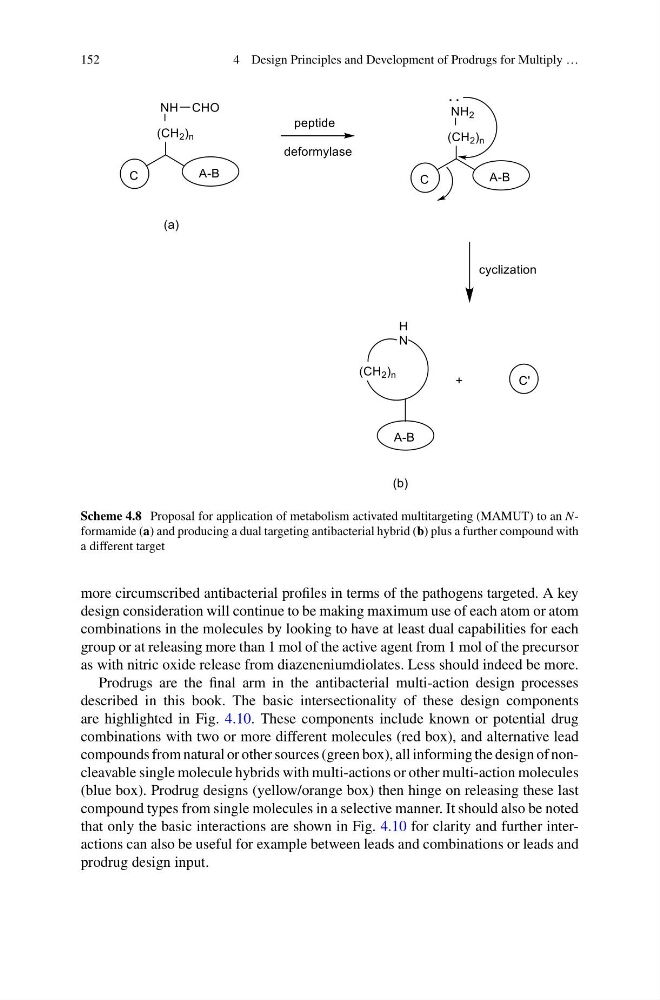
Scheme 4.8 Proposal for application of metabolism activated multitargeting (MAMUT) to an Nformamide (a) and producing a dual targeting antibacterial hybrid (b) plus a further compound with
a different target
more circumscribed antibacterial profiles in terms of the pathogens targeted. A key
design consideration will continue to be making maximum use of each atom or atom
combinations in the molecules by looking to have at least dual capabilities for each
group or at releasing more than 1 mol of the active agent from 1 mol of the precursor
as with nitric oxide release from diazeneniumdiolates. Less should indeed be more.
Prodrugs are the final arm in the antibacterial multi-action design processes
described in this book. The basic intersectionality of these design components
are highlighted in Fig. 4.10. These components include known or potential drug
combinations with two or more different molecules (red box), and alternative lead
compounds from natural or other sources (green box), all informing the design of noncleavable single molecule hybrids with multi-actions or other multi-action molecules
(blue box). Prodrug designs (yellow/orange box) then hinge on releasing these last
compound types from single molecules in a selective manner. It should also be noted
that only the basic interactions are shown in Fig. 4.10 for clarity and further interactions can also be useful for example between leads and combinations or leads and
prodrug design input.
4 Design Principles and Development of Prodrugs for Multiply …
Scheme 4.8 Proposal for application of metabolism activated multitargeting (MAMUT) to an Nformamide (a) and producing a dual targeting antibacterial hybrid (b) plus a further compound with
a different target
more circumscribed antibacterial profiles in terms of the pathogens targeted. A key
design consideration will continue to be making maximum use of each atom or atom
combinations in the molecules by looking to have at least dual capabilities for each
group or at releasing more than 1 mol of the active agent from 1 mol of the precursor
as with nitric oxide release from diazeneniumdiolates. Less should indeed be more.
Prodrugs are the final arm in the antibacterial multi-action design processes
described in this book. The basic intersectionality of these design components
are highlighted in Fig. 4.10. These components include known or potential drug
combinations with two or more different molecules (red box), and alternative lead
compounds from natural or other sources (green box), all informing the design of noncleavable single molecule hybrids with multi-actions or other multi-action molecules
(blue box). Prodrug designs (yellow/orange box) then hinge on releasing these last
compound types from single molecules in a selective manner. It should also be noted
that only the basic interactions are shown in Fig. 4.10 for clarity and further interactions can also be useful for example between leads and combinations or leads and
prodrug design input.