

1.2 Antibacterial Action
5
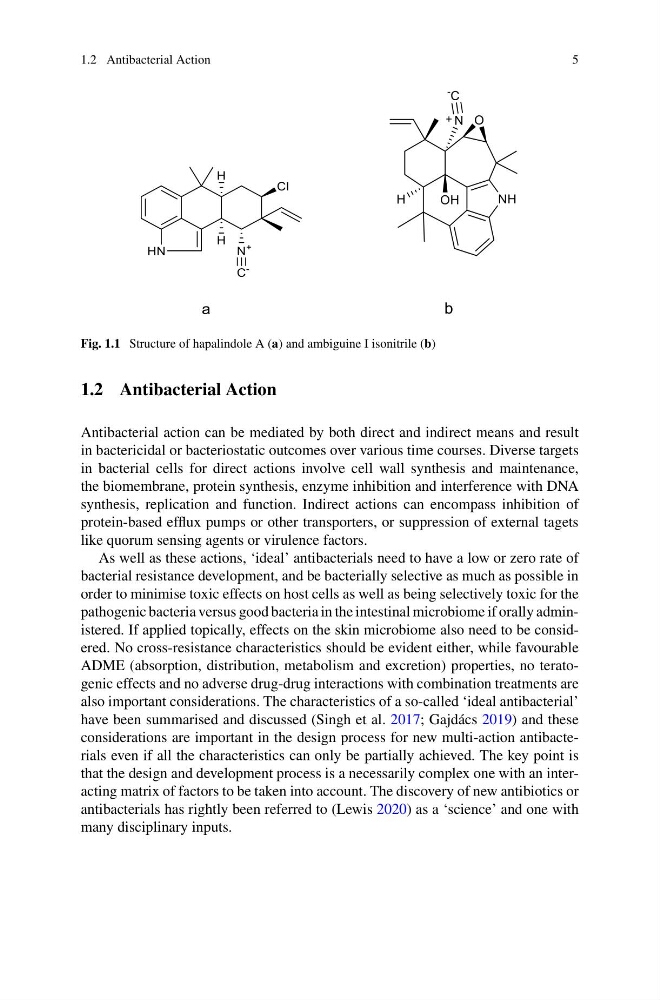
Fig. 1.1 Structure of hapalindole A (a) and ambiguine I isonitrile (b)
1.2 Antibacterial Action
Antibacterial action can be mediated by both direct and indirect means and result
in bactericidal or bacteriostatic outcomes over various time courses. Diverse targets
in bacterial cells for direct actions involve cell wall synthesis and maintenance,
the biomembrane, protein synthesis, enzyme inhibition and interference with DNA
synthesis, replication and function. Indirect actions can encompass inhibition of
protein-based efflux pumps or other transporters, or suppression of external tagets
like quorum sensing agents or virulence factors.
As well as these actions, ‘ideal’ antibacterials need to have a low or zero rate of
bacterial resistance development, and be bacterially selective as much as possible in
order to minimise toxic effects on host cells as well as being selectively toxic for the
pathogenic bacteria versus good bacteria in the intestinal microbiome if orally administered. If applied topically, effects on the skin microbiome also need to be considered. No cross-resistance characteristics should be evident either, while favourable
ADME (absorption, distribution, metabolism and excretion) properties, no teratogenic effects and no adverse drug-drug interactions with combination treatments are
also important considerations. The characteristics of a so-called ‘ideal antibacterial’
have been summarised and discussed (Singh et al. 2017; Gajdács 2019) and these
considerations are important in the design process for new multi-action antibacterials even if all the characteristics can only be partially achieved. The key point is
that the design and development process is a necessarily complex one with an interacting matrix of factors to be taken into account. The discovery of new antibiotics or
antibacterials has rightly been referred to (Lewis 2020) as a ‘science’ and one with
many disciplinary inputs.
5
Fig. 1.1 Structure of hapalindole A (a) and ambiguine I isonitrile (b)
1.2 Antibacterial Action
Antibacterial action can be mediated by both direct and indirect means and result
in bactericidal or bacteriostatic outcomes over various time courses. Diverse targets
in bacterial cells for direct actions involve cell wall synthesis and maintenance,
the biomembrane, protein synthesis, enzyme inhibition and interference with DNA
synthesis, replication and function. Indirect actions can encompass inhibition of
protein-based efflux pumps or other transporters, or suppression of external tagets
like quorum sensing agents or virulence factors.
As well as these actions, ‘ideal’ antibacterials need to have a low or zero rate of
bacterial resistance development, and be bacterially selective as much as possible in
order to minimise toxic effects on host cells as well as being selectively toxic for the
pathogenic bacteria versus good bacteria in the intestinal microbiome if orally administered. If applied topically, effects on the skin microbiome also need to be considered. No cross-resistance characteristics should be evident either, while favourable
ADME (absorption, distribution, metabolism and excretion) properties, no teratogenic effects and no adverse drug-drug interactions with combination treatments are
also important considerations. The characteristics of a so-called ‘ideal antibacterial’
have been summarised and discussed (Singh et al. 2017; Gajdács 2019) and these
considerations are important in the design process for new multi-action antibacterials even if all the characteristics can only be partially achieved. The key point is
that the design and development process is a necessarily complex one with an interacting matrix of factors to be taken into account. The discovery of new antibiotics or
antibacterials has rightly been referred to (Lewis 2020) as a ‘science’ and one with
many disciplinary inputs.