

96
3 Single Molecule Non-cleavable Multiply Active Antibacterials
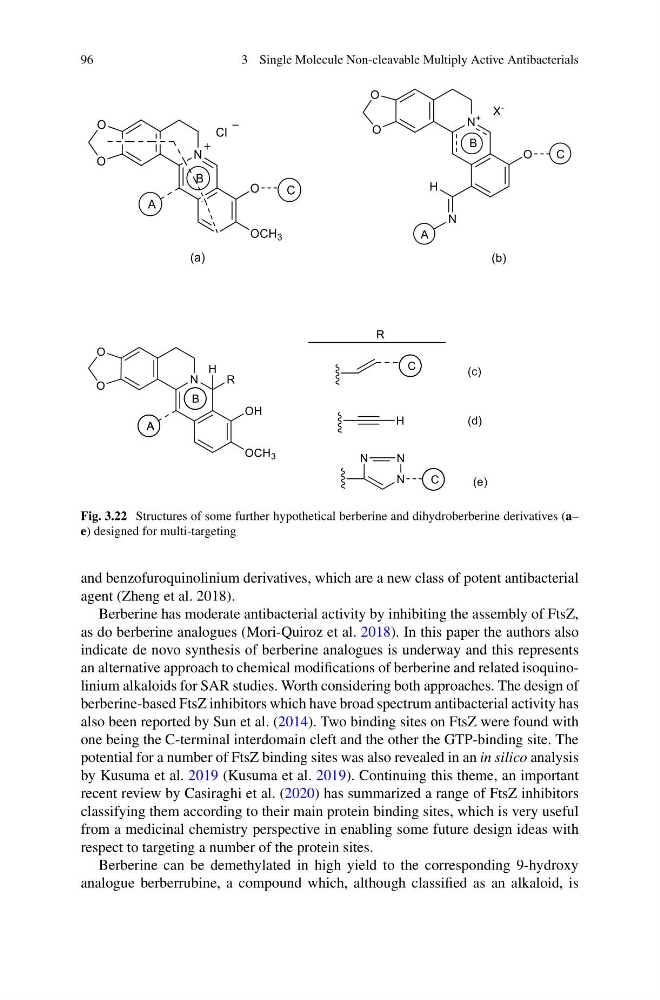
Fig. 3.22 Structures of some further hypothetical berberine and dihydroberberine derivatives (a–
e) designed for multi-targeting
and benzofuroquinolinium derivatives, which are a new class of potent antibacterial
agent (Zheng et al. 2018).
Berberine has moderate antibacterial activity by inhibiting the assembly of FtsZ,
as do berberine analogues (Mori-Quiroz et al. 2018). In this paper the authors also
indicate de novo synthesis of berberine analogues is underway and this represents
an alternative approach to chemical modifications of berberine and related isoquinolinium alkaloids for SAR studies. Worth considering both approaches. The design of
berberine-based FtsZ inhibitors which have broad spectrum antibacterial activity has
also been reported by Sun et al. (2014). Two binding sites on FtsZ were found with
one being the C-terminal interdomain cleft and the other the GTP-binding site. The
potential for a number of FtsZ binding sites was also revealed in an in silico analysis
by Kusuma et al. 2019 (Kusuma et al. 2019). Continuing this theme, an important
recent review by Casiraghi et al. (2020) has summarized a range of FtsZ inhibitors
classifying them according to their main protein binding sites, which is very useful
from a medicinal chemistry perspective in enabling some future design ideas with
respect to targeting a number of the protein sites.
Berberine can be demethylated in high yield to the corresponding 9-hydroxy
analogue berberrubine, a compound which, although classified as an alkaloid, is
3 Single Molecule Non-cleavable Multiply Active Antibacterials
Fig. 3.22 Structures of some further hypothetical berberine and dihydroberberine derivatives (a–
e) designed for multi-targeting
and benzofuroquinolinium derivatives, which are a new class of potent antibacterial
agent (Zheng et al. 2018).
Berberine has moderate antibacterial activity by inhibiting the assembly of FtsZ,
as do berberine analogues (Mori-Quiroz et al. 2018). In this paper the authors also
indicate de novo synthesis of berberine analogues is underway and this represents
an alternative approach to chemical modifications of berberine and related isoquinolinium alkaloids for SAR studies. Worth considering both approaches. The design of
berberine-based FtsZ inhibitors which have broad spectrum antibacterial activity has
also been reported by Sun et al. (2014). Two binding sites on FtsZ were found with
one being the C-terminal interdomain cleft and the other the GTP-binding site. The
potential for a number of FtsZ binding sites was also revealed in an in silico analysis
by Kusuma et al. 2019 (Kusuma et al. 2019). Continuing this theme, an important
recent review by Casiraghi et al. (2020) has summarized a range of FtsZ inhibitors
classifying them according to their main protein binding sites, which is very useful
from a medicinal chemistry perspective in enabling some future design ideas with
respect to targeting a number of the protein sites.
Berberine can be demethylated in high yield to the corresponding 9-hydroxy
analogue berberrubine, a compound which, although classified as an alkaloid, is