

response and provide a basis for systems biology interpretation, which deepens the
methodological understanding of cellular responses in the large-scale environment.
So far, investigations have shown that the exposure of cells to gradients leads to a
higher population heterogeneity under scale-down conditions. This was examined in
particular for protein concentrations in E. coli [80]. It was found that the dynamics of
glycolysis might play an important role in the development of non-growing subpopulations [81]. One way to observe this evolution of subpopulations with sufficient accuracy and time-resolution is the creation of a strain with a reporter protein
that can be quantified by fluorescence, which enables the application of
fluorescence-assisted characterization of single cells, and eventually cell sorting
[38, 76]. For example, the green fluorescence protein can be used, if coupled to
automated sampling, eventually coupled with a multiplexer, and spectroscopic
methods like flow cytometry, for a statistically proven detection of subpopulations
[82]. In P. putida cultivations, the change in DNA content in individual cells was
investigated under different environmental growth conditions with flow cytometric
analysis at various dilution rates in chemostat experiments. The impact of oxygen
deprivation, solvent exposure, and iron availability on DNA replication was also
investigated [83]. The application of flow cytometry and cell staining to characterize
population subgroups was described in several other studies as well [76, 84]. Nevertheless, this is a challenging technique to apply in bacteria due to their size. In
bacteria, the quantification based on fluorescence is subject to genetic noise [75],
which in this case might not be predominantly affected by large-scale cultivation
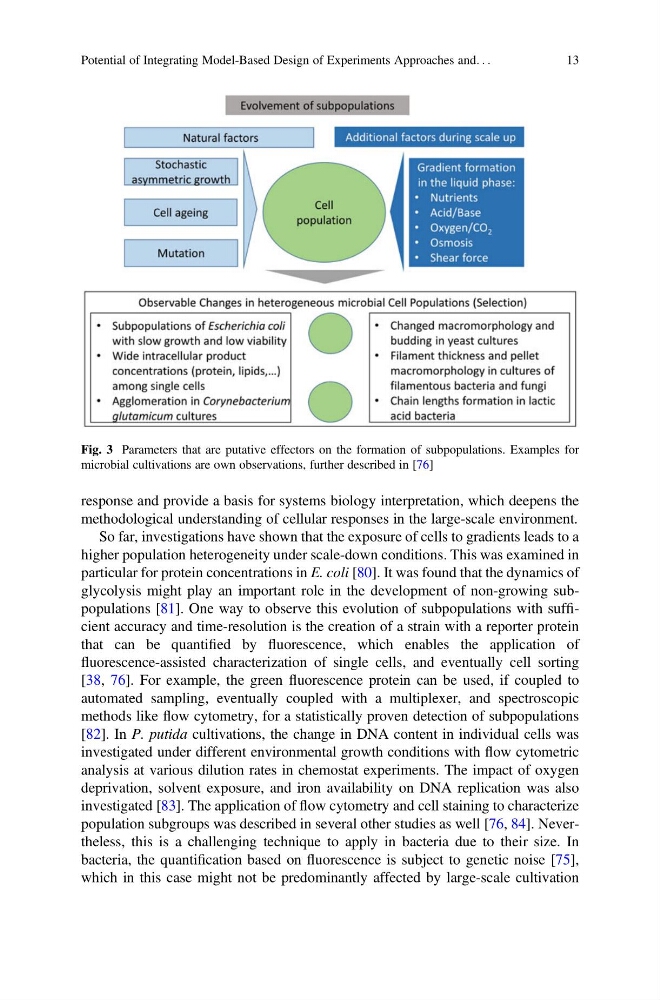
Fig. 3 Parameters that are putative effectors on the formation of subpopulations. Examples for
microbial cultivations are own observations, further described in [76]
Potential of Integrating Model-Based Design of Experiments Approaches and. . .
13
methodological understanding of cellular responses in the large-scale environment.
So far, investigations have shown that the exposure of cells to gradients leads to a
higher population heterogeneity under scale-down conditions. This was examined in
particular for protein concentrations in E. coli [80]. It was found that the dynamics of
glycolysis might play an important role in the development of non-growing subpopulations [81]. One way to observe this evolution of subpopulations with sufficient accuracy and time-resolution is the creation of a strain with a reporter protein
that can be quantified by fluorescence, which enables the application of
fluorescence-assisted characterization of single cells, and eventually cell sorting
[38, 76]. For example, the green fluorescence protein can be used, if coupled to
automated sampling, eventually coupled with a multiplexer, and spectroscopic
methods like flow cytometry, for a statistically proven detection of subpopulations
[82]. In P. putida cultivations, the change in DNA content in individual cells was
investigated under different environmental growth conditions with flow cytometric
analysis at various dilution rates in chemostat experiments. The impact of oxygen
deprivation, solvent exposure, and iron availability on DNA replication was also
investigated [83]. The application of flow cytometry and cell staining to characterize
population subgroups was described in several other studies as well [76, 84]. Nevertheless, this is a challenging technique to apply in bacteria due to their size. In
bacteria, the quantification based on fluorescence is subject to genetic noise [75],
which in this case might not be predominantly affected by large-scale cultivation
Fig. 3 Parameters that are putative effectors on the formation of subpopulations. Examples for
microbial cultivations are own observations, further described in [76]
Potential of Integrating Model-Based Design of Experiments Approaches and. . .
13