

50
5 Biomass Decomposition and Nanotechnology
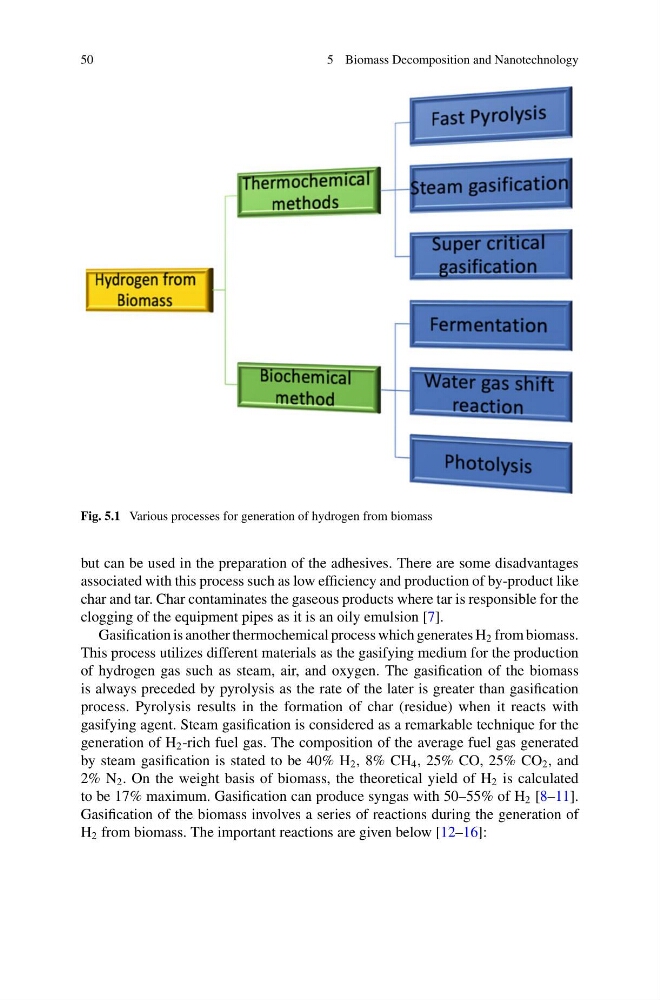
Fig. 5.1 Various processes for generation of hydrogen from biomass
but can be used in the preparation of the adhesives. There are some disadvantages
associated with this process such as low efficiency and production of by-product like
char and tar. Char contaminates the gaseous products where tar is responsible for the
clogging of the equipment pipes as it is an oily emulsion [7].
Gasification is another thermochemical process which generates H 2 from biomass.
This process utilizes different materials as the gasifying medium for the production
of hydrogen gas such as steam, air, and oxygen. The gasification of the biomass
is always preceded by pyrolysis as the rate of the later is greater than gasification
process. Pyrolysis results in the formation of char (residue) when it reacts with
gasifying agent. Steam gasification is considered as a remarkable technique for the
generation of H 2 -rich fuel gas. The composition of the average fuel gas generated
by steam gasification is stated to be 40% H 2 , 8% CH 4 , 25% CO, 25% CO 2 , and
2% N 2 . On the weight basis of biomass, the theoretical yield of H 2 is calculated
to be 17% maximum. Gasification can produce syngas with 50–55% of H 2 [8–11].
Gasification of the biomass involves a series of reactions during the generation of
H 2 from biomass. The important reactions are given below [12–16]:
5 Biomass Decomposition and Nanotechnology
Fig. 5.1 Various processes for generation of hydrogen from biomass
but can be used in the preparation of the adhesives. There are some disadvantages
associated with this process such as low efficiency and production of by-product like
char and tar. Char contaminates the gaseous products where tar is responsible for the
clogging of the equipment pipes as it is an oily emulsion [7].
Gasification is another thermochemical process which generates H 2 from biomass.
This process utilizes different materials as the gasifying medium for the production
of hydrogen gas such as steam, air, and oxygen. The gasification of the biomass
is always preceded by pyrolysis as the rate of the later is greater than gasification
process. Pyrolysis results in the formation of char (residue) when it reacts with
gasifying agent. Steam gasification is considered as a remarkable technique for the
generation of H 2 -rich fuel gas. The composition of the average fuel gas generated
by steam gasification is stated to be 40% H 2 , 8% CH 4 , 25% CO, 25% CO 2 , and
2% N 2 . On the weight basis of biomass, the theoretical yield of H 2 is calculated
to be 17% maximum. Gasification can produce syngas with 50–55% of H 2 [8–11].
Gasification of the biomass involves a series of reactions during the generation of
H 2 from biomass. The important reactions are given below [12–16]: