

3.2 Electromagnetism Analysis of Physical Anti-Collision …
83
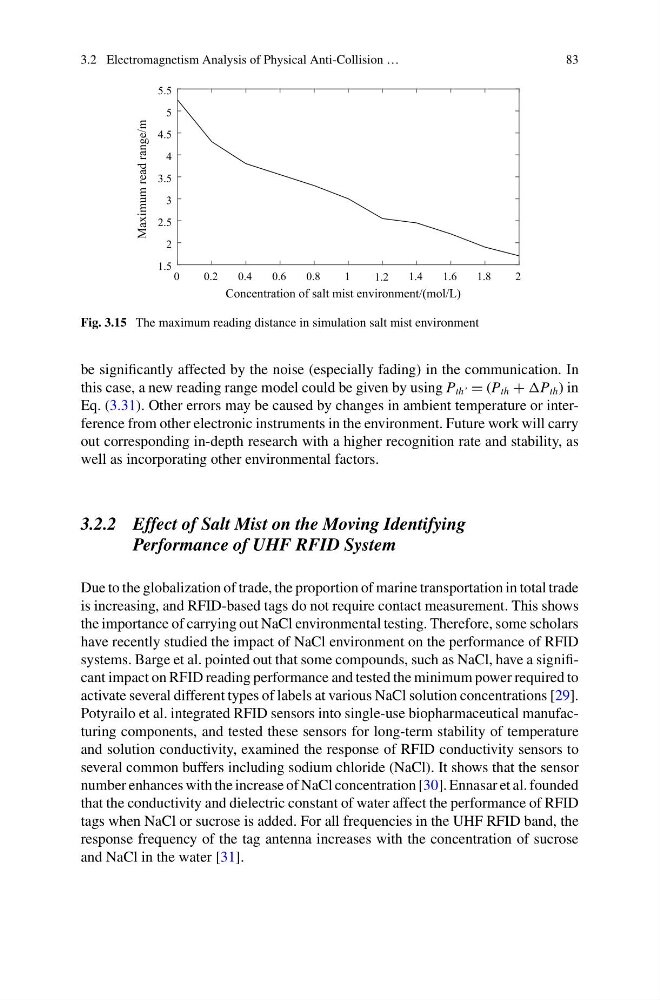
Fig. 3.15 The maximum reading distance in simulation salt mist environment
be significantly affected by the noise (especially fading) in the communication. In
this case, a new reading range model could be given by using P th’ = (P th + th ) in
Eq. (3.31). Other errors may be caused by changes in ambient temperature or interference from other electronic instruments in the environment. Future work will carry
out corresponding in-depth research with a higher recognition rate and stability, as
well as incorporating other environmental factors.
3.2.2 Effect of Salt Mist on the Moving Identifying
Performance of UHF RFID System
Due to the globalization of trade, the proportion of marine transportation in total trade
is increasing, and RFID-based tags do not require contact measurement. This shows
the importance of carrying out NaCl environmental testing. Therefore, some scholars
have recently studied the impact of NaCl environment on the performance of RFID
systems. Barge et al. pointed out that some compounds, such as NaCl, have a significant impact on RFID reading performance and tested the minimum power required to
activate several different types of labels at various NaCl solution concentrations [29].
Potyrailo et al. integrated RFID sensors into single-use biopharmaceutical manufacturing components, and tested these sensors for long-term stability of temperature
and solution conductivity, examined the response of RFID conductivity sensors to
several common buffers including sodium chloride (NaCl). It shows that the sensor
number enhances with the increase of NaCl concentration [30]. Ennasar et al. founded
that the conductivity and dielectric constant of water affect the performance of RFID
tags when NaCl or sucrose is added. For all frequencies in the UHF RFID band, the
response frequency of the tag antenna increases with the concentration of sucrose
and NaCl in the water [31].
83
Fig. 3.15 The maximum reading distance in simulation salt mist environment
be significantly affected by the noise (especially fading) in the communication. In
this case, a new reading range model could be given by using P th’ = (P th + th ) in
Eq. (3.31). Other errors may be caused by changes in ambient temperature or interference from other electronic instruments in the environment. Future work will carry
out corresponding in-depth research with a higher recognition rate and stability, as
well as incorporating other environmental factors.
3.2.2 Effect of Salt Mist on the Moving Identifying
Performance of UHF RFID System
Due to the globalization of trade, the proportion of marine transportation in total trade
is increasing, and RFID-based tags do not require contact measurement. This shows
the importance of carrying out NaCl environmental testing. Therefore, some scholars
have recently studied the impact of NaCl environment on the performance of RFID
systems. Barge et al. pointed out that some compounds, such as NaCl, have a significant impact on RFID reading performance and tested the minimum power required to
activate several different types of labels at various NaCl solution concentrations [29].
Potyrailo et al. integrated RFID sensors into single-use biopharmaceutical manufacturing components, and tested these sensors for long-term stability of temperature
and solution conductivity, examined the response of RFID conductivity sensors to
several common buffers including sodium chloride (NaCl). It shows that the sensor
number enhances with the increase of NaCl concentration [30]. Ennasar et al. founded
that the conductivity and dielectric constant of water affect the performance of RFID
tags when NaCl or sucrose is added. For all frequencies in the UHF RFID band, the
response frequency of the tag antenna increases with the concentration of sucrose
and NaCl in the water [31].