

14.3 Arc Discharge Processes with Difference Gases
517
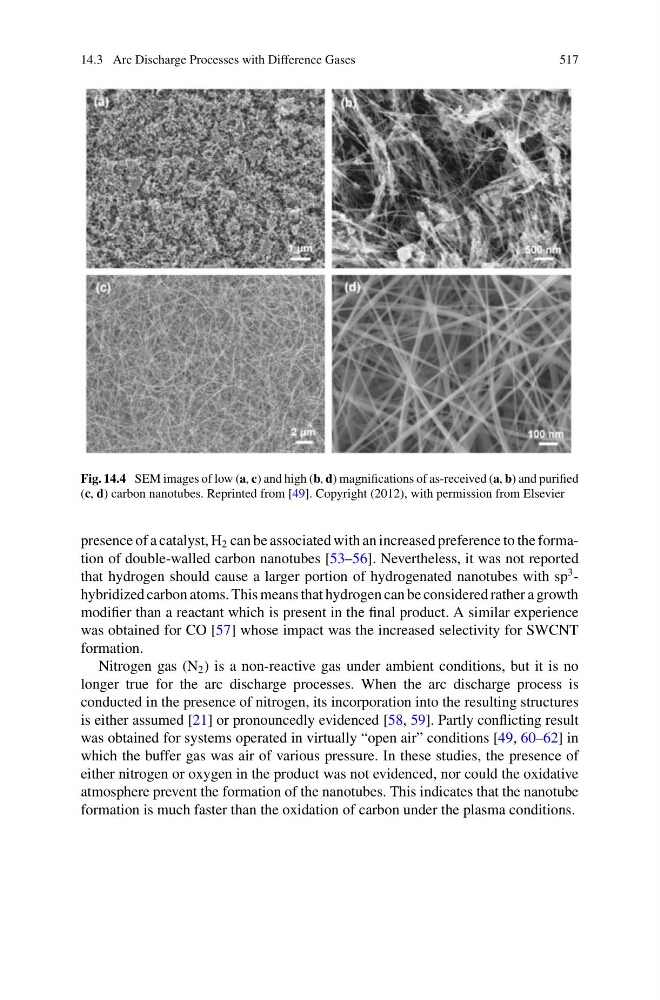
Fig. 14.4 SEM images of low (a, c) and high (b, d) magnifications of as-received (a, b) and purified
(c, d) carbon nanotubes. Reprinted from [49]. Copyright (2012), with permission from Elsevier
presence of a catalyst, H 2 can be associated with an increased preference to the formation of double-walled carbon nanotubes [53–56]. Nevertheless, it was not reported
that hydrogen should cause a larger portion of hydrogenated nanotubes with sp
3 -
hybridized carbon atoms. This means that hydrogen can be considered rather a growth
modifier than a reactant which is present in the final product. A similar experience
was obtained for CO [57] whose impact was the increased selectivity for SWCNT
formation.
Nitrogen gas (N 2 ) is a non-reactive gas under ambient conditions, but it is no
longer true for the arc discharge processes. When the arc discharge process is
conducted in the presence of nitrogen, its incorporation into the resulting structures
is either assumed [21] or pronouncedly evidenced [58, 59]. Partly conflicting result
was obtained for systems operated in virtually “open air” conditions [49, 60–62] in
which the buffer gas was air of various pressure. In these studies, the presence of
either nitrogen or oxygen in the product was not evidenced, nor could the oxidative
atmosphere prevent the formation of the nanotubes. This indicates that the nanotube
formation is much faster than the oxidation of carbon under the plasma conditions.
517
Fig. 14.4 SEM images of low (a, c) and high (b, d) magnifications of as-received (a, b) and purified
(c, d) carbon nanotubes. Reprinted from [49]. Copyright (2012), with permission from Elsevier
presence of a catalyst, H 2 can be associated with an increased preference to the formation of double-walled carbon nanotubes [53–56]. Nevertheless, it was not reported
that hydrogen should cause a larger portion of hydrogenated nanotubes with sp
3 -
hybridized carbon atoms. This means that hydrogen can be considered rather a growth
modifier than a reactant which is present in the final product. A similar experience
was obtained for CO [57] whose impact was the increased selectivity for SWCNT
formation.
Nitrogen gas (N 2 ) is a non-reactive gas under ambient conditions, but it is no
longer true for the arc discharge processes. When the arc discharge process is
conducted in the presence of nitrogen, its incorporation into the resulting structures
is either assumed [21] or pronouncedly evidenced [58, 59]. Partly conflicting result
was obtained for systems operated in virtually “open air” conditions [49, 60–62] in
which the buffer gas was air of various pressure. In these studies, the presence of
either nitrogen or oxygen in the product was not evidenced, nor could the oxidative
atmosphere prevent the formation of the nanotubes. This indicates that the nanotube
formation is much faster than the oxidation of carbon under the plasma conditions.