

462
12 Localized or Spatially Selective Electrodeposition Methods
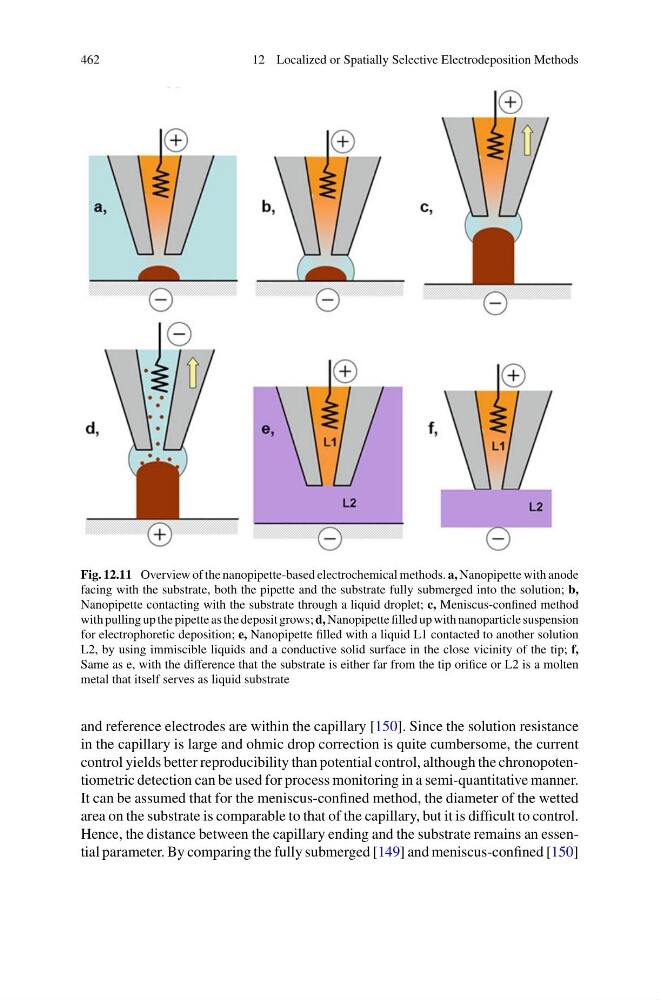
Fig. 12.11 Overview of the nanopipette-based electrochemical methods. a, Nanopipette with anode
facing with the substrate, both the pipette and the substrate fully submerged into the solution; b,
Nanopipette contacting with the substrate through a liquid droplet; c, Meniscus-confined method
with pulling up the pipette as the deposit grows; d, Nanopipette filled up with nanoparticle suspension
for electrophoretic deposition; e, Nanopipette filled with a liquid L1 contacted to another solution
L2, by using immiscible liquids and a conductive solid surface in the close vicinity of the tip; f,
Same as e, with the difference that the substrate is either far from the tip orifice or L2 is a molten
metal that itself serves as liquid substrate
and reference electrodes are within the capillary [150]. Since the solution resistance
in the capillary is large and ohmic drop correction is quite cumbersome, the current
control yields better reproducibility than potential control, although the chronopotentiometric detection can be used for process monitoring in a semi-quantitative manner.
It can be assumed that for the meniscus-confined method, the diameter of the wetted
area on the substrate is comparable to that of the capillary, but it is difficult to control.
Hence, the distance between the capillary ending and the substrate remains an essential parameter. By comparing the fully submerged [149] and meniscus-confined [150]
12 Localized or Spatially Selective Electrodeposition Methods
Fig. 12.11 Overview of the nanopipette-based electrochemical methods. a, Nanopipette with anode
facing with the substrate, both the pipette and the substrate fully submerged into the solution; b,
Nanopipette contacting with the substrate through a liquid droplet; c, Meniscus-confined method
with pulling up the pipette as the deposit grows; d, Nanopipette filled up with nanoparticle suspension
for electrophoretic deposition; e, Nanopipette filled with a liquid L1 contacted to another solution
L2, by using immiscible liquids and a conductive solid surface in the close vicinity of the tip; f,
Same as e, with the difference that the substrate is either far from the tip orifice or L2 is a molten
metal that itself serves as liquid substrate
and reference electrodes are within the capillary [150]. Since the solution resistance
in the capillary is large and ohmic drop correction is quite cumbersome, the current
control yields better reproducibility than potential control, although the chronopotentiometric detection can be used for process monitoring in a semi-quantitative manner.
It can be assumed that for the meniscus-confined method, the diameter of the wetted
area on the substrate is comparable to that of the capillary, but it is difficult to control.
Hence, the distance between the capillary ending and the substrate remains an essential parameter. By comparing the fully submerged [149] and meniscus-confined [150]