

12.4 Deposition with the Help of Tips
459
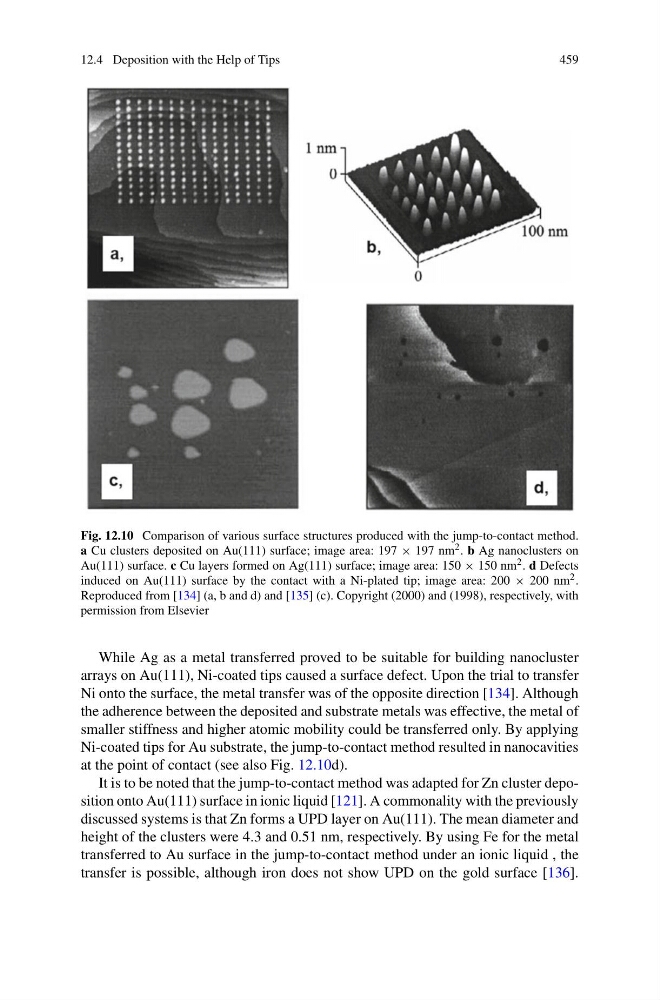
Fig. 12.10 Comparison of various surface structures produced with the jump-to-contact method.
a Cu clusters deposited on Au(111) surface; image area: 197 × 197 nm 2 . b Ag nanoclusters on
Au(111) surface. c Cu layers formed on Ag(111) surface; image area: 150 × 150 nm 2 . d Defects
induced on Au(111) surface by the contact with a Ni-plated tip; image area: 200 × 200 nm 2 .
Reproduced from [134] (a, b and d) and [135] (c). Copyright (2000) and (1998), respectively, with
permission from Elsevier
While Ag as a metal transferred proved to be suitable for building nanocluster
arrays on Au(111), Ni-coated tips caused a surface defect. Upon the trial to transfer
Ni onto the surface, the metal transfer was of the opposite direction [134]. Although
the adherence between the deposited and substrate metals was effective, the metal of
smaller stiffness and higher atomic mobility could be transferred only. By applying
Ni-coated tips for Au substrate, the jump-to-contact method resulted in nanocavities
at the point of contact (see also Fig. 12.10d).
It is to be noted that the jump-to-contact method was adapted for Zn cluster deposition onto Au(111) surface in ionic liquid [121]. A commonality with the previously
discussed systems is that Zn forms a UPD layer on Au(111). The mean diameter and
height of the clusters were 4.3 and 0.51 nm, respectively. By using Fe for the metal
transferred to Au surface in the jump-to-contact method under an ionic liquid , the
transfer is possible, although iron does not show UPD on the gold surface [136].
459
Fig. 12.10 Comparison of various surface structures produced with the jump-to-contact method.
a Cu clusters deposited on Au(111) surface; image area: 197 × 197 nm 2 . b Ag nanoclusters on
Au(111) surface. c Cu layers formed on Ag(111) surface; image area: 150 × 150 nm 2 . d Defects
induced on Au(111) surface by the contact with a Ni-plated tip; image area: 200 × 200 nm 2 .
Reproduced from [134] (a, b and d) and [135] (c). Copyright (2000) and (1998), respectively, with
permission from Elsevier
While Ag as a metal transferred proved to be suitable for building nanocluster
arrays on Au(111), Ni-coated tips caused a surface defect. Upon the trial to transfer
Ni onto the surface, the metal transfer was of the opposite direction [134]. Although
the adherence between the deposited and substrate metals was effective, the metal of
smaller stiffness and higher atomic mobility could be transferred only. By applying
Ni-coated tips for Au substrate, the jump-to-contact method resulted in nanocavities
at the point of contact (see also Fig. 12.10d).
It is to be noted that the jump-to-contact method was adapted for Zn cluster deposition onto Au(111) surface in ionic liquid [121]. A commonality with the previously
discussed systems is that Zn forms a UPD layer on Au(111). The mean diameter and
height of the clusters were 4.3 and 0.51 nm, respectively. By using Fe for the metal
transferred to Au surface in the jump-to-contact method under an ionic liquid , the
transfer is possible, although iron does not show UPD on the gold surface [136].