

352
10 Electrochemical Manufacturing Methods Based on Surface …
a
b
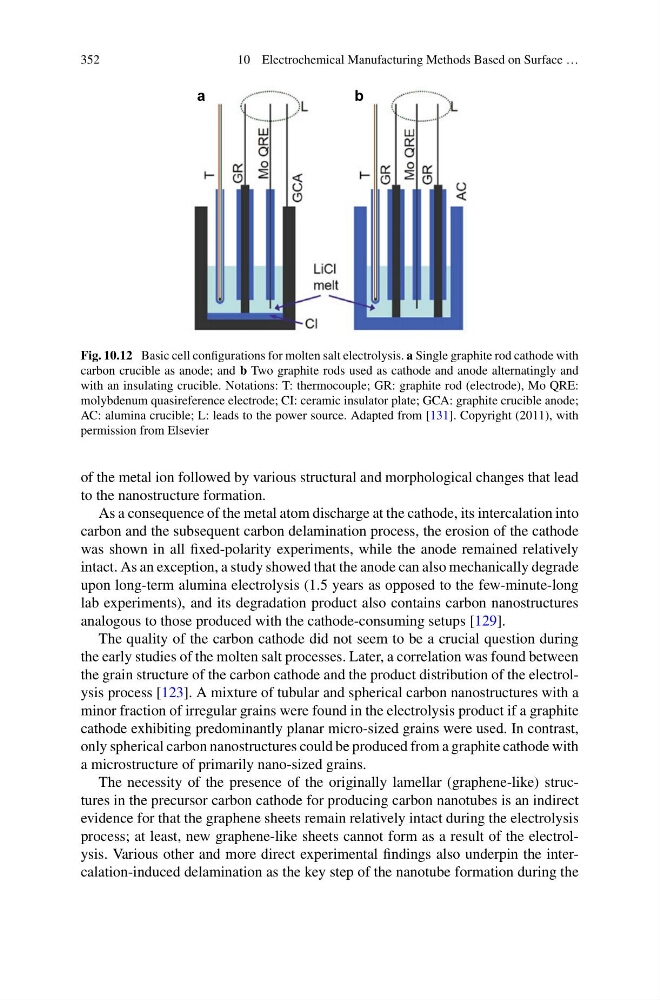
Fig. 10.12 Basic cell configurations for molten salt electrolysis. a Single graphite rod cathode with
carbon crucible as anode; and b Two graphite rods used as cathode and anode alternatingly and
with an insulating crucible. Notations: T: thermocouple; GR: graphite rod (electrode), Mo QRE:
molybdenum quasireference electrode; CI: ceramic insulator plate; GCA: graphite crucible anode;
AC: alumina crucible; L: leads to the power source. Adapted from [131]. Copyright (2011), with
permission from Elsevier
of the metal ion followed by various structural and morphological changes that lead
to the nanostructure formation.
As a consequence of the metal atom discharge at the cathode, its intercalation into
carbon and the subsequent carbon delamination process, the erosion of the cathode
was shown in all fixed-polarity experiments, while the anode remained relatively
intact. As an exception, a study showed that the anode can also mechanically degrade
upon long-term alumina electrolysis (1.5 years as opposed to the few-minute-long
lab experiments), and its degradation product also contains carbon nanostructures
analogous to those produced with the cathode-consuming setups [129].
The quality of the carbon cathode did not seem to be a crucial question during
the early studies of the molten salt processes. Later, a correlation was found between
the grain structure of the carbon cathode and the product distribution of the electrolysis process [123]. A mixture of tubular and spherical carbon nanostructures with a
minor fraction of irregular grains were found in the electrolysis product if a graphite
cathode exhibiting predominantly planar micro-sized grains were used. In contrast,
only spherical carbon nanostructures could be produced from a graphite cathode with
a microstructure of primarily nano-sized grains.
The necessity of the presence of the originally lamellar (graphene-like) structures in the precursor carbon cathode for producing carbon nanotubes is an indirect
evidence for that the graphene sheets remain relatively intact during the electrolysis
process; at least, new graphene-like sheets cannot form as a result of the electrolysis. Various other and more direct experimental findings also underpin the intercalation-induced delamination as the key step of the nanotube formation during the
10 Electrochemical Manufacturing Methods Based on Surface …
a
b
Fig. 10.12 Basic cell configurations for molten salt electrolysis. a Single graphite rod cathode with
carbon crucible as anode; and b Two graphite rods used as cathode and anode alternatingly and
with an insulating crucible. Notations: T: thermocouple; GR: graphite rod (electrode), Mo QRE:
molybdenum quasireference electrode; CI: ceramic insulator plate; GCA: graphite crucible anode;
AC: alumina crucible; L: leads to the power source. Adapted from [131]. Copyright (2011), with
permission from Elsevier
of the metal ion followed by various structural and morphological changes that lead
to the nanostructure formation.
As a consequence of the metal atom discharge at the cathode, its intercalation into
carbon and the subsequent carbon delamination process, the erosion of the cathode
was shown in all fixed-polarity experiments, while the anode remained relatively
intact. As an exception, a study showed that the anode can also mechanically degrade
upon long-term alumina electrolysis (1.5 years as opposed to the few-minute-long
lab experiments), and its degradation product also contains carbon nanostructures
analogous to those produced with the cathode-consuming setups [129].
The quality of the carbon cathode did not seem to be a crucial question during
the early studies of the molten salt processes. Later, a correlation was found between
the grain structure of the carbon cathode and the product distribution of the electrolysis process [123]. A mixture of tubular and spherical carbon nanostructures with a
minor fraction of irregular grains were found in the electrolysis product if a graphite
cathode exhibiting predominantly planar micro-sized grains were used. In contrast,
only spherical carbon nanostructures could be produced from a graphite cathode with
a microstructure of primarily nano-sized grains.
The necessity of the presence of the originally lamellar (graphene-like) structures in the precursor carbon cathode for producing carbon nanotubes is an indirect
evidence for that the graphene sheets remain relatively intact during the electrolysis
process; at least, new graphene-like sheets cannot form as a result of the electrolysis. Various other and more direct experimental findings also underpin the intercalation-induced delamination as the key step of the nanotube formation during the