

292
8 Porous Nanostructured Materials
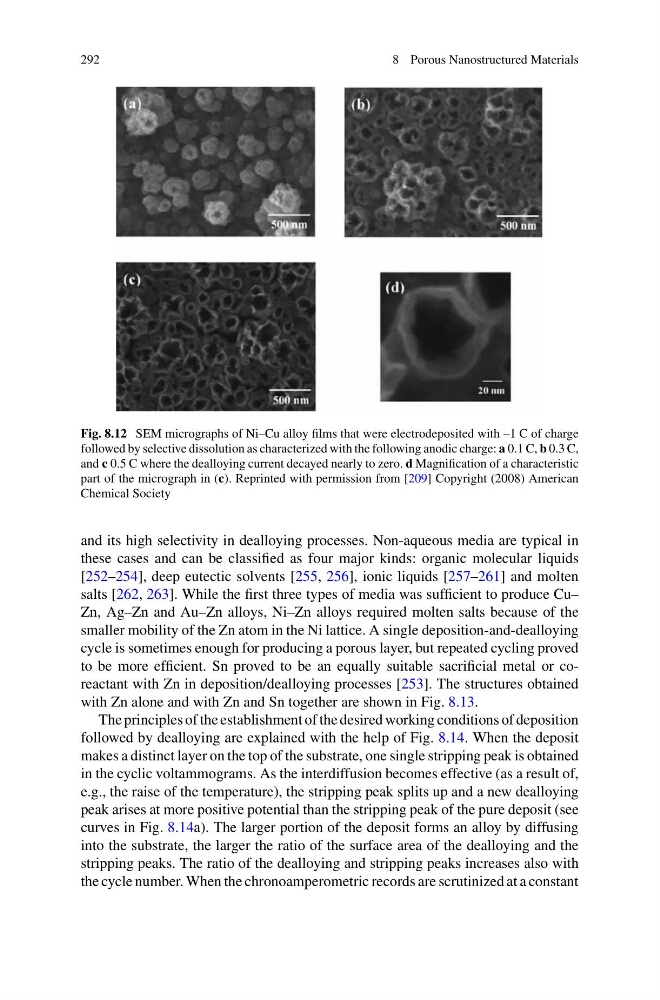
Fig. 8.12 SEM micrographs of Ni–Cu alloy films that were electrodeposited with –1 C of charge
followed by selective dissolution as characterized with the following anodic charge: a 0.1 C, b 0.3 C,
and c 0.5 C where the dealloying current decayed nearly to zero. d Magnification of a characteristic
part of the micrograph in (c). Reprinted with permission from [209] Copyright (2008) American
Chemical Society
and its high selectivity in dealloying processes. Non-aqueous media are typical in
these cases and can be classified as four major kinds: organic molecular liquids
[252–254], deep eutectic solvents [255, 256], ionic liquids [257–261] and molten
salts [262, 263]. While the first three types of media was sufficient to produce Cu–
Zn, Ag–Zn and Au–Zn alloys, Ni–Zn alloys required molten salts because of the
smaller mobility of the Zn atom in the Ni lattice. A single deposition-and-dealloying
cycle is sometimes enough for producing a porous layer, but repeated cycling proved
to be more efficient. Sn proved to be an equally suitable sacrificial metal or coreactant with Zn in deposition/dealloying processes [253]. The structures obtained
with Zn alone and with Zn and Sn together are shown in Fig. 8.13.
The principles of the establishment of the desired working conditions of deposition
followed by dealloying are explained with the help of Fig. 8.14. When the deposit
makes a distinct layer on the top of the substrate, one single stripping peak is obtained
in the cyclic voltammograms. As the interdiffusion becomes effective (as a result of,
e.g., the raise of the temperature), the stripping peak splits up and a new dealloying
peak arises at more positive potential than the stripping peak of the pure deposit (see
curves in Fig. 8.14a). The larger portion of the deposit forms an alloy by diffusing
into the substrate, the larger the ratio of the surface area of the dealloying and the
stripping peaks. The ratio of the dealloying and stripping peaks increases also with
the cycle number. When the chronoamperometric records are scrutinized at a constant
8 Porous Nanostructured Materials
Fig. 8.12 SEM micrographs of Ni–Cu alloy films that were electrodeposited with –1 C of charge
followed by selective dissolution as characterized with the following anodic charge: a 0.1 C, b 0.3 C,
and c 0.5 C where the dealloying current decayed nearly to zero. d Magnification of a characteristic
part of the micrograph in (c). Reprinted with permission from [209] Copyright (2008) American
Chemical Society
and its high selectivity in dealloying processes. Non-aqueous media are typical in
these cases and can be classified as four major kinds: organic molecular liquids
[252–254], deep eutectic solvents [255, 256], ionic liquids [257–261] and molten
salts [262, 263]. While the first three types of media was sufficient to produce Cu–
Zn, Ag–Zn and Au–Zn alloys, Ni–Zn alloys required molten salts because of the
smaller mobility of the Zn atom in the Ni lattice. A single deposition-and-dealloying
cycle is sometimes enough for producing a porous layer, but repeated cycling proved
to be more efficient. Sn proved to be an equally suitable sacrificial metal or coreactant with Zn in deposition/dealloying processes [253]. The structures obtained
with Zn alone and with Zn and Sn together are shown in Fig. 8.13.
The principles of the establishment of the desired working conditions of deposition
followed by dealloying are explained with the help of Fig. 8.14. When the deposit
makes a distinct layer on the top of the substrate, one single stripping peak is obtained
in the cyclic voltammograms. As the interdiffusion becomes effective (as a result of,
e.g., the raise of the temperature), the stripping peak splits up and a new dealloying
peak arises at more positive potential than the stripping peak of the pure deposit (see
curves in Fig. 8.14a). The larger portion of the deposit forms an alloy by diffusing
into the substrate, the larger the ratio of the surface area of the dealloying and the
stripping peaks. The ratio of the dealloying and stripping peaks increases also with
the cycle number. When the chronoamperometric records are scrutinized at a constant