

450
K. Rehak et al.
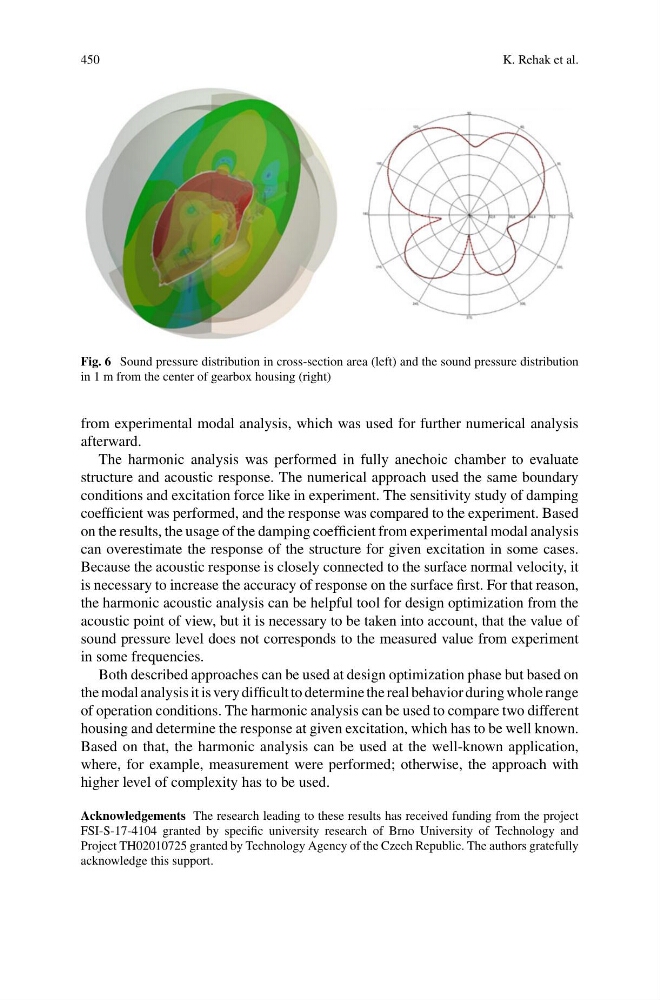
Fig. 6 Sound pressure distribution in cross-section area (left) and the sound pressure distribution
in 1 m from the center of gearbox housing (right)
from experimental modal analysis, which was used for further numerical analysis
afterward.
The harmonic analysis was performed in fully anechoic chamber to evaluate
structure and acoustic response. The numerical approach used the same boundary
conditions and excitation force like in experiment. The sensitivity study of damping
coefficient was performed, and the response was compared to the experiment. Based
on the results, the usage of the damping coefficient from experimental modal analysis
can overestimate the response of the structure for given excitation in some cases.
Because the acoustic response is closely connected to the surface normal velocity, it
is necessary to increase the accuracy of response on the surface first. For that reason,
the harmonic acoustic analysis can be helpful tool for design optimization from the
acoustic point of view, but it is necessary to be taken into account, that the value of
sound pressure level does not corresponds to the measured value from experiment
in some frequencies.
Both described approaches can be used at design optimization phase but based on
the modal analysis it is very difficult to determine the real behavior during whole range
of operation conditions. The harmonic analysis can be used to compare two different
housing and determine the response at given excitation, which has to be well known.
Based on that, the harmonic analysis can be used at the well-known application,
where, for example, measurement were performed; otherwise, the approach with
higher level of complexity has to be used.
Acknowledgements The research leading to these results has received funding from the project
FSI-S-17-4104 granted by specific university research of Brno University of Technology and
Project TH02010725 granted by Technology Agency of the Czech Republic. The authors gratefully
acknowledge this support.
K. Rehak et al.
Fig. 6 Sound pressure distribution in cross-section area (left) and the sound pressure distribution
in 1 m from the center of gearbox housing (right)
from experimental modal analysis, which was used for further numerical analysis
afterward.
The harmonic analysis was performed in fully anechoic chamber to evaluate
structure and acoustic response. The numerical approach used the same boundary
conditions and excitation force like in experiment. The sensitivity study of damping
coefficient was performed, and the response was compared to the experiment. Based
on the results, the usage of the damping coefficient from experimental modal analysis
can overestimate the response of the structure for given excitation in some cases.
Because the acoustic response is closely connected to the surface normal velocity, it
is necessary to increase the accuracy of response on the surface first. For that reason,
the harmonic acoustic analysis can be helpful tool for design optimization from the
acoustic point of view, but it is necessary to be taken into account, that the value of
sound pressure level does not corresponds to the measured value from experiment
in some frequencies.
Both described approaches can be used at design optimization phase but based on
the modal analysis it is very difficult to determine the real behavior during whole range
of operation conditions. The harmonic analysis can be used to compare two different
housing and determine the response at given excitation, which has to be well known.
Based on that, the harmonic analysis can be used at the well-known application,
where, for example, measurement were performed; otherwise, the approach with
higher level of complexity has to be used.
Acknowledgements The research leading to these results has received funding from the project
FSI-S-17-4104 granted by specific university research of Brno University of Technology and
Project TH02010725 granted by Technology Agency of the Czech Republic. The authors gratefully
acknowledge this support.