

297
directly be assessed with high throughput and in parallel in
vivo, i.e., without laborious intermediate steps such as protein
purification. Efficient in vivo assays largely fall into two clades:
first, screening assays are based on a readily measurable, often
colorimetric readout such as fluorescence; second, selection
systems link functionality of the hybrid variants to cell survival
or proliferation. In the example case of the chimerae between
BsYtvA LOV and the BjFixL histidine kinase, we resorted to
the pDusk- DsRed screening system which links hybrid receptor activity to expression of a DsRed fluorescent reporter gene
[10, 16]. Transformed cells are cultured at 37 °C on plate in
darkness or under constant blue light illumination (470 nm,
40 μW/cm
2
). Clones harboring functional hybrid variants that
expressed DsRed under the given incubation condition are
visually identified via observation of fluorescence through a
550-nm long- pass filter goggle. As detailed in Subheading 3.1
step 1, the template construct is incapacitated by a deliberate
frameshift between the two gene fragments recombined via
PATCHY. Screening for function is thus well suited to further
discriminate against the template construct (see Note 4).
6. Optional: As an alternative screening method, fluorescenceactivated cell sorting can be used, provided function of hybrids
is linked to a fluorescent readout [16] (see Note 7).
7. Storage of isolated hybrid variants: Clones with desirable phenotypes identified in the previous two steps are grown at 37 °C
to stationary phase. To this end, single wells of a 96-deep-well
microtiter plate are filled with 600 μL LB medium supplemented with the required antibiotic and are inoculated with a
linker length j BjFixL
linker length i BsYtvA
25
5
10
15 20
5
10
15
20
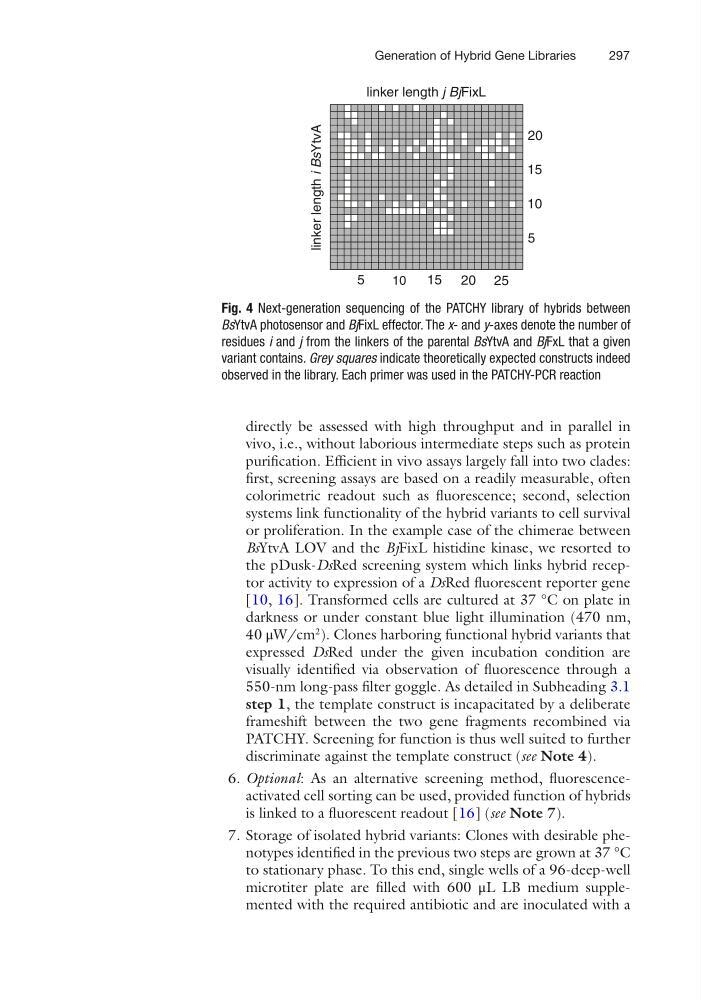
Fig. 4 Next-generation sequencing of the PATCHY library of hybrids between
BsYtvA photosensor and BjFixL effector. The x- and y-axes denote the number of
residues i and j from the linkers of the parental BsYtvA and BjFxL that a given
variant contains. Grey squares indicate theoretically expected constructs indeed
observed in the library. Each primer was used in the PATCHY-PCR reaction
Generation of Hybrid Gene Libraries
directly be assessed with high throughput and in parallel in
vivo, i.e., without laborious intermediate steps such as protein
purification. Efficient in vivo assays largely fall into two clades:
first, screening assays are based on a readily measurable, often
colorimetric readout such as fluorescence; second, selection
systems link functionality of the hybrid variants to cell survival
or proliferation. In the example case of the chimerae between
BsYtvA LOV and the BjFixL histidine kinase, we resorted to
the pDusk- DsRed screening system which links hybrid receptor activity to expression of a DsRed fluorescent reporter gene
[10, 16]. Transformed cells are cultured at 37 °C on plate in
darkness or under constant blue light illumination (470 nm,
40 μW/cm
2
). Clones harboring functional hybrid variants that
expressed DsRed under the given incubation condition are
visually identified via observation of fluorescence through a
550-nm long- pass filter goggle. As detailed in Subheading 3.1
step 1, the template construct is incapacitated by a deliberate
frameshift between the two gene fragments recombined via
PATCHY. Screening for function is thus well suited to further
discriminate against the template construct (see Note 4).
6. Optional: As an alternative screening method, fluorescenceactivated cell sorting can be used, provided function of hybrids
is linked to a fluorescent readout [16] (see Note 7).
7. Storage of isolated hybrid variants: Clones with desirable phenotypes identified in the previous two steps are grown at 37 °C
to stationary phase. To this end, single wells of a 96-deep-well
microtiter plate are filled with 600 μL LB medium supplemented with the required antibiotic and are inoculated with a
linker length j BjFixL
linker length i BsYtvA
25
5
10
15 20
5
10
15
20
Fig. 4 Next-generation sequencing of the PATCHY library of hybrids between
BsYtvA photosensor and BjFixL effector. The x- and y-axes denote the number of
residues i and j from the linkers of the parental BsYtvA and BjFxL that a given
variant contains. Grey squares indicate theoretically expected constructs indeed
observed in the library. Each primer was used in the PATCHY-PCR reaction
Generation of Hybrid Gene Libraries