

72
H. Zhu et al.
HN
O O
O
OH
HO
HN
O O
O
OH
O
HN
O O
O
OH
HN
O O
O
OH
HO
HN
O O
O
OH
O
HN
O O
O
OH
N
N
N
N
NH 2
HN
O O
O
N
N
N
N
NH 2
O
470 (alachalasin A)
471 (alachalasin B)
472 (alachalasin C)
473 (alachalasin D)
474 (alachalasin E)
475 (alachalasin F)
476 (alachalasin G)
477 (trichalasin A)
HN
O
O
O
OH
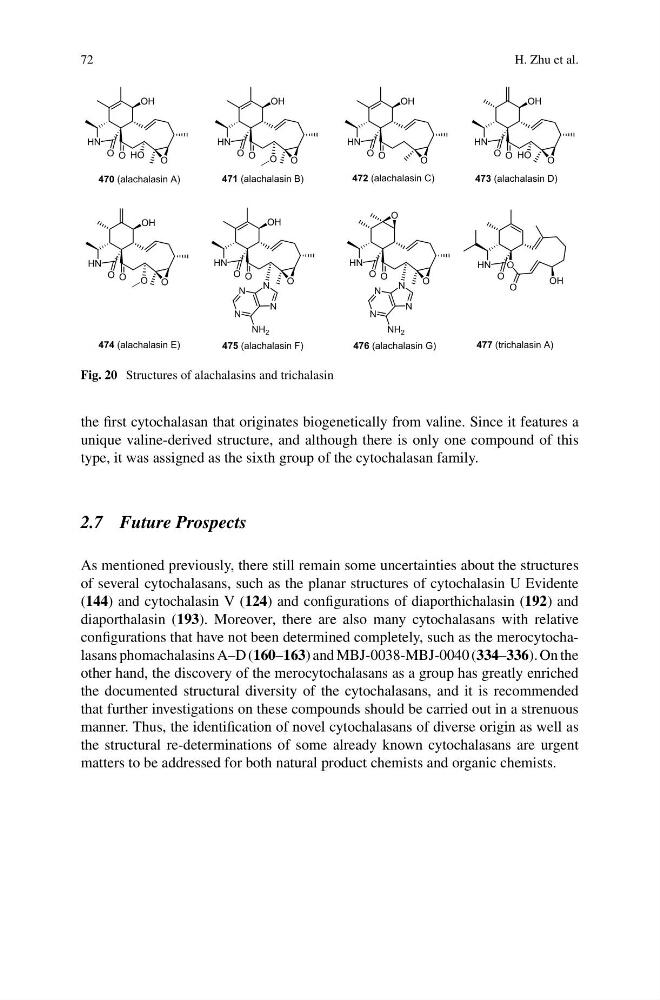
Fig. 20 Structures of alachalasins and trichalasin
the first cytochalasan that originates biogenetically from valine. Since it features a
unique valine-derived structure, and although there is only one compound of this
type, it was assigned as the sixth group of the cytochalasan family.
2.7 Future Prospects
As mentioned previously, there still remain some uncertainties about the structures
of several cytochalasans, such as the planar structures of cytochalasin U Evidente
(144) and cytochalasin V (124) and configurations of diaporthichalasin (192) and
diaporthalasin (193). Moreover, there are also many cytochalasans with relative
configurations that have not been determined completely, such as the merocytochalasans phomachalasins A–D (160–163) and MBJ-0038-MBJ-0040 (334–336). On the
other hand, the discovery of the merocytochalasans as a group has greatly enriched
the documented structural diversity of the cytochalasans, and it is recommended
that further investigations on these compounds should be carried out in a strenuous
manner. Thus, the identification of novel cytochalasans of diverse origin as well as
the structural re-determinations of some already known cytochalasans are urgent
matters to be addressed for both natural product chemists and organic chemists.
H. Zhu et al.
HN
O O
O
OH
HO
HN
O O
O
OH
O
HN
O O
O
OH
HN
O O
O
OH
HO
HN
O O
O
OH
O
HN
O O
O
OH
N
N
N
N
NH 2
HN
O O
O
N
N
N
N
NH 2
O
470 (alachalasin A)
471 (alachalasin B)
472 (alachalasin C)
473 (alachalasin D)
474 (alachalasin E)
475 (alachalasin F)
476 (alachalasin G)
477 (trichalasin A)
HN
O
O
O
OH
Fig. 20 Structures of alachalasins and trichalasin
the first cytochalasan that originates biogenetically from valine. Since it features a
unique valine-derived structure, and although there is only one compound of this
type, it was assigned as the sixth group of the cytochalasan family.
2.7 Future Prospects
As mentioned previously, there still remain some uncertainties about the structures
of several cytochalasans, such as the planar structures of cytochalasin U Evidente
(144) and cytochalasin V (124) and configurations of diaporthichalasin (192) and
diaporthalasin (193). Moreover, there are also many cytochalasans with relative
configurations that have not been determined completely, such as the merocytochalasans phomachalasins A–D (160–163) and MBJ-0038-MBJ-0040 (334–336). On the
other hand, the discovery of the merocytochalasans as a group has greatly enriched
the documented structural diversity of the cytochalasans, and it is recommended
that further investigations on these compounds should be carried out in a strenuous
manner. Thus, the identification of novel cytochalasans of diverse origin as well as
the structural re-determinations of some already known cytochalasans are urgent
matters to be addressed for both natural product chemists and organic chemists.