

218
N. N. Win and H. Morita
O
O
RO
O
O
O
O
R
2
O
O
O
HO
O
OH
O
O
O
OH
HO
O
361 (scopoletin) R = H
422 (scoparone) R = Me
423 (salicifoliol) R
1 = H, R
2 = OH
424 (glaberide I) R
1 = OMe, R
2 = H
249 (syringaresinol) R
1 = R
2 = OMe
425 (pinoresinol) R
1 = R
2 = H
426 (medioresinol) R
1 = H, R
2 = OMe
427 (matairesinol)
R
1
R
2
R
1
O
428 (secoisolariciresinol)
O
OH
HO
O
OH
HO
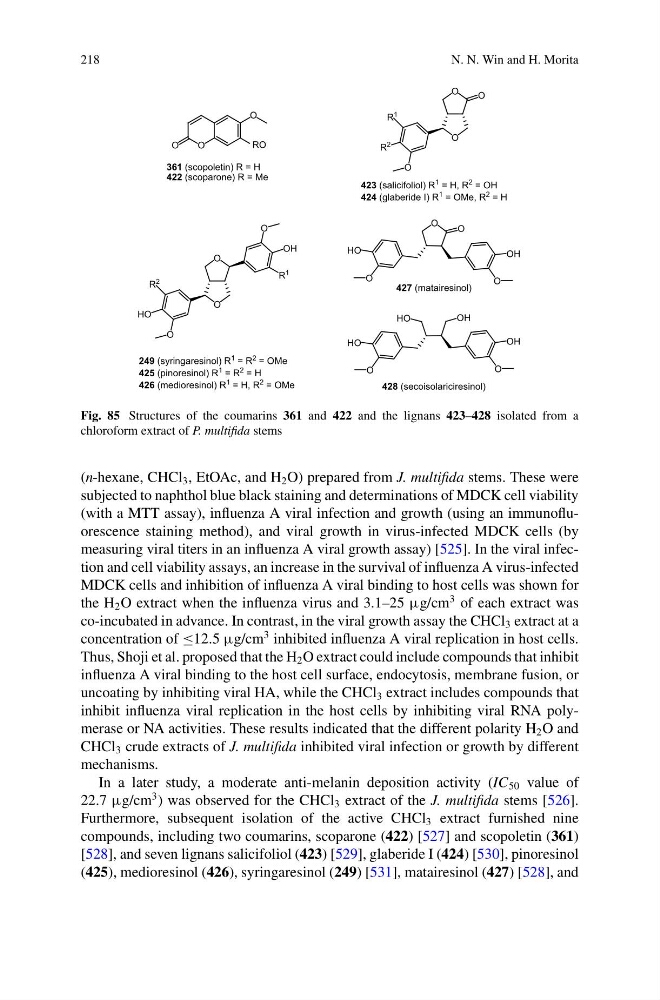
Fig. 85 Structures of the coumarins 361 and 422 and the lignans 423–428 isolated from a
chloroform extract of P. multifida stems
(n-hexane, CHCl 3 , EtOAc, and H 2 O) prepared from J. multifida stems. These were
subjected to naphthol blue black staining and determinations of MDCK cell viability
(with a MTT assay), influenza A viral infection and growth (using an immunofluorescence staining method), and viral growth in virus-infected MDCK cells (by
measuring viral titers in an influenza A viral growth assay) [525]. In the viral infection and cell viability assays, an increase in the survival of influenza A virus-infected
MDCK cells and inhibition of influenza A viral binding to host cells was shown for
the H 2 O extract when the influenza virus and 3.1–25 μg/cm
3 of each extract was
co-incubated in advance. In contrast, in the viral growth assay the CHCl 3 extract at a
concentration of ≤12.5 μg/cm
3 inhibited influenza A viral replication in host cells.
Thus, Shoji et al. proposed that the H 2 O extract could include compounds that inhibit
influenza A viral binding to the host cell surface, endocytosis, membrane fusion, or
uncoating by inhibiting viral HA, while the CHCl 3 extract includes compounds that
inhibit influenza viral replication in the host cells by inhibiting viral RNA polymerase or NA activities. These results indicated that the different polarity H 2 O and
CHCl 3 crude extracts of J. multifida inhibited viral infection or growth by different
mechanisms.
In a later study, a moderate anti-melanin deposition activity (IC 50 value of
22.7 μg/cm
3 ) was observed for the CHCl 3 extract of the J. multifida stems [526].
Furthermore, subsequent isolation of the active CHCl 3 extract furnished nine
compounds, including two coumarins, scoparone (422) [527] and scopoletin (361)
[528], and seven lignans salicifoliol (423) [529], glaberide I (424) [530], pinoresinol
(425), medioresinol (426), syringaresinol (249) [531], matairesinol (427) [528], and
N. N. Win and H. Morita
O
O
RO
O
O
O
O
R
2
O
O
O
HO
O
OH
O
O
O
OH
HO
O
361 (scopoletin) R = H
422 (scoparone) R = Me
423 (salicifoliol) R
1 = H, R
2 = OH
424 (glaberide I) R
1 = OMe, R
2 = H
249 (syringaresinol) R
1 = R
2 = OMe
425 (pinoresinol) R
1 = R
2 = H
426 (medioresinol) R
1 = H, R
2 = OMe
427 (matairesinol)
R
1
R
2
R
1
O
428 (secoisolariciresinol)
O
OH
HO
O
OH
HO
Fig. 85 Structures of the coumarins 361 and 422 and the lignans 423–428 isolated from a
chloroform extract of P. multifida stems
(n-hexane, CHCl 3 , EtOAc, and H 2 O) prepared from J. multifida stems. These were
subjected to naphthol blue black staining and determinations of MDCK cell viability
(with a MTT assay), influenza A viral infection and growth (using an immunofluorescence staining method), and viral growth in virus-infected MDCK cells (by
measuring viral titers in an influenza A viral growth assay) [525]. In the viral infection and cell viability assays, an increase in the survival of influenza A virus-infected
MDCK cells and inhibition of influenza A viral binding to host cells was shown for
the H 2 O extract when the influenza virus and 3.1–25 μg/cm
3 of each extract was
co-incubated in advance. In contrast, in the viral growth assay the CHCl 3 extract at a
concentration of ≤12.5 μg/cm
3 inhibited influenza A viral replication in host cells.
Thus, Shoji et al. proposed that the H 2 O extract could include compounds that inhibit
influenza A viral binding to the host cell surface, endocytosis, membrane fusion, or
uncoating by inhibiting viral HA, while the CHCl 3 extract includes compounds that
inhibit influenza viral replication in the host cells by inhibiting viral RNA polymerase or NA activities. These results indicated that the different polarity H 2 O and
CHCl 3 crude extracts of J. multifida inhibited viral infection or growth by different
mechanisms.
In a later study, a moderate anti-melanin deposition activity (IC 50 value of
22.7 μg/cm
3 ) was observed for the CHCl 3 extract of the J. multifida stems [526].
Furthermore, subsequent isolation of the active CHCl 3 extract furnished nine
compounds, including two coumarins, scoparone (422) [527] and scopoletin (361)
[528], and seven lignans salicifoliol (423) [529], glaberide I (424) [530], pinoresinol
(425), medioresinol (426), syringaresinol (249) [531], matairesinol (427) [528], and