

156
N. N. Win and H. Morita
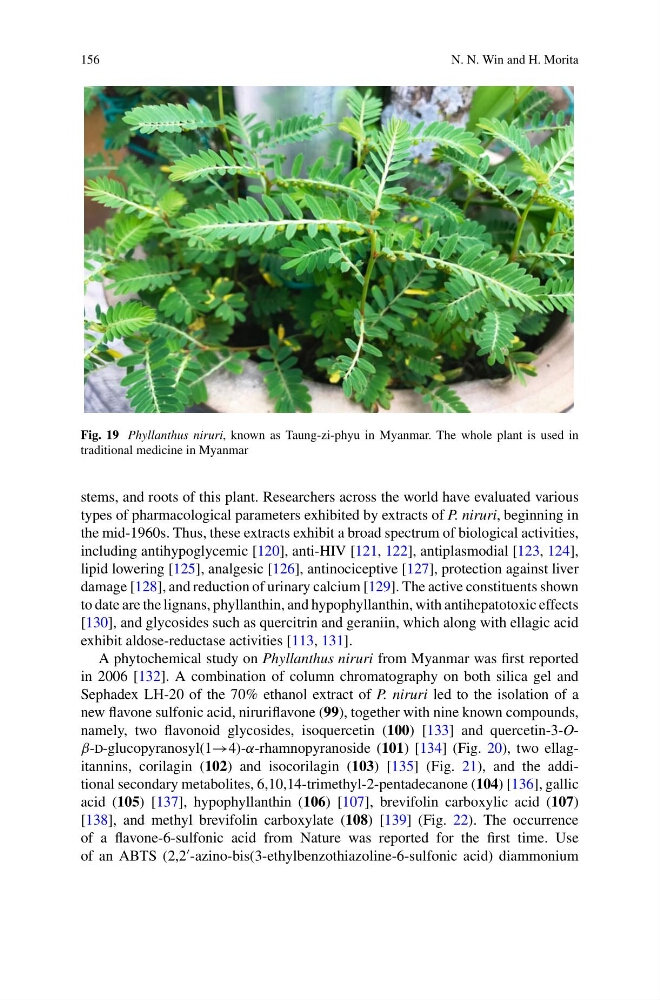
Fig. 19 Phyllanthus niruri, known as Taung-zi-phyu in Myanmar. The whole plant is used in
traditional medicine in Myanmar
stems, and roots of this plant. Researchers across the world have evaluated various
types of pharmacological parameters exhibited by extracts of P. niruri, beginning in
the mid-1960s. Thus, these extracts exhibit a broad spectrum of biological activities,
including antihypoglycemic [120], anti-HIV [121, 122], antiplasmodial [123, 124],
lipid lowering [125], analgesic [126], antinociceptive [127], protection against liver
damage [128], and reduction of urinary calcium [129]. The active constituents shown
to date are the lignans, phyllanthin, and hypophyllanthin, with antihepatotoxic effects
[130], and glycosides such as quercitrin and geraniin, which along with ellagic acid
exhibit aldose-reductase activities [113, 131].
A phytochemical study on Phyllanthus niruri from Myanmar was first reported
in 2006 [132]. A combination of column chromatography on both silica gel and
Sephadex LH-20 of the 70% ethanol extract of P. niruri led to the isolation of a
new flavone sulfonic acid, niruriflavone (99), together with nine known compounds,
namely, two flavonoid glycosides, isoquercetin (100) [133] and quercetin-3-Oβ-d-glucopyranosyl(1→4)-α-rhamnopyranoside (101) [134] (Fig. 20), two ellagitannins, corilagin (102) and isocorilagin (103) [135] (Fig. 21), and the additional secondary metabolites, 6,10,14-trimethyl-2-pentadecanone (104) [136], gallic
acid (105) [137], hypophyllanthin (106) [107], brevifolin carboxylic acid (107)
[138], and methyl brevifolin carboxylate (108) [139] (Fig. 22). The occurrence
of a flavone-6-sulfonic acid from Nature was reported for the first time. Use
of an ABTS (2,2
-azino-bis(3-ethylbenzothiazoline-6-sulfonic acid) diammonium
N. N. Win and H. Morita
Fig. 19 Phyllanthus niruri, known as Taung-zi-phyu in Myanmar. The whole plant is used in
traditional medicine in Myanmar
stems, and roots of this plant. Researchers across the world have evaluated various
types of pharmacological parameters exhibited by extracts of P. niruri, beginning in
the mid-1960s. Thus, these extracts exhibit a broad spectrum of biological activities,
including antihypoglycemic [120], anti-HIV [121, 122], antiplasmodial [123, 124],
lipid lowering [125], analgesic [126], antinociceptive [127], protection against liver
damage [128], and reduction of urinary calcium [129]. The active constituents shown
to date are the lignans, phyllanthin, and hypophyllanthin, with antihepatotoxic effects
[130], and glycosides such as quercitrin and geraniin, which along with ellagic acid
exhibit aldose-reductase activities [113, 131].
A phytochemical study on Phyllanthus niruri from Myanmar was first reported
in 2006 [132]. A combination of column chromatography on both silica gel and
Sephadex LH-20 of the 70% ethanol extract of P. niruri led to the isolation of a
new flavone sulfonic acid, niruriflavone (99), together with nine known compounds,
namely, two flavonoid glycosides, isoquercetin (100) [133] and quercetin-3-Oβ-d-glucopyranosyl(1→4)-α-rhamnopyranoside (101) [134] (Fig. 20), two ellagitannins, corilagin (102) and isocorilagin (103) [135] (Fig. 21), and the additional secondary metabolites, 6,10,14-trimethyl-2-pentadecanone (104) [136], gallic
acid (105) [137], hypophyllanthin (106) [107], brevifolin carboxylic acid (107)
[138], and methyl brevifolin carboxylate (108) [139] (Fig. 22). The occurrence
of a flavone-6-sulfonic acid from Nature was reported for the first time. Use
of an ABTS (2,2
-azino-bis(3-ethylbenzothiazoline-6-sulfonic acid) diammonium