

4.1 The Sterrewacht Leiden
47
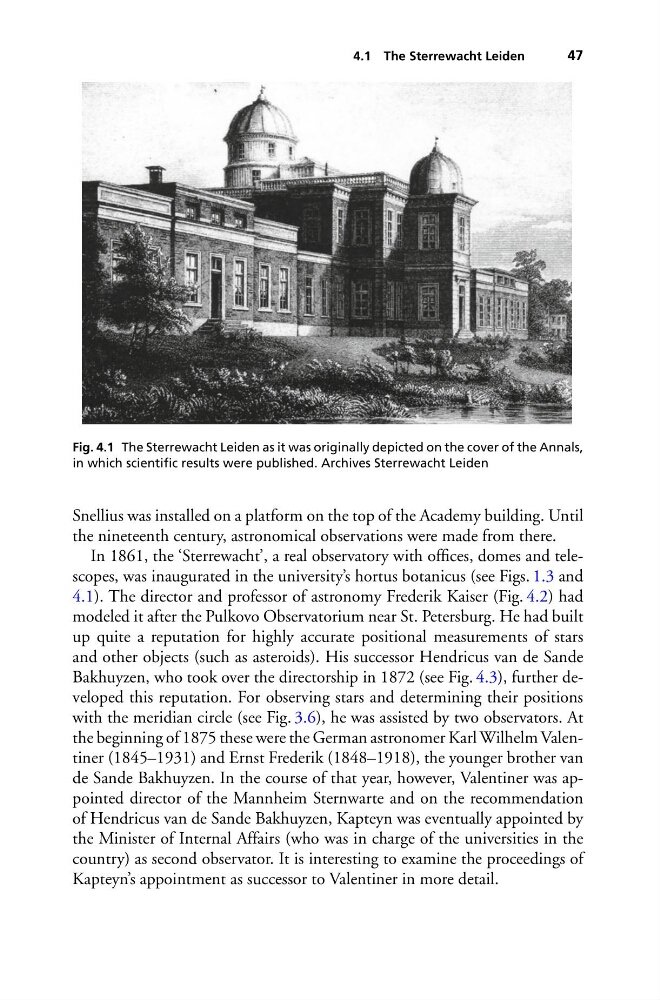
Fig. 4.1 The Sterrewacht Leiden as it was originally depicted on the cover of the Annals,
in which scientific results were published. Archives Sterrewacht Leiden
Snellius was installed on a platform on the top of the Academy building. Until
the nineteenth century, astronomical observations were made from there.
In 1861, the ‘Sterrewacht’, a real observatory with offices, domes and telescopes, was inaugurated in the university’s hortus botanicus (see Figs. 1.3 and
4.1). The director and professor of astronomy Frederik Kaiser (Fig. 4.2) had
modeled it after the Pulkovo Observatorium near St. Petersburg. He had built
up quite a reputation for highly accurate positional measurements of stars
and other objects (such as asteroids). His successor Hendricus van de Sande
Bakhuyzen, who took over the directorship in 1872 (see Fig. 4.3), further developed this reputation. For observing stars and determining their positions
with the meridian circle (see Fig. 3.6), he was assisted by two observators. At
the beginning of 1875 these were the German astronomer Karl Wilhelm Valentiner (1845–1931) and Ernst Frederik (1848–1918), the younger brother van
de Sande Bakhuyzen. In the course of that year, however, Valentiner was appointed director of the Mannheim Sternwarte and on the recommendation
of Hendricus van de Sande Bakhuyzen, Kapteyn was eventually appointed by
the Minister of Internal Affairs (who was in charge of the universities in the
country) as second observator. It is interesting to examine the proceedings of
Kapteyn’s appointment as successor to Valentiner in more detail.
47
Fig. 4.1 The Sterrewacht Leiden as it was originally depicted on the cover of the Annals,
in which scientific results were published. Archives Sterrewacht Leiden
Snellius was installed on a platform on the top of the Academy building. Until
the nineteenth century, astronomical observations were made from there.
In 1861, the ‘Sterrewacht’, a real observatory with offices, domes and telescopes, was inaugurated in the university’s hortus botanicus (see Figs. 1.3 and
4.1). The director and professor of astronomy Frederik Kaiser (Fig. 4.2) had
modeled it after the Pulkovo Observatorium near St. Petersburg. He had built
up quite a reputation for highly accurate positional measurements of stars
and other objects (such as asteroids). His successor Hendricus van de Sande
Bakhuyzen, who took over the directorship in 1872 (see Fig. 4.3), further developed this reputation. For observing stars and determining their positions
with the meridian circle (see Fig. 3.6), he was assisted by two observators. At
the beginning of 1875 these were the German astronomer Karl Wilhelm Valentiner (1845–1931) and Ernst Frederik (1848–1918), the younger brother van
de Sande Bakhuyzen. In the course of that year, however, Valentiner was appointed director of the Mannheim Sternwarte and on the recommendation
of Hendricus van de Sande Bakhuyzen, Kapteyn was eventually appointed by
the Minister of Internal Affairs (who was in charge of the universities in the
country) as second observator. It is interesting to examine the proceedings of
Kapteyn’s appointment as successor to Valentiner in more detail.