

2.2 Utrecht
19
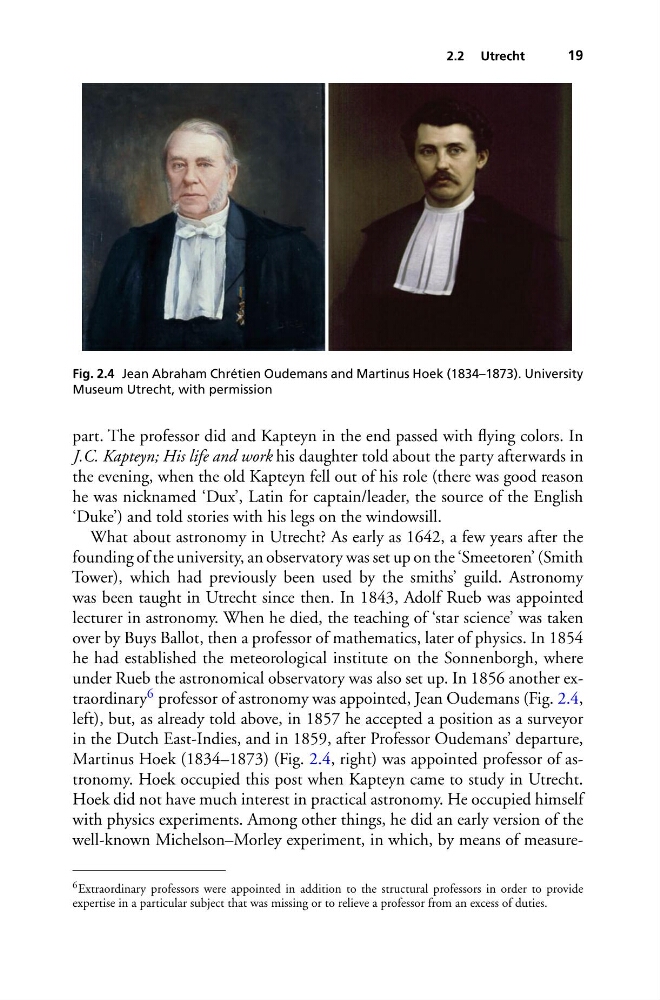
Fig. 2.4 Jean Abraham Chrétien Oudemans and Martinus Hoek (1834–1873). University
Museum Utrecht, with permission
part. The professor did and Kapteyn in the end passed with flying colors. In
J.C. Kapteyn; His life and work his daughter told about the party afterwards in
the evening, when the old Kapteyn fell out of his role (there was good reason
he was nicknamed ‘Dux’, Latin for captain/leader, the source of the English
‘Duke’) and told stories with his legs on the windowsill.
What about astronomy in Utrecht? As early as 1642, a few years after the
founding of the university, an observatory was set up on the ‘Smeetoren’ (Smith
Tower), which had previously been used by the smiths’ guild. Astronomy
was been taught in Utrecht since then. In 1843, Adolf Rueb was appointed
lecturer in astronomy. When he died, the teaching of ‘star science’ was taken
over by Buys Ballot, then a professor of mathematics, later of physics. In 1854
he had established the meteorological institute on the Sonnenborgh, where
under Rueb the astronomical observatory was also set up. In 1856 another extraordinary 6 professor of astronomy was appointed, Jean Oudemans (Fig. 2.4,
left), but, as already told above, in 1857 he accepted a position as a surveyor
in the Dutch East-Indies, and in 1859, after Professor Oudemans’ departure,
Martinus Hoek (1834–1873) (Fig. 2.4, right) was appointed professor of astronomy. Hoek occupied this post when Kapteyn came to study in Utrecht.
Hoek did not have much interest in practical astronomy. He occupied himself
with physics experiments. Among other things, he did an early version of the
well-known Michelson–Morley experiment, in which, by means of measure6 Extraordinary professors were appointed in addition to the structural professors in order to provide
expertise in a particular subject that was missing or to relieve a professor from an excess of duties.
19
Fig. 2.4 Jean Abraham Chrétien Oudemans and Martinus Hoek (1834–1873). University
Museum Utrecht, with permission
part. The professor did and Kapteyn in the end passed with flying colors. In
J.C. Kapteyn; His life and work his daughter told about the party afterwards in
the evening, when the old Kapteyn fell out of his role (there was good reason
he was nicknamed ‘Dux’, Latin for captain/leader, the source of the English
‘Duke’) and told stories with his legs on the windowsill.
What about astronomy in Utrecht? As early as 1642, a few years after the
founding of the university, an observatory was set up on the ‘Smeetoren’ (Smith
Tower), which had previously been used by the smiths’ guild. Astronomy
was been taught in Utrecht since then. In 1843, Adolf Rueb was appointed
lecturer in astronomy. When he died, the teaching of ‘star science’ was taken
over by Buys Ballot, then a professor of mathematics, later of physics. In 1854
he had established the meteorological institute on the Sonnenborgh, where
under Rueb the astronomical observatory was also set up. In 1856 another extraordinary 6 professor of astronomy was appointed, Jean Oudemans (Fig. 2.4,
left), but, as already told above, in 1857 he accepted a position as a surveyor
in the Dutch East-Indies, and in 1859, after Professor Oudemans’ departure,
Martinus Hoek (1834–1873) (Fig. 2.4, right) was appointed professor of astronomy. Hoek occupied this post when Kapteyn came to study in Utrecht.
Hoek did not have much interest in practical astronomy. He occupied himself
with physics experiments. Among other things, he did an early version of the
well-known Michelson–Morley experiment, in which, by means of measure6 Extraordinary professors were appointed in addition to the structural professors in order to provide
expertise in a particular subject that was missing or to relieve a professor from an excess of duties.