

9.5 Interstellar Extinction
191
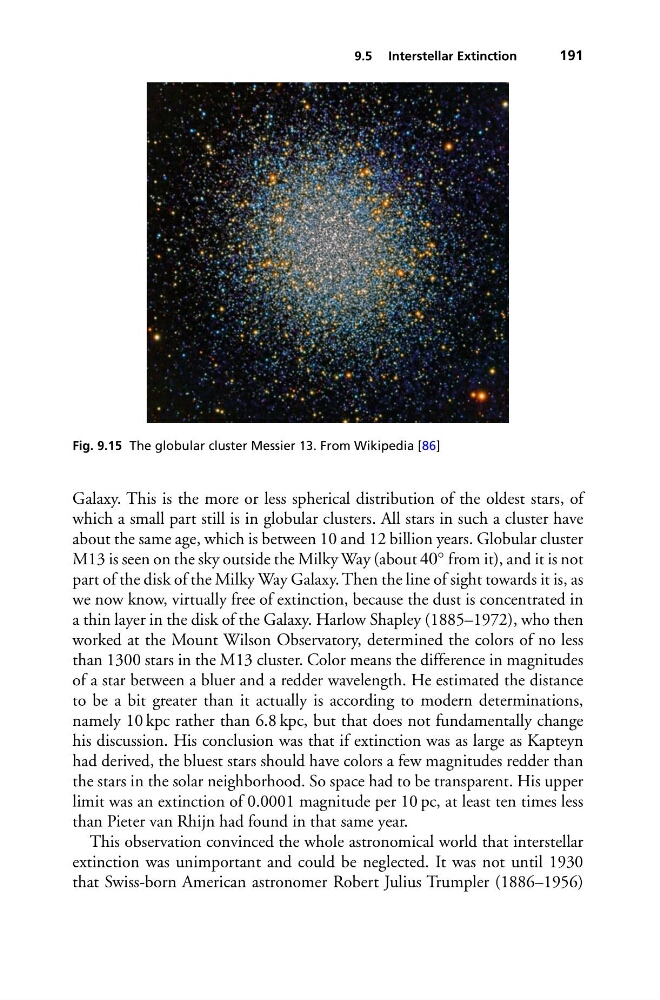
Fig. 9.15 The globular cluster Messier 13. From Wikipedia [86]
Galaxy. This is the more or less spherical distribution of the oldest stars, of
which a small part still is in globular clusters. All stars in such a cluster have
about the same age, which is between 10 and 12 billion years. Globular cluster
M13 is seen on the sky outside the Milky Way (about 40 ◦ from it), and it is not
part of the disk of the Milky Way Galaxy. Then the line of sight towards it is, as
we now know, virtually free of extinction, because the dust is concentrated in
a thin layer in the disk of the Galaxy. Harlow Shapley (1885–1972), who then
worked at the Mount Wilson Observatory, determined the colors of no less
than 1300 stars in the M13 cluster. Color means the difference in magnitudes
of a star between a bluer and a redder wavelength. He estimated the distance
to be a bit greater than it actually is according to modern determinations,
namely 10 kpc rather than 6.8 kpc, but that does not fundamentally change
his discussion. His conclusion was that if extinction was as large as Kapteyn
had derived, the bluest stars should have colors a few magnitudes redder than
the stars in the solar neighborhood. So space had to be transparent. His upper
limit was an extinction of 0.0001 magnitude per 10 pc, at least ten times less
than Pieter van Rhijn had found in that same year.
This observation convinced the whole astronomical world that interstellar
extinction was unimportant and could be neglected. It was not until 1930
that Swiss-born American astronomer Robert Julius Trumpler (1886–1956)
191
Fig. 9.15 The globular cluster Messier 13. From Wikipedia [86]
Galaxy. This is the more or less spherical distribution of the oldest stars, of
which a small part still is in globular clusters. All stars in such a cluster have
about the same age, which is between 10 and 12 billion years. Globular cluster
M13 is seen on the sky outside the Milky Way (about 40 ◦ from it), and it is not
part of the disk of the Milky Way Galaxy. Then the line of sight towards it is, as
we now know, virtually free of extinction, because the dust is concentrated in
a thin layer in the disk of the Galaxy. Harlow Shapley (1885–1972), who then
worked at the Mount Wilson Observatory, determined the colors of no less
than 1300 stars in the M13 cluster. Color means the difference in magnitudes
of a star between a bluer and a redder wavelength. He estimated the distance
to be a bit greater than it actually is according to modern determinations,
namely 10 kpc rather than 6.8 kpc, but that does not fundamentally change
his discussion. His conclusion was that if extinction was as large as Kapteyn
had derived, the bluest stars should have colors a few magnitudes redder than
the stars in the solar neighborhood. So space had to be transparent. His upper
limit was an extinction of 0.0001 magnitude per 10 pc, at least ten times less
than Pieter van Rhijn had found in that same year.
This observation convinced the whole astronomical world that interstellar
extinction was unimportant and could be neglected. It was not until 1930
that Swiss-born American astronomer Robert Julius Trumpler (1886–1956)