

182
9 Mount Wilson
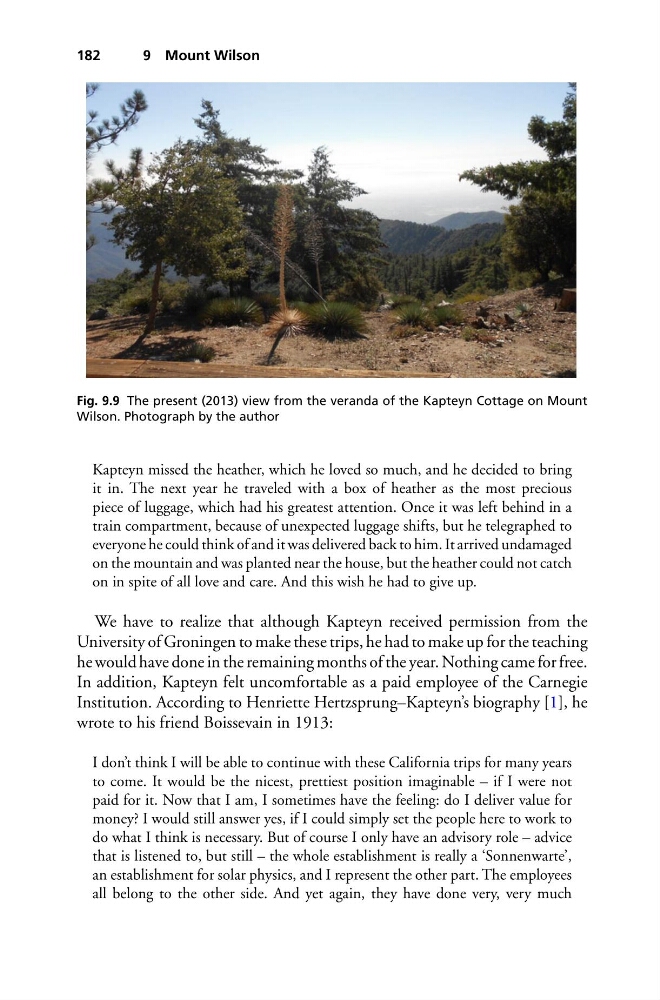
Fig. 9.9 The present (2013) view from the veranda of the Kapteyn Cottage on Mount
Wilson. Photograph by the author
Kapteyn missed the heather, which he loved so much, and he decided to bring
it in. The next year he traveled with a box of heather as the most precious
piece of luggage, which had his greatest attention. Once it was left behind in a
train compartment, because of unexpected luggage shifts, but he telegraphed to
everyone he could think of and it was delivered back to him. It arrived undamaged
on the mountain and was planted near the house, but the heather could not catch
on in spite of all love and care. And this wish he had to give up.
We have to realize that although Kapteyn received permission from the
University of Groningen to make these trips, he had to make up for the teaching
he would have done in the remaining months of the year. Nothing came for free.
In addition, Kapteyn felt uncomfortable as a paid employee of the Carnegie
Institution. According to Henriette Hertzsprung–Kapteyn’s biography [1], he
wrote to his friend Boissevain in 1913:
I don’t think I will be able to continue with these California trips for many years
to come. It would be the nicest, prettiest position imaginable – if I were not
paid for it. Now that I am, I sometimes have the feeling: do I deliver value for
money? I would still answer yes, if I could simply set the people here to work to
do what I think is necessary. But of course I only have an advisory role – advice
that is listened to, but still – the whole establishment is really a ‘Sonnenwarte’,
an establishment for solar physics, and I represent the other part. The employees
all belong to the other side. And yet again, they have done very, very much
9 Mount Wilson
Fig. 9.9 The present (2013) view from the veranda of the Kapteyn Cottage on Mount
Wilson. Photograph by the author
Kapteyn missed the heather, which he loved so much, and he decided to bring
it in. The next year he traveled with a box of heather as the most precious
piece of luggage, which had his greatest attention. Once it was left behind in a
train compartment, because of unexpected luggage shifts, but he telegraphed to
everyone he could think of and it was delivered back to him. It arrived undamaged
on the mountain and was planted near the house, but the heather could not catch
on in spite of all love and care. And this wish he had to give up.
We have to realize that although Kapteyn received permission from the
University of Groningen to make these trips, he had to make up for the teaching
he would have done in the remaining months of the year. Nothing came for free.
In addition, Kapteyn felt uncomfortable as a paid employee of the Carnegie
Institution. According to Henriette Hertzsprung–Kapteyn’s biography [1], he
wrote to his friend Boissevain in 1913:
I don’t think I will be able to continue with these California trips for many years
to come. It would be the nicest, prettiest position imaginable – if I were not
paid for it. Now that I am, I sometimes have the feeling: do I deliver value for
money? I would still answer yes, if I could simply set the people here to work to
do what I think is necessary. But of course I only have an advisory role – advice
that is listened to, but still – the whole establishment is really a ‘Sonnenwarte’,
an establishment for solar physics, and I represent the other part. The employees
all belong to the other side. And yet again, they have done very, very much