

6.3 Parallaxes and Proper Motions
107
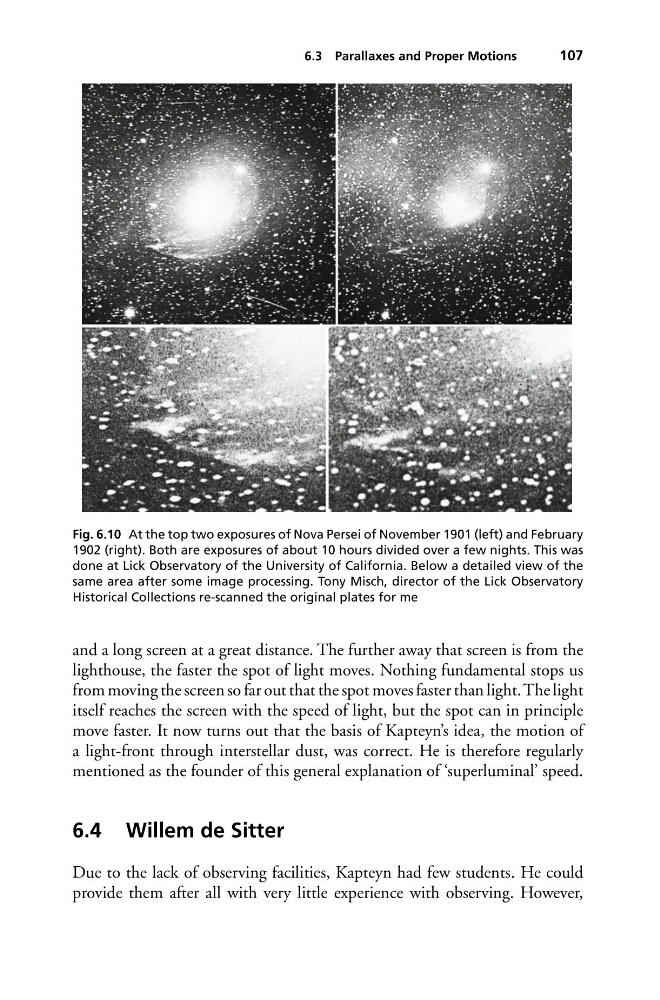
Fig. 6.10 At the top two exposures of Nova Persei of November 1901 (left) and February
1902 (right). Both are exposures of about 10 hours divided over a few nights. This was
done at Lick Observatory of the University of California. Below a detailed view of the
same area after some image processing. Tony Misch, director of the Lick Observatory
Historical Collections re-scanned the original plates for me
and a long screen at a great distance. The further away that screen is from the
lighthouse, the faster the spot of light moves. Nothing fundamental stops us
from moving the screen so far out that the spot moves faster than light. The light
itself reaches the screen with the speed of light, but the spot can in principle
move faster. It now turns out that the basis of Kapteyn’s idea, the motion of
a light-front through interstellar dust, was correct. He is therefore regularly
mentioned as the founder of this general explanation of ‘superluminal’ speed.
6.4 Willem de Sitter
Due to the lack of observing facilities, Kapteyn had few students. He could
provide them after all with very little experience with observing. However,
107
Fig. 6.10 At the top two exposures of Nova Persei of November 1901 (left) and February
1902 (right). Both are exposures of about 10 hours divided over a few nights. This was
done at Lick Observatory of the University of California. Below a detailed view of the
same area after some image processing. Tony Misch, director of the Lick Observatory
Historical Collections re-scanned the original plates for me
and a long screen at a great distance. The further away that screen is from the
lighthouse, the faster the spot of light moves. Nothing fundamental stops us
from moving the screen so far out that the spot moves faster than light. The light
itself reaches the screen with the speed of light, but the spot can in principle
move faster. It now turns out that the basis of Kapteyn’s idea, the motion of
a light-front through interstellar dust, was correct. He is therefore regularly
mentioned as the founder of this general explanation of ‘superluminal’ speed.
6.4 Willem de Sitter
Due to the lack of observing facilities, Kapteyn had few students. He could
provide them after all with very little experience with observing. However,