

6.3 Parallaxes and Proper Motions
103
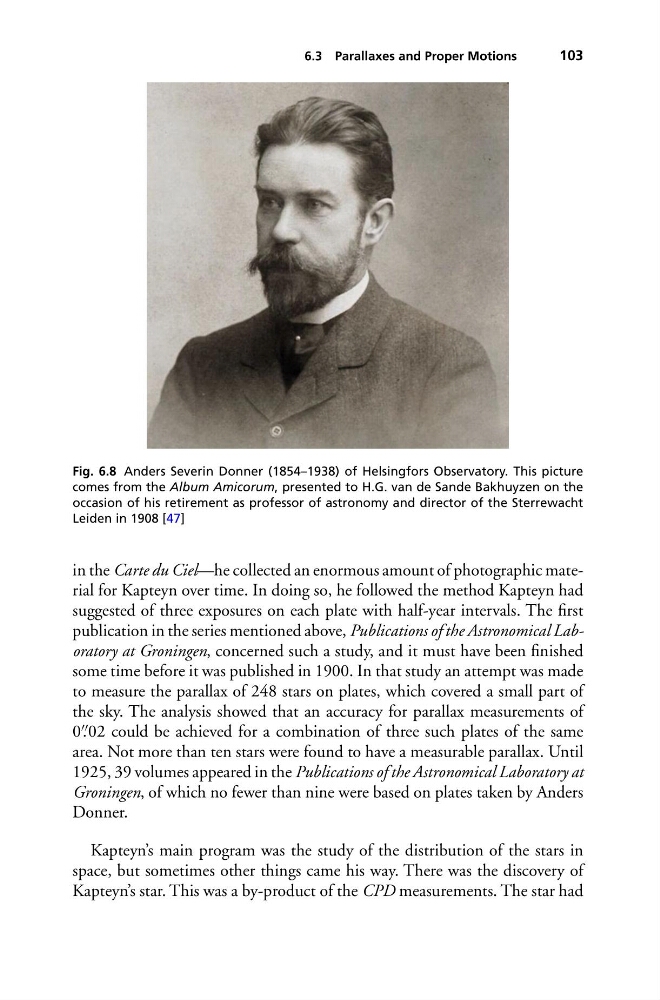
Fig. 6.8 Anders Severin Donner (1854–1938) of Helsingfors Observatory. This picture
comes from the Album Amicorum, presented to H.G. van de Sande Bakhuyzen on the
occasion of his retirement as professor of astronomy and director of the Sterrewacht
Leiden in 1908 [47]
in the Carte du Ciel—he collected an enormous amount of photographic material for Kapteyn over time. In doing so, he followed the method Kapteyn had
suggested of three exposures on each plate with half-year intervals. The first
publication in the series mentioned above, Publications of the Astronomical Laboratory at Groningen, concerned such a study, and it must have been finished
some time before it was published in 1900. In that study an attempt was made
to measure the parallax of 248 stars on plates, which covered a small part of
the sky. The analysis showed that an accuracy for parallax measurements of
0 .02 could be achieved for a combination of three such plates of the same
area. Not more than ten stars were found to have a measurable parallax. Until
1925, 39 volumes appeared in the Publications of the Astronomical Laboratory at
Groningen, of which no fewer than nine were based on plates taken by Anders
Donner.
Kapteyn’s main program was the study of the distribution of the stars in
space, but sometimes other things came his way. There was the discovery of
Kapteyn’s star. This was a by-product of the CPD measurements. The star had
103
Fig. 6.8 Anders Severin Donner (1854–1938) of Helsingfors Observatory. This picture
comes from the Album Amicorum, presented to H.G. van de Sande Bakhuyzen on the
occasion of his retirement as professor of astronomy and director of the Sterrewacht
Leiden in 1908 [47]
in the Carte du Ciel—he collected an enormous amount of photographic material for Kapteyn over time. In doing so, he followed the method Kapteyn had
suggested of three exposures on each plate with half-year intervals. The first
publication in the series mentioned above, Publications of the Astronomical Laboratory at Groningen, concerned such a study, and it must have been finished
some time before it was published in 1900. In that study an attempt was made
to measure the parallax of 248 stars on plates, which covered a small part of
the sky. The analysis showed that an accuracy for parallax measurements of
0 .02 could be achieved for a combination of three such plates of the same
area. Not more than ten stars were found to have a measurable parallax. Until
1925, 39 volumes appeared in the Publications of the Astronomical Laboratory at
Groningen, of which no fewer than nine were based on plates taken by Anders
Donner.
Kapteyn’s main program was the study of the distribution of the stars in
space, but sometimes other things came his way. There was the discovery of
Kapteyn’s star. This was a by-product of the CPD measurements. The star had