

88
5 Nearly Half a Million Stars
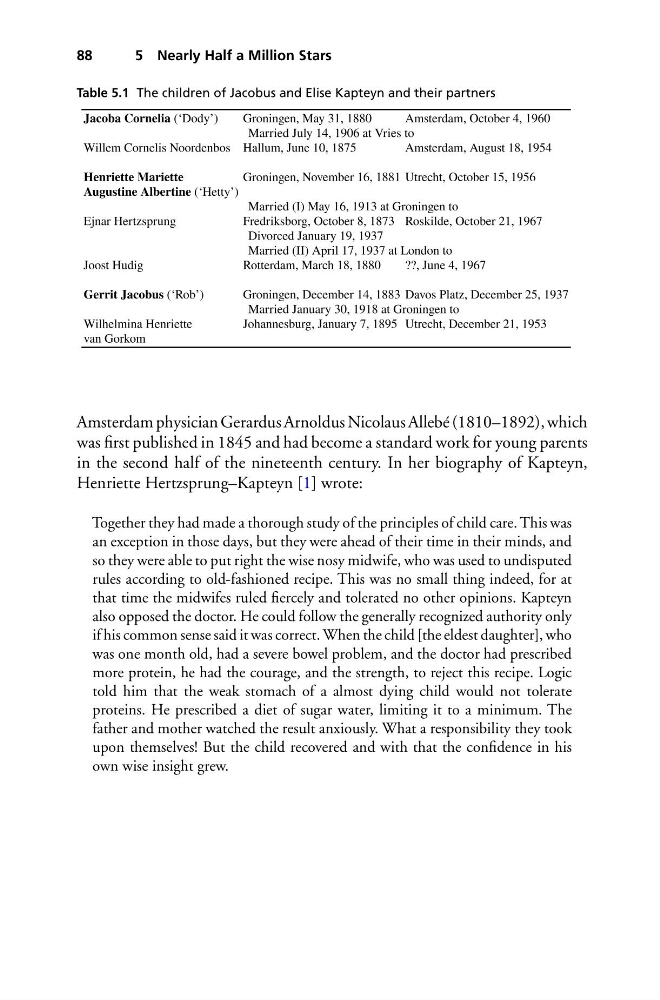
Table 5.1 The children of Jacobus and Elise Kapteyn and their partners
Amsterdam physician Gerardus Arnoldus Nicolaus Allebé (1810–1892), which
was first published in 1845 and had become a standard work for young parents
in the second half of the nineteenth century. In her biography of Kapteyn,
Henriette Hertzsprung–Kapteyn [1] wrote:
Together they had made a thorough study of the principles of child care. This was
an exception in those days, but they were ahead of their time in their minds, and
so they were able to put right the wise nosy midwife, who was used to undisputed
rules according to old-fashioned recipe. This was no small thing indeed, for at
that time the midwifes ruled fiercely and tolerated no other opinions. Kapteyn
also opposed the doctor. He could follow the generally recognized authority only
if his common sense said it was correct. When the child [the eldest daughter], who
was one month old, had a severe bowel problem, and the doctor had prescribed
more protein, he had the courage, and the strength, to reject this recipe. Logic
told him that the weak stomach of a almost dying child would not tolerate
proteins. He prescribed a diet of sugar water, limiting it to a minimum. The
father and mother watched the result anxiously. What a responsibility they took
upon themselves! But the child recovered and with that the confidence in his
own wise insight grew.
5 Nearly Half a Million Stars
Table 5.1 The children of Jacobus and Elise Kapteyn and their partners
Amsterdam physician Gerardus Arnoldus Nicolaus Allebé (1810–1892), which
was first published in 1845 and had become a standard work for young parents
in the second half of the nineteenth century. In her biography of Kapteyn,
Henriette Hertzsprung–Kapteyn [1] wrote:
Together they had made a thorough study of the principles of child care. This was
an exception in those days, but they were ahead of their time in their minds, and
so they were able to put right the wise nosy midwife, who was used to undisputed
rules according to old-fashioned recipe. This was no small thing indeed, for at
that time the midwifes ruled fiercely and tolerated no other opinions. Kapteyn
also opposed the doctor. He could follow the generally recognized authority only
if his common sense said it was correct. When the child [the eldest daughter], who
was one month old, had a severe bowel problem, and the doctor had prescribed
more protein, he had the courage, and the strength, to reject this recipe. Logic
told him that the weak stomach of a almost dying child would not tolerate
proteins. He prescribed a diet of sugar water, limiting it to a minimum. The
father and mother watched the result anxiously. What a responsibility they took
upon themselves! But the child recovered and with that the confidence in his
own wise insight grew.