

1.2.2 Substrate Intake
With few exceptions, most organic compounds of high molecular weight (macromolecules such as polysaccharides and proteins) cannot penetrate into cells for use in
cellular metabolism. Specific exoenzymes are excreted by the cells to digest the
macromolecules adsorbed on the floc surface or in the wastewater. The digestive
enzymes are hydrolases that catalyze the hydrolytic decomposition of their substrate.
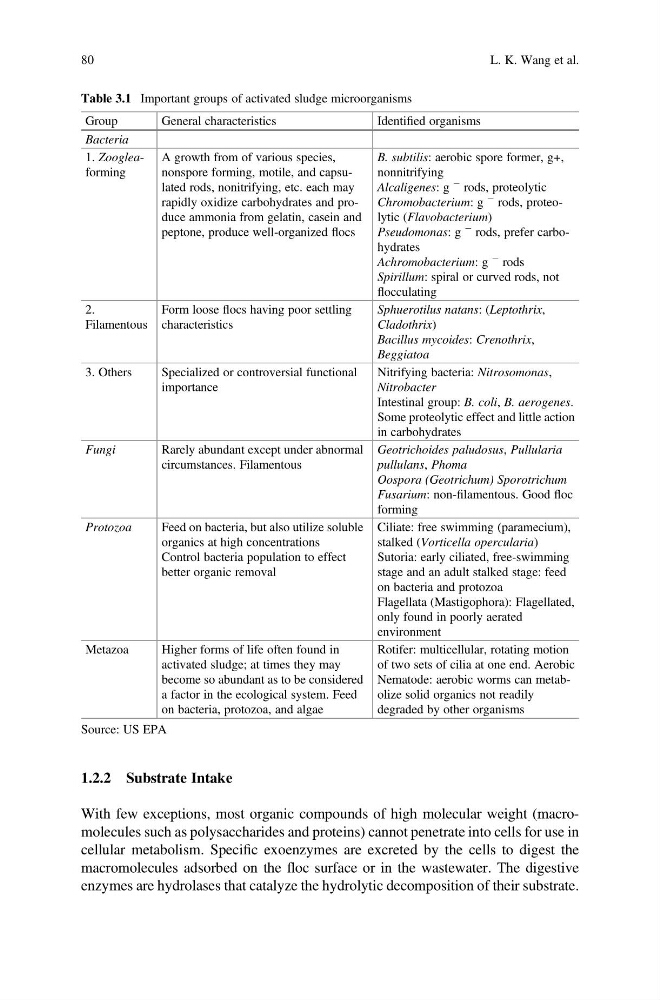
Table 3.1 Important groups of activated sludge microorganisms
Group
General characteristics
Identified organisms
Bacteria
1. Zoogleaforming
A growth from of various species,
nonspore forming, motile, and capsulated rods, nonitrifying, etc. each may
rapidly oxidize carbohydrates and produce ammonia from gelatin, casein and
peptone, produce well-organized flocs
B. subtilis: aerobic spore former, g+,
nonnitrifying
Alcaligenes: g
À rods, proteolytic
Chromobacterium: g
À rods, proteolytic (Flavobacterium)
Pseudomonas: g
À rods, prefer carbohydrates
Achromobacterium: g
À rods
Spirillum: spiral or curved rods, not
flocculating
2.
Filamentous
Form loose flocs having poor settling
characteristics
Sphuerotilus natans: (Leptothrix,
Cladothrix)
Bacillus mycoides: Crenothrix,
Beggiatoa
3. Others
Specialized or controversial functional
importance
Nitrifying bacteria: Nitrosomonas,
Nitrobacter
Intestinal group: B. coli, B. aerogenes.
Some proteolytic effect and little action
in carbohydrates
Fungi
Rarely abundant except under abnormal
circumstances. Filamentous
Geotrichoides paludosus, Pullularia
pullulans, Phoma
Oospora (Geotrichum) Sporotrichum
Fusarium: non-filamentous. Good floc
forming
Protozoa
Feed on bacteria, but also utilize soluble
organics at high concentrations
Control bacteria population to effect
better organic removal
Ciliate: free swimming (paramecium),
stalked (Vorticella opercularia)
Sutoria: early ciliated, free-swimming
stage and an adult stalked stage: feed
on bacteria and protozoa
Flagellata (Mastigophora): Flagellated,
only found in poorly aerated
environment
Metazoa
Higher forms of life often found in
activated sludge; at times they may
become so abundant as to be considered
a factor in the ecological system. Feed
on bacteria, protozoa, and algae
Rotifer: multicellular, rotating motion
of two sets of cilia at one end. Aerobic
Nematode: aerobic worms can metabolize solid organics not readily
degraded by other organisms
Source: US EPA
80
L. K. Wang et al.
With few exceptions, most organic compounds of high molecular weight (macromolecules such as polysaccharides and proteins) cannot penetrate into cells for use in
cellular metabolism. Specific exoenzymes are excreted by the cells to digest the
macromolecules adsorbed on the floc surface or in the wastewater. The digestive
enzymes are hydrolases that catalyze the hydrolytic decomposition of their substrate.
Table 3.1 Important groups of activated sludge microorganisms
Group
General characteristics
Identified organisms
Bacteria
1. Zoogleaforming
A growth from of various species,
nonspore forming, motile, and capsulated rods, nonitrifying, etc. each may
rapidly oxidize carbohydrates and produce ammonia from gelatin, casein and
peptone, produce well-organized flocs
B. subtilis: aerobic spore former, g+,
nonnitrifying
Alcaligenes: g
À rods, proteolytic
Chromobacterium: g
À rods, proteolytic (Flavobacterium)
Pseudomonas: g
À rods, prefer carbohydrates
Achromobacterium: g
À rods
Spirillum: spiral or curved rods, not
flocculating
2.
Filamentous
Form loose flocs having poor settling
characteristics
Sphuerotilus natans: (Leptothrix,
Cladothrix)
Bacillus mycoides: Crenothrix,
Beggiatoa
3. Others
Specialized or controversial functional
importance
Nitrifying bacteria: Nitrosomonas,
Nitrobacter
Intestinal group: B. coli, B. aerogenes.
Some proteolytic effect and little action
in carbohydrates
Fungi
Rarely abundant except under abnormal
circumstances. Filamentous
Geotrichoides paludosus, Pullularia
pullulans, Phoma
Oospora (Geotrichum) Sporotrichum
Fusarium: non-filamentous. Good floc
forming
Protozoa
Feed on bacteria, but also utilize soluble
organics at high concentrations
Control bacteria population to effect
better organic removal
Ciliate: free swimming (paramecium),
stalked (Vorticella opercularia)
Sutoria: early ciliated, free-swimming
stage and an adult stalked stage: feed
on bacteria and protozoa
Flagellata (Mastigophora): Flagellated,
only found in poorly aerated
environment
Metazoa
Higher forms of life often found in
activated sludge; at times they may
become so abundant as to be considered
a factor in the ecological system. Feed
on bacteria, protozoa, and algae
Rotifer: multicellular, rotating motion
of two sets of cilia at one end. Aerobic
Nematode: aerobic worms can metabolize solid organics not readily
degraded by other organisms
Source: US EPA
80
L. K. Wang et al.