

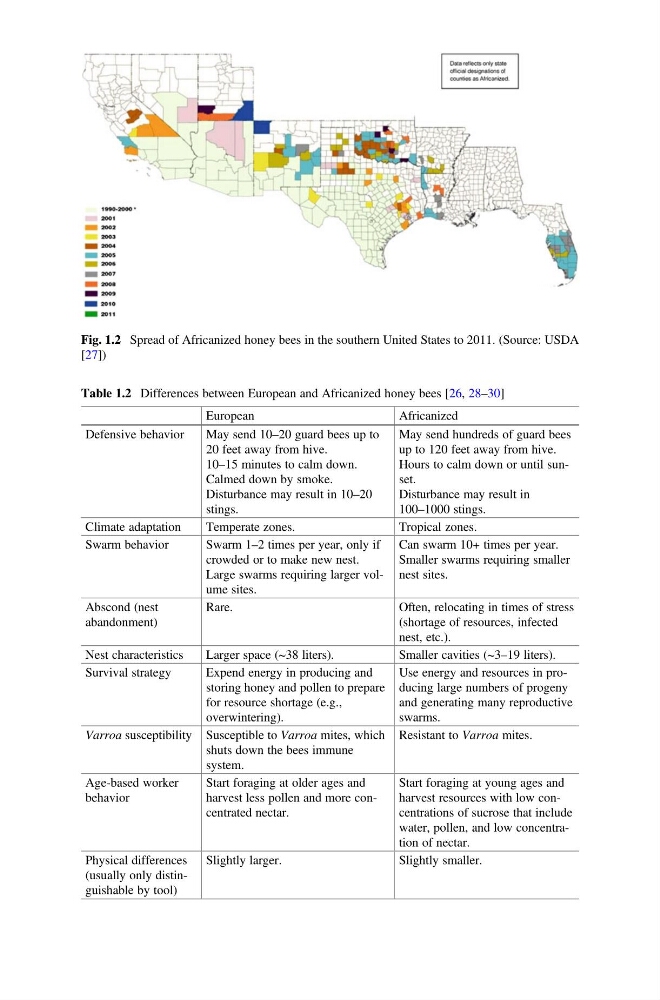
Fig. 1.2 Spread of Africanized honey bees in the southern United States to 2011. (Source: USDA
[27])
Table 1.2 Differences between European and Africanized honey bees [26, 28–30]
European
Africanized
Defensive behavior
May send 10–20 guard bees up to
20 feet away from hive.
10–15 minutes to calm down.
Calmed down by smoke.
Disturbance may result in 10–20
stings.
May send hundreds of guard bees
up to 120 feet away from hive.
Hours to calm down or until sunset.
Disturbance may result in
100–1000 stings.
Climate adaptation
Temperate zones.
Tropical zones.
Swarm behavior
Swarm 1–2 times per year, only if
crowded or to make new nest.
Large swarms requiring larger volume sites.
Can swarm 10+ times per year.
Smaller swarms requiring smaller
nest sites.
Abscond (nest
abandonment)
Rare.
Often, relocating in times of stress
(shortage of resources, infected
nest, etc.).
Nest characteristics
Larger space (~38 liters).
Smaller cavities (~3–19 liters).
Survival strategy
Expend energy in producing and
storing honey and pollen to prepare
for resource shortage (e.g.,
overwintering).
Use energy and resources in producing large numbers of progeny
and generating many reproductive
swarms.
Varroa susceptibility Susceptible to Varroa mites, which
shuts down the bees immune
system.
Resistant to Varroa mites.
Age-based worker
behavior
Start foraging at older ages and
harvest less pollen and more concentrated nectar.
Start foraging at young ages and
harvest resources with low concentrations of sucrose that include
water, pollen, and low concentration of nectar.
Physical differences
(usually only distinguishable by tool)
Slightly larger.
Slightly smaller.
[27])
Table 1.2 Differences between European and Africanized honey bees [26, 28–30]
European
Africanized
Defensive behavior
May send 10–20 guard bees up to
20 feet away from hive.
10–15 minutes to calm down.
Calmed down by smoke.
Disturbance may result in 10–20
stings.
May send hundreds of guard bees
up to 120 feet away from hive.
Hours to calm down or until sunset.
Disturbance may result in
100–1000 stings.
Climate adaptation
Temperate zones.
Tropical zones.
Swarm behavior
Swarm 1–2 times per year, only if
crowded or to make new nest.
Large swarms requiring larger volume sites.
Can swarm 10+ times per year.
Smaller swarms requiring smaller
nest sites.
Abscond (nest
abandonment)
Rare.
Often, relocating in times of stress
(shortage of resources, infected
nest, etc.).
Nest characteristics
Larger space (~38 liters).
Smaller cavities (~3–19 liters).
Survival strategy
Expend energy in producing and
storing honey and pollen to prepare
for resource shortage (e.g.,
overwintering).
Use energy and resources in producing large numbers of progeny
and generating many reproductive
swarms.
Varroa susceptibility Susceptible to Varroa mites, which
shuts down the bees immune
system.
Resistant to Varroa mites.
Age-based worker
behavior
Start foraging at older ages and
harvest less pollen and more concentrated nectar.
Start foraging at young ages and
harvest resources with low concentrations of sucrose that include
water, pollen, and low concentration of nectar.
Physical differences
(usually only distinguishable by tool)
Slightly larger.
Slightly smaller.