

3.1 Pesticide Residues
A number of pesticides have been implicated as endocrine disruptors, primarily in
aquatic and wildlife species. Agricultural runoff is responsible for the presence of
most pesticides found in surface waters. The pesticide concentrations in surface
waters tend to be highest after the first storm following application. Pesticides may
also enter source water from accidental spills, in wastewater discharges, or as runoff
from urban and suburban areas. Because pesticides are known to be potentially
highly toxic compounds, the maximum contaminant level (MCL) has been
established for each of these substances. These limits were originally established
on the basis of known toxicologic effects; however, in the future the MCLs may be
set at even lower concentrations if adverse endocrine effects are detected due to their
presence [9]. Again, this chapter does not infer that the reader is obligated to attain an
MCL; rather this information is presented to demonstrate how future research on
EDCs may eventually impact some MCLs.
3.1.1 DDT
DDT is an organochlorine insecticide used mainly to control mosquito-borne
malaria. It is the common name of the technical product that is a mixture of three
isomers of DDT and contains 65–80% p,p’-DDT. It is very soluble in fats and most
organic solvents and practically insoluble in water. In the USA, DDT is currently
used only for public health emergencies as an insecticide under Public Health
Service supervision and by the US Department of Agriculture (USDA) or military
for health quarantine. US Environmental Protection Agency (USEPA) banned the
use of DDT in food in 1972 and the use in nonfoods in 1988 [9]. At present no US
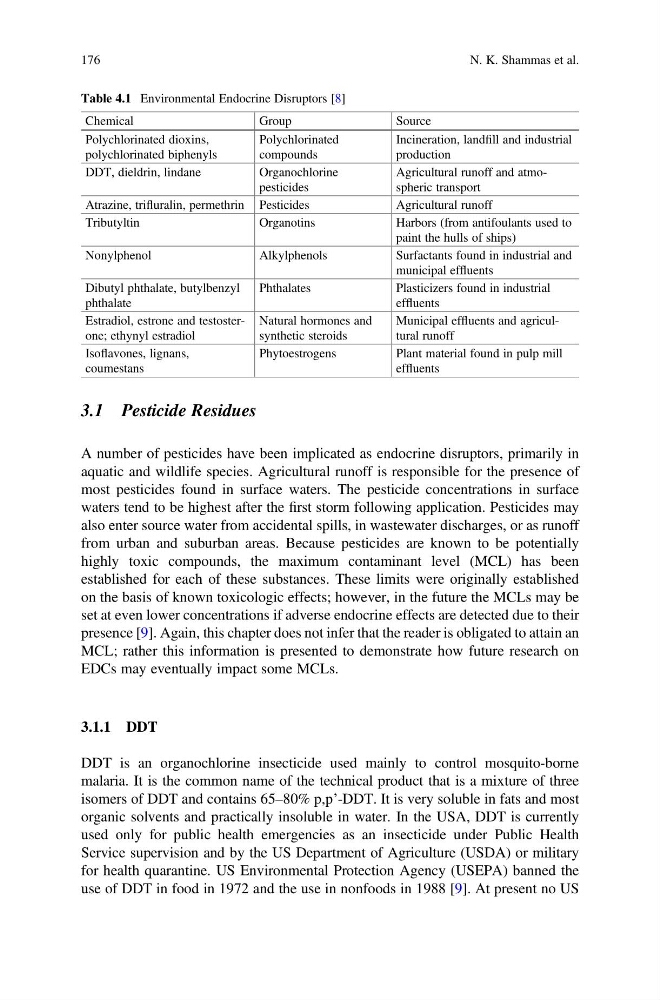
Table 4.1 Environmental Endocrine Disruptors [8]
Chemical
Group
Source
Polychlorinated dioxins,
polychlorinated biphenyls
Polychlorinated
compounds
Incineration, landfill and industrial
production
DDT, dieldrin, lindane
Organochlorine
pesticides
Agricultural runoff and atmospheric transport
Atrazine, trifluralin, permethrin Pesticides
Agricultural runoff
Tributyltin
Organotins
Harbors (from antifoulants used to
paint the hulls of ships)
Nonylphenol
Alkylphenols
Surfactants found in industrial and
municipal effluents
Dibutyl phthalate, butylbenzyl
phthalate
Phthalates
Plasticizers found in industrial
effluents
Estradiol, estrone and testosterone; ethynyl estradiol
Natural hormones and
synthetic steroids
Municipal effluents and agricultural runoff
Isoflavones, lignans,
coumestans
Phytoestrogens
Plant material found in pulp mill
effluents
176
N. K. Shammas et al.
A number of pesticides have been implicated as endocrine disruptors, primarily in
aquatic and wildlife species. Agricultural runoff is responsible for the presence of
most pesticides found in surface waters. The pesticide concentrations in surface
waters tend to be highest after the first storm following application. Pesticides may
also enter source water from accidental spills, in wastewater discharges, or as runoff
from urban and suburban areas. Because pesticides are known to be potentially
highly toxic compounds, the maximum contaminant level (MCL) has been
established for each of these substances. These limits were originally established
on the basis of known toxicologic effects; however, in the future the MCLs may be
set at even lower concentrations if adverse endocrine effects are detected due to their
presence [9]. Again, this chapter does not infer that the reader is obligated to attain an
MCL; rather this information is presented to demonstrate how future research on
EDCs may eventually impact some MCLs.
3.1.1 DDT
DDT is an organochlorine insecticide used mainly to control mosquito-borne
malaria. It is the common name of the technical product that is a mixture of three
isomers of DDT and contains 65–80% p,p’-DDT. It is very soluble in fats and most
organic solvents and practically insoluble in water. In the USA, DDT is currently
used only for public health emergencies as an insecticide under Public Health
Service supervision and by the US Department of Agriculture (USDA) or military
for health quarantine. US Environmental Protection Agency (USEPA) banned the
use of DDT in food in 1972 and the use in nonfoods in 1988 [9]. At present no US
Table 4.1 Environmental Endocrine Disruptors [8]
Chemical
Group
Source
Polychlorinated dioxins,
polychlorinated biphenyls
Polychlorinated
compounds
Incineration, landfill and industrial
production
DDT, dieldrin, lindane
Organochlorine
pesticides
Agricultural runoff and atmospheric transport
Atrazine, trifluralin, permethrin Pesticides
Agricultural runoff
Tributyltin
Organotins
Harbors (from antifoulants used to
paint the hulls of ships)
Nonylphenol
Alkylphenols
Surfactants found in industrial and
municipal effluents
Dibutyl phthalate, butylbenzyl
phthalate
Phthalates
Plasticizers found in industrial
effluents
Estradiol, estrone and testosterone; ethynyl estradiol
Natural hormones and
synthetic steroids
Municipal effluents and agricultural runoff
Isoflavones, lignans,
coumestans
Phytoestrogens
Plant material found in pulp mill
effluents
176
N. K. Shammas et al.