

328
M. Avolio et al.
state of the art of the clinical applications, which, mainly concerning MFH, is in
continuous evolution.
14.1 Introduction
In the recent past, magnetic nanoparticles (MNPs) emerged as the most promising
building blocks to realize multifunctional devices to be used in the biomedical field
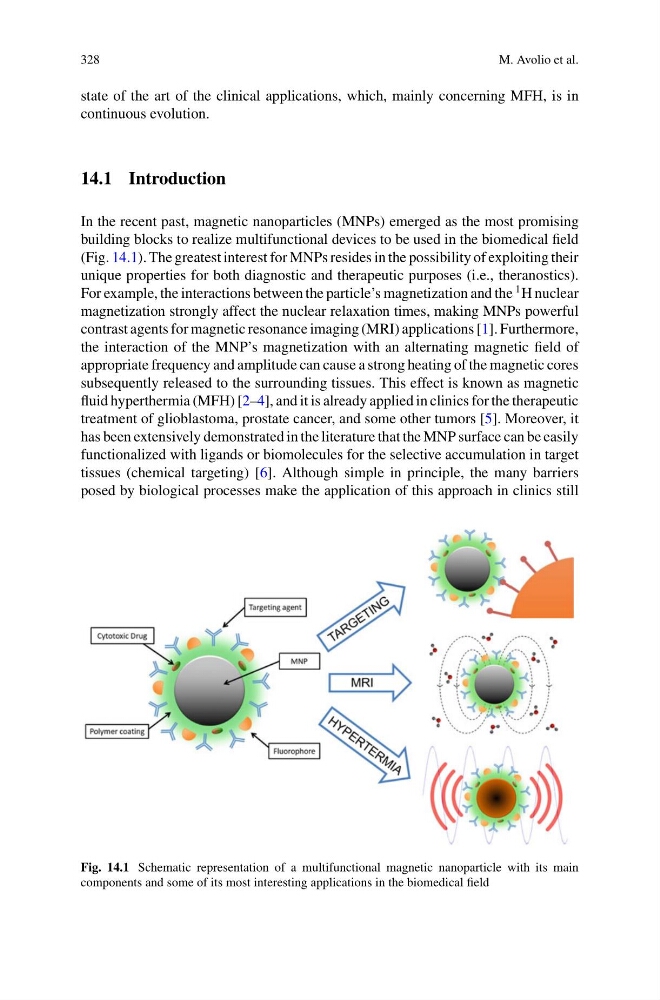
(Fig. 14.1). The greatest interest for MNPs resides in the possibility of exploiting their
unique properties for both diagnostic and therapeutic purposes (i.e., theranostics).
For example, the interactions between the particle’s magnetization and the
1 H nuclear
magnetization strongly affect the nuclear relaxation times, making MNPs powerful
contrast agents for magnetic resonance imaging (MRI) applications [1]. Furthermore,
the interaction of the MNP’s magnetization with an alternating magnetic field of
appropriate frequency and amplitude can cause a strong heating of the magnetic cores
subsequently released to the surrounding tissues. This effect is known as magnetic
fluid hyperthermia (MFH) [2–4], and it is already applied in clinics for the therapeutic
treatment of glioblastoma, prostate cancer, and some other tumors [5]. Moreover, it
has been extensively demonstrated in the literature that the MNP surface can be easily
functionalized with ligands or biomolecules for the selective accumulation in target
tissues (chemical targeting) [6]. Although simple in principle, the many barriers
posed by biological processes make the application of this approach in clinics still
Fig. 14.1 Schematic representation of a multifunctional magnetic nanoparticle with its main
components and some of its most interesting applications in the biomedical field
M. Avolio et al.
state of the art of the clinical applications, which, mainly concerning MFH, is in
continuous evolution.
14.1 Introduction
In the recent past, magnetic nanoparticles (MNPs) emerged as the most promising
building blocks to realize multifunctional devices to be used in the biomedical field
(Fig. 14.1). The greatest interest for MNPs resides in the possibility of exploiting their
unique properties for both diagnostic and therapeutic purposes (i.e., theranostics).
For example, the interactions between the particle’s magnetization and the
1 H nuclear
magnetization strongly affect the nuclear relaxation times, making MNPs powerful
contrast agents for magnetic resonance imaging (MRI) applications [1]. Furthermore,
the interaction of the MNP’s magnetization with an alternating magnetic field of
appropriate frequency and amplitude can cause a strong heating of the magnetic cores
subsequently released to the surrounding tissues. This effect is known as magnetic
fluid hyperthermia (MFH) [2–4], and it is already applied in clinics for the therapeutic
treatment of glioblastoma, prostate cancer, and some other tumors [5]. Moreover, it
has been extensively demonstrated in the literature that the MNP surface can be easily
functionalized with ligands or biomolecules for the selective accumulation in target
tissues (chemical targeting) [6]. Although simple in principle, the many barriers
posed by biological processes make the application of this approach in clinics still
Fig. 14.1 Schematic representation of a multifunctional magnetic nanoparticle with its main
components and some of its most interesting applications in the biomedical field