

13 Magnetic Nanoparticles for Life Sciences Applications
315
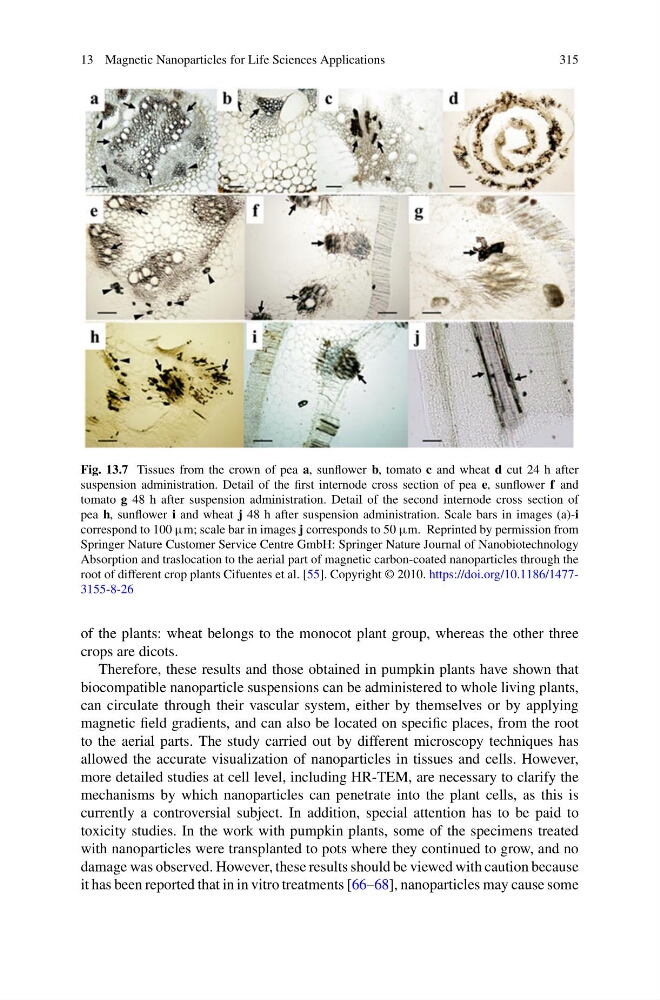
Fig. 13.7 Tissues from the crown of pea a, sunflower b, tomato c and wheat d cut 24 h after
suspension administration. Detail of the first internode cross section of pea e, sunflower f and
tomato g 48 h after suspension administration. Detail of the second internode cross section of
pea h, sunflower i and wheat j 48 h after suspension administration. Scale bars in images (a)-i
correspond to 100 μm; scale bar in images j corresponds to 50 μm. Reprinted by permission from
Springer Nature Customer Service Centre GmbH: Springer Nature Journal of Nanobiotechnology
Absorption and traslocation to the aerial part of magnetic carbon-coated nanoparticles through the
root of different crop plants Cifuentes et al. [55]. Copyright © 2010. https://doi.org/10.1186/14773155-8-26
of the plants: wheat belongs to the monocot plant group, whereas the other three
crops are dicots.
Therefore, these results and those obtained in pumpkin plants have shown that
biocompatible nanoparticle suspensions can be administered to whole living plants,
can circulate through their vascular system, either by themselves or by applying
magnetic field gradients, and can also be located on specific places, from the root
to the aerial parts. The study carried out by different microscopy techniques has
allowed the accurate visualization of nanoparticles in tissues and cells. However,
more detailed studies at cell level, including HR-TEM, are necessary to clarify the
mechanisms by which nanoparticles can penetrate into the plant cells, as this is
currently a controversial subject. In addition, special attention has to be paid to
toxicity studies. In the work with pumpkin plants, some of the specimens treated
with nanoparticles were transplanted to pots where they continued to grow, and no
damage was observed. However, these results should be viewed with caution because
it has been reported that in in vitro treatments [66–68], nanoparticles may cause some
315
Fig. 13.7 Tissues from the crown of pea a, sunflower b, tomato c and wheat d cut 24 h after
suspension administration. Detail of the first internode cross section of pea e, sunflower f and
tomato g 48 h after suspension administration. Detail of the second internode cross section of
pea h, sunflower i and wheat j 48 h after suspension administration. Scale bars in images (a)-i
correspond to 100 μm; scale bar in images j corresponds to 50 μm. Reprinted by permission from
Springer Nature Customer Service Centre GmbH: Springer Nature Journal of Nanobiotechnology
Absorption and traslocation to the aerial part of magnetic carbon-coated nanoparticles through the
root of different crop plants Cifuentes et al. [55]. Copyright © 2010. https://doi.org/10.1186/14773155-8-26
of the plants: wheat belongs to the monocot plant group, whereas the other three
crops are dicots.
Therefore, these results and those obtained in pumpkin plants have shown that
biocompatible nanoparticle suspensions can be administered to whole living plants,
can circulate through their vascular system, either by themselves or by applying
magnetic field gradients, and can also be located on specific places, from the root
to the aerial parts. The study carried out by different microscopy techniques has
allowed the accurate visualization of nanoparticles in tissues and cells. However,
more detailed studies at cell level, including HR-TEM, are necessary to clarify the
mechanisms by which nanoparticles can penetrate into the plant cells, as this is
currently a controversial subject. In addition, special attention has to be paid to
toxicity studies. In the work with pumpkin plants, some of the specimens treated
with nanoparticles were transplanted to pots where they continued to grow, and no
damage was observed. However, these results should be viewed with caution because
it has been reported that in in vitro treatments [66–68], nanoparticles may cause some