

154
H. Khurshid et al.
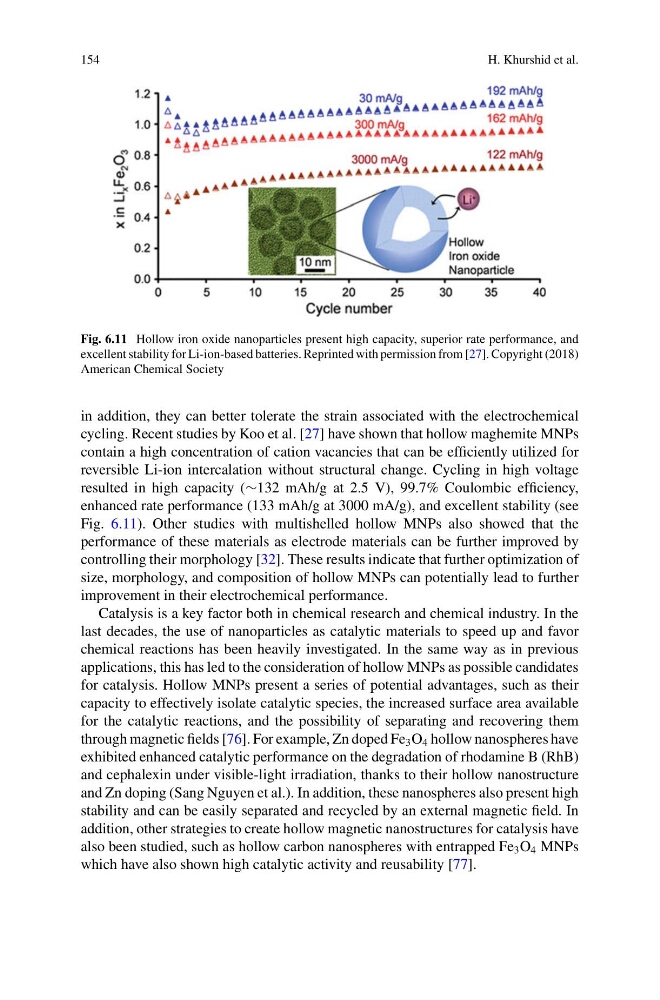
Fig. 6.11 Hollow iron oxide nanoparticles present high capacity, superior rate performance, and
excellent stability for Li-ion-based batteries. Reprinted with permission from [27]. Copyright (2018)
American Chemical Society
in addition, they can better tolerate the strain associated with the electrochemical
cycling. Recent studies by Koo et al. [27] have shown that hollow maghemite MNPs
contain a high concentration of cation vacancies that can be efficiently utilized for
reversible Li-ion intercalation without structural change. Cycling in high voltage
resulted in high capacity (∼132 mAh/g at 2.5 V), 99.7% Coulombic efficiency,
enhanced rate performance (133 mAh/g at 3000 mA/g), and excellent stability (see
Fig. 6.11). Other studies with multishelled hollow MNPs also showed that the
performance of these materials as electrode materials can be further improved by
controlling their morphology [32]. These results indicate that further optimization of
size, morphology, and composition of hollow MNPs can potentially lead to further
improvement in their electrochemical performance.
Catalysis is a key factor both in chemical research and chemical industry. In the
last decades, the use of nanoparticles as catalytic materials to speed up and favor
chemical reactions has been heavily investigated. In the same way as in previous
applications, this has led to the consideration of hollow MNPs as possible candidates
for catalysis. Hollow MNPs present a series of potential advantages, such as their
capacity to effectively isolate catalytic species, the increased surface area available
for the catalytic reactions, and the possibility of separating and recovering them
through magnetic fields [76]. For example, Zn doped Fe 3 O 4 hollow nanospheres have
exhibited enhanced catalytic performance on the degradation of rhodamine B (RhB)
and cephalexin under visible-light irradiation, thanks to their hollow nanostructure
and Zn doping (Sang Nguyen et al.). In addition, these nanospheres also present high
stability and can be easily separated and recycled by an external magnetic field. In
addition, other strategies to create hollow magnetic nanostructures for catalysis have
also been studied, such as hollow carbon nanospheres with entrapped Fe 3 O 4 MNPs
which have also shown high catalytic activity and reusability [77].
H. Khurshid et al.
Fig. 6.11 Hollow iron oxide nanoparticles present high capacity, superior rate performance, and
excellent stability for Li-ion-based batteries. Reprinted with permission from [27]. Copyright (2018)
American Chemical Society
in addition, they can better tolerate the strain associated with the electrochemical
cycling. Recent studies by Koo et al. [27] have shown that hollow maghemite MNPs
contain a high concentration of cation vacancies that can be efficiently utilized for
reversible Li-ion intercalation without structural change. Cycling in high voltage
resulted in high capacity (∼132 mAh/g at 2.5 V), 99.7% Coulombic efficiency,
enhanced rate performance (133 mAh/g at 3000 mA/g), and excellent stability (see
Fig. 6.11). Other studies with multishelled hollow MNPs also showed that the
performance of these materials as electrode materials can be further improved by
controlling their morphology [32]. These results indicate that further optimization of
size, morphology, and composition of hollow MNPs can potentially lead to further
improvement in their electrochemical performance.
Catalysis is a key factor both in chemical research and chemical industry. In the
last decades, the use of nanoparticles as catalytic materials to speed up and favor
chemical reactions has been heavily investigated. In the same way as in previous
applications, this has led to the consideration of hollow MNPs as possible candidates
for catalysis. Hollow MNPs present a series of potential advantages, such as their
capacity to effectively isolate catalytic species, the increased surface area available
for the catalytic reactions, and the possibility of separating and recovering them
through magnetic fields [76]. For example, Zn doped Fe 3 O 4 hollow nanospheres have
exhibited enhanced catalytic performance on the degradation of rhodamine B (RhB)
and cephalexin under visible-light irradiation, thanks to their hollow nanostructure
and Zn doping (Sang Nguyen et al.). In addition, these nanospheres also present high
stability and can be easily separated and recycled by an external magnetic field. In
addition, other strategies to create hollow magnetic nanostructures for catalysis have
also been studied, such as hollow carbon nanospheres with entrapped Fe 3 O 4 MNPs
which have also shown high catalytic activity and reusability [77].