

1.4 Consumption Behaviours and Yerba Mate Products. One …
15
tererê). An additional aging period (6–24 months, and also 8–12 months are
reported) may be required before packaging. Consequently, green colour turns
into brownish tints; flavour is enhanced)
(5) The possible reduction of twigs (30% according to the Brazilian legislation in
loose products)
(6) The presence or absence of the roasting process (in this situation, a teabag
packaging process is required at last)
(7) The use of genetic variations of I. paraguariensis.
All the above-discussed variables and possible quality types are correlated
together, taking into account that certain qualities may have different features. This
situation may be complicated enough. However, it has to be noted that the destination
of yerba mate products is the key for the final comprehension (Fig. 1.6). In fact, I.
paraguariensis is mainly used (for food applications only) in the following ways
(Heck and Mejia 2007):
(a) Hot or regular infusions in water. The correspondent names are chimarrão or
mate. It has to be noted that roasted yerba mate packaged in teabags can be
used for this aim
(b) Cold infusions in water. The correspondent name is generally tererê. It has to
be noted that roasted yerba mate packaged in teabags can be used for this aim.
In addition (Fig. 1.6):
Yerba mate... and related infusions
HOT (REGULAR) INFUSIONS
COLD INFUSIONS
green and
dried leaves
roasted and
brownish leaves
green and
dried leaves
Chimarrão
Mate
Tererê
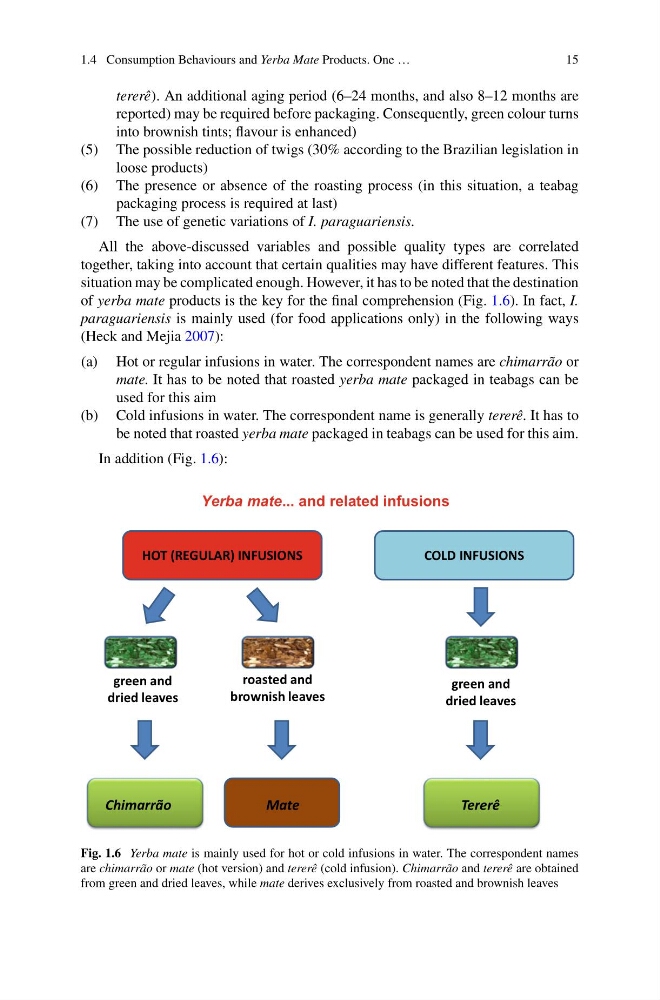
Fig. 1.6 Yerba mate is mainly used for hot or cold infusions in water. The correspondent names
are chimarrão or mate (hot version) and tererê (cold infusion). Chimarrão and tererê are obtained
from green and dried leaves, while mate derives exclusively from roasted and brownish leaves
15
tererê). An additional aging period (6–24 months, and also 8–12 months are
reported) may be required before packaging. Consequently, green colour turns
into brownish tints; flavour is enhanced)
(5) The possible reduction of twigs (30% according to the Brazilian legislation in
loose products)
(6) The presence or absence of the roasting process (in this situation, a teabag
packaging process is required at last)
(7) The use of genetic variations of I. paraguariensis.
All the above-discussed variables and possible quality types are correlated
together, taking into account that certain qualities may have different features. This
situation may be complicated enough. However, it has to be noted that the destination
of yerba mate products is the key for the final comprehension (Fig. 1.6). In fact, I.
paraguariensis is mainly used (for food applications only) in the following ways
(Heck and Mejia 2007):
(a) Hot or regular infusions in water. The correspondent names are chimarrão or
mate. It has to be noted that roasted yerba mate packaged in teabags can be
used for this aim
(b) Cold infusions in water. The correspondent name is generally tererê. It has to
be noted that roasted yerba mate packaged in teabags can be used for this aim.
In addition (Fig. 1.6):
Yerba mate... and related infusions
HOT (REGULAR) INFUSIONS
COLD INFUSIONS
green and
dried leaves
roasted and
brownish leaves
green and
dried leaves
Chimarrão
Mate
Tererê
Fig. 1.6 Yerba mate is mainly used for hot or cold infusions in water. The correspondent names
are chimarrão or mate (hot version) and tererê (cold infusion). Chimarrão and tererê are obtained
from green and dried leaves, while mate derives exclusively from roasted and brownish leaves