

4 Gödel, Hawking and the Foundations of Physics
67
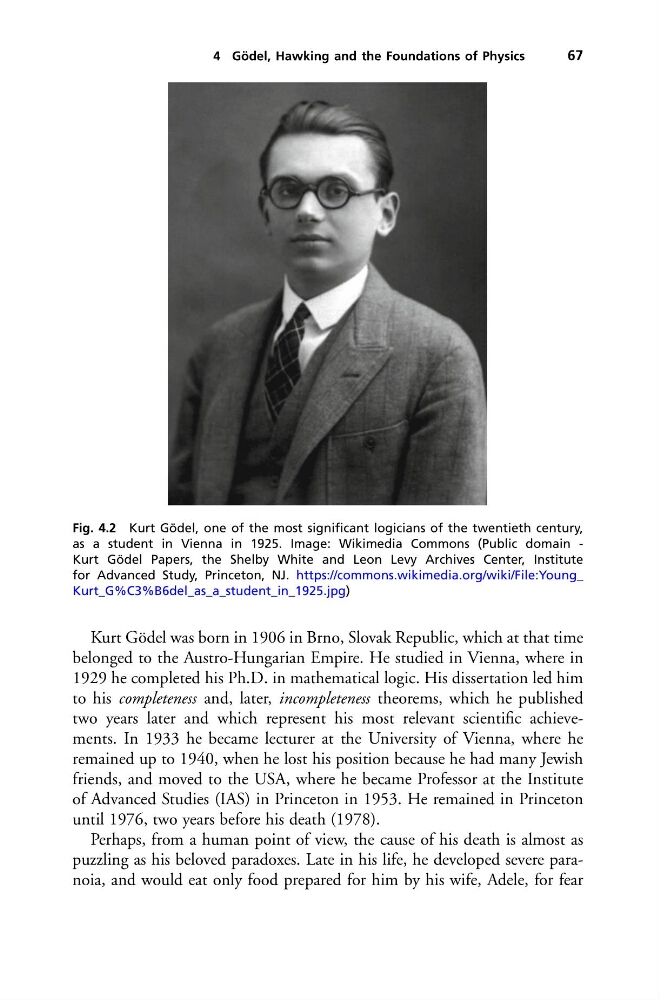
Fig. 4.2 Kurt Gödel, one of the most significant logicians of the twentieth century,
as a student in Vienna in 1925. Image: Wikimedia Commons (Public domain -
Kurt Gödel Papers, the Shelby White and Leon Levy Archives Center, Institute
for Advanced Study, Princeton, NJ. https://commons.wikimedia.org/wiki/File:Young_
Kurt_G%C3%B6del_as_a_student_in_1925.jpg)
Kurt Gödel was born in 1906 in Brno, Slovak Republic, which at that time
belonged to the Austro-Hungarian Empire. He studied in Vienna, where in
1929 he completed his Ph.D. in mathematical logic. His dissertation led him
to his completeness and, later, incompleteness theorems, which he published
two years later and which represent his most relevant scientific achievements. In 1933 he became lecturer at the University of Vienna, where he
remained up to 1940, when he lost his position because he had many Jewish
friends, and moved to the USA, where he became Professor at the Institute
of Advanced Studies (IAS) in Princeton in 1953. He remained in Princeton
until 1976, two years before his death (1978).
Perhaps, from a human point of view, the cause of his death is almost as
puzzling as his beloved paradoxes. Late in his life, he developed severe paranoia, and would eat only food prepared for him by his wife, Adele, for fear
67
Fig. 4.2 Kurt Gödel, one of the most significant logicians of the twentieth century,
as a student in Vienna in 1925. Image: Wikimedia Commons (Public domain -
Kurt Gödel Papers, the Shelby White and Leon Levy Archives Center, Institute
for Advanced Study, Princeton, NJ. https://commons.wikimedia.org/wiki/File:Young_
Kurt_G%C3%B6del_as_a_student_in_1925.jpg)
Kurt Gödel was born in 1906 in Brno, Slovak Republic, which at that time
belonged to the Austro-Hungarian Empire. He studied in Vienna, where in
1929 he completed his Ph.D. in mathematical logic. His dissertation led him
to his completeness and, later, incompleteness theorems, which he published
two years later and which represent his most relevant scientific achievements. In 1933 he became lecturer at the University of Vienna, where he
remained up to 1940, when he lost his position because he had many Jewish
friends, and moved to the USA, where he became Professor at the Institute
of Advanced Studies (IAS) in Princeton in 1953. He remained in Princeton
until 1976, two years before his death (1978).
Perhaps, from a human point of view, the cause of his death is almost as
puzzling as his beloved paradoxes. Late in his life, he developed severe paranoia, and would eat only food prepared for him by his wife, Adele, for fear